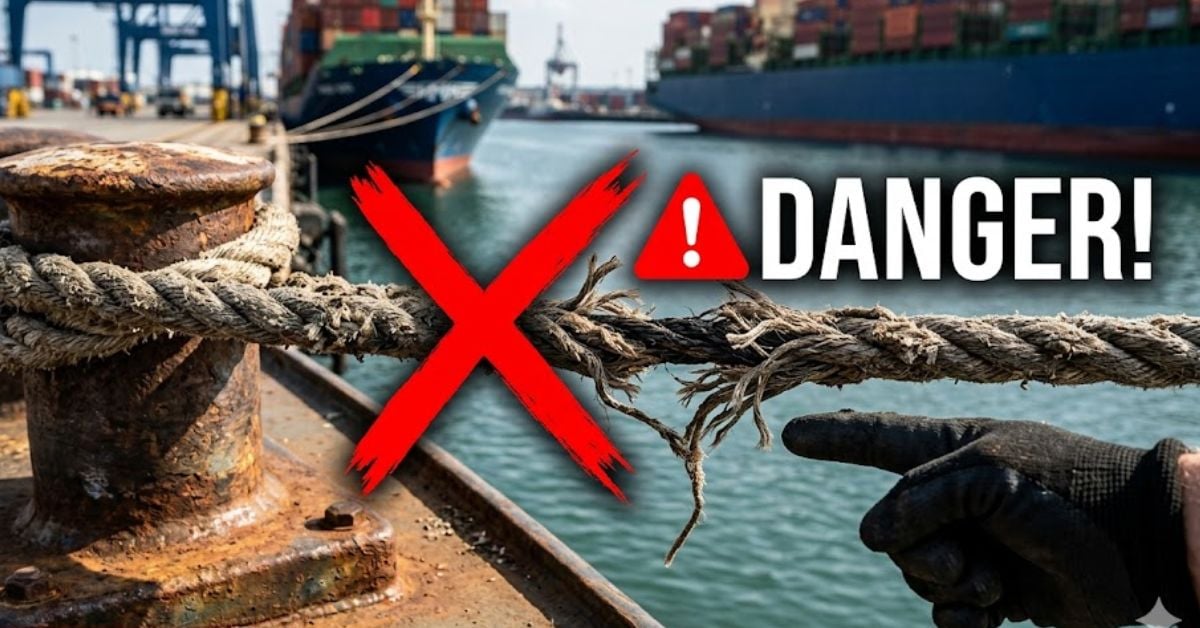
The seemingly mundane task of mooring vessel operations carries a disproportionate risk, as highlighted by the recent article detailing seven warning signs of mooring line failure. The statistics are sobering; preventable accidents during these procedures result in significant injury and loss of life. This underscores a critical need for heightened vigilance and proactive maintenance protocols across maritime industries. Our focus at World Data Ocean is on building comprehensive ocean intelligence, and this article serves as a stark reminder that seemingly small failures in infrastructure, like mooring lines, can have cascading and devastating consequences. Understanding these risks is the first step toward mitigating them, and the detailed list provided offers a valuable checklist for those involved. Complementing this understanding is the growing ability to accurately map coastal environments, as demonstrated in [A frequency domain enhanced lightweight oriented object detector for floating raft aquaculture mapping in high-resolution coastal imagery], which highlights the increasing sophistication of remote sensing techniques applicable to monitoring infrastructure integrity. The ability to remotely assess conditions, coupled with rigorous on-site inspections, represents a paradigm shift in preventative maintenance.
The importance of this extends beyond immediate safety concerns. Mooring systems are integral to a vast array of maritime activities, from commercial shipping and fisheries to scientific research and offshore energy production. A compromised mooring line can not only endanger personnel but also damage vessels, disrupt operations, and potentially release pollutants into the marine environment. Longitudinal data collection and analysis, a core principle of our work, is key to identifying patterns and predicting potential failures before they occur. This proactive approach is far more efficient and safer than reactive responses to incidents. Linked to this is the critical need for robust data streams, as evidenced by [Twelve years of acoustic monitoring reveal rising spring–autumn harbor porpoise (Phocoena phocoena) detection rates in the Pomeranian Bay (Baltic Sea), a transition zone between populations of concern], demonstrating the utility of long-term data in identifying environmental shifts. Applying similar principles to the monitoring of mooring line health – incorporating factors like tidal patterns, weather conditions, and material degradation – would significantly enhance safety. Furthermore, the ongoing research into seagrass meadow stability, as explored in [Seasonal dynamics of seagrass-mediated sediment stabilization in a temperate eelgrass meadow: field evidence from the Yellow Sea], reminds us of the interconnectedness of marine ecosystems and the potential for natural solutions in supporting infrastructure resilience.
The seven warning signs outlined – including fraying, kinking, corrosion, and excessive stretch – are relatively straightforward to identify, yet their consistent and rigorous monitoring requires a commitment to safety culture and standardized procedures. Current practices often rely on subjective visual inspections, which are prone to human error and can be easily overlooked during busy operations. The integration of sensor technology, providing real-time data on line tension, elongation, and environmental conditions, offers the potential for automated monitoring and early warning systems. Calibration and validation of these sensors against empirical data, a practice we champion, are crucial to ensuring their accuracy and reliability. Moving beyond reactive maintenance towards predictive maintenance, leveraging integrated data ecosystems to anticipate failures, represents a major advancement in maritime safety. Such a transition demands not only technological investment but also a shift in mindset – prioritizing preventative measures and fostering a culture of continuous improvement.
Looking ahead, the convergence of advanced sensor technology, machine learning algorithms, and comprehensive ocean data sets holds immense promise for revolutionizing mooring line management. Imagine a system that analyzes real-time data, historical trends, and environmental forecasts to predict the remaining lifespan of a mooring line with unprecedented accuracy. This would allow for proactive replacement and minimize the risk of catastrophic failure. The question then becomes: how can we accelerate the adoption of these technologies across the diverse range of maritime sectors, ensuring equitable access to improved safety protocols and a shared commitment to ocean stewardship? The future of safe and sustainable maritime operations hinges on our ability to harness the power of data and innovation.