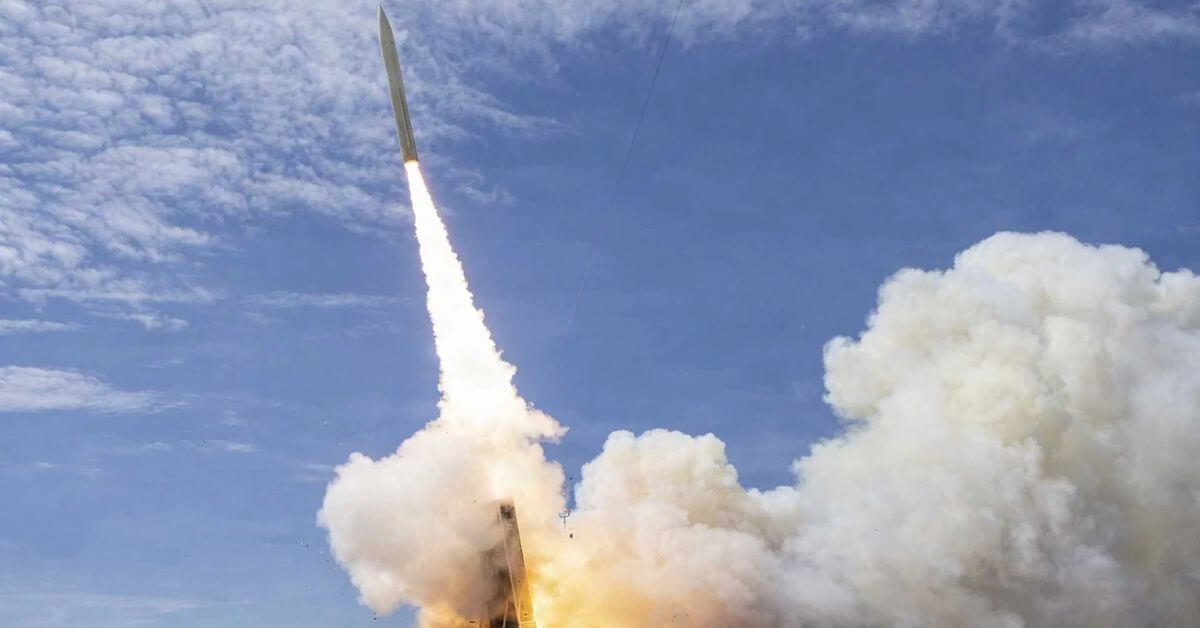
World Data Ocean’s perspective on the recent Navy validation of hypersonic strike capability centers on the broader implications of such technological advancements for global monitoring and understanding. While the immediate focus of this development is military readiness, its underlying principles of speed, precision, and data-driven decision-making resonate deeply with our mission. The ability to gather and process information at unprecedented velocities, as demonstrated by these hypersonic systems, mirrors our own pursuit of real-time ocean intelligence. This validation underscores the accelerating pace of innovation across diverse scientific and technological fields, a trend we actively embrace and seek to integrate into our understanding of the Earth's most critical ecosystem.
Our core work involves the meticulous collection and analysis of vast, longitudinal datasets pertaining to ocean health and climate indicators. The pursuit of speed and accuracy in data acquisition and transmission is paramount to our efforts to provide actionable insights. The validation of hypersonic capabilities, while applied in a defense context, highlights the potential for rapid dissemination of critical information. This capability, when translated to oceanic research, could mean faster detection of environmental shifts, more immediate responses to developing crises, and a more dynamic understanding of complex oceanographic processes. The scientific community, much like defense strategists, relies on timely and validated data to inform crucial decisions, and advancements that enable such speed are of significant interest to our integrated data ecosystem.
The development and validation of technologies like hypersonic missiles, though seemingly distant from direct ocean stewardship, serve as a powerful reminder of humanity's capacity for innovation. At World Data Ocean, we believe that this same spirit of ingenuity, when directed towards understanding and protecting our planet, holds the key to addressing the most pressing environmental challenges. Our approach is rooted in scientific rigor and a commitment to global collaboration, aiming to make complex oceanographic data accessible and understandable to all stakeholders. The validation of new strike capabilities, therefore, prompts a reflection on how similar principles of speed, precision, and advanced technological application can be leveraged to accelerate progress in ocean science and foster a more informed and effective approach to ocean stewardship. Understanding drives protection, and the faster we can gather and interpret the data that informs that understanding, the better equipped we will be to safeguard our oceans for future generations.