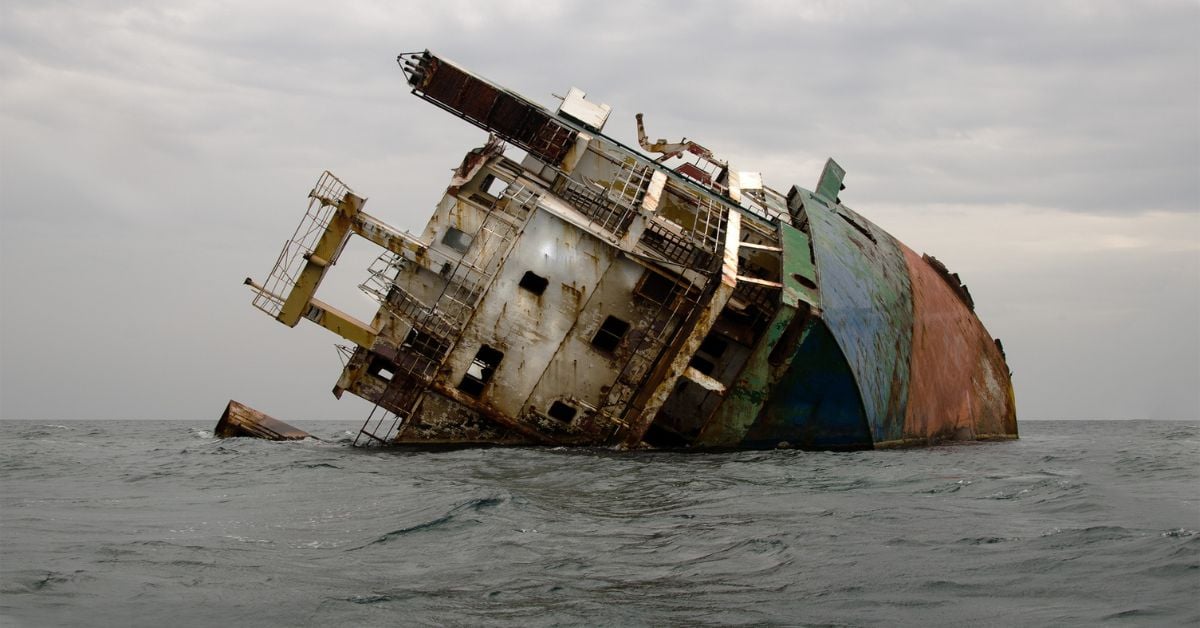
A second fatal sinking in a week on a Congolese lake is not an isolated tragedy; it is a recurring data point in a system under stress. On Lake Kivu, an overloaded vessel carrying more than 50 people capsized near Idjwi Island, according to Felix Habiragi, the Kisheki village head. This follows closely on the heels of another disaster: Tragedy on Lake Tanganyika: 41 Dead in Congolese Vessel Sinking, where a boat carrying around 100 people and cargo sank in the Democratic Republic of Congo's Lake Tanganyika. These are not random events. They are measurable failures in maritime safety, transport regulation, and environmental monitoring that demand empirical attention.
Our take is straightforward: the ocean intelligence community must expand its view beyond open-ocean systems to include inland waterways that serve as critical arteries for human life. Lake Kivu and Lake Tanganyika are not small ponds; they are vast, deep, and volatile bodies of water that sit atop active geological and climatic systems. Overloading is the proximate cause here, but the systemic drivers are what should concern us. When a vessel capsizes because it carries more than 50 people with no apparent enforcement of capacity limits, we are seeing a failure of integrated data ecosystems. Where are the real-time passenger counts? Where are the calibrated vessel registries? Where is the longitudinal tracking of accident patterns that could have flagged this lake as a high-risk zone before the second sinking occurred?
Compare this to the Cargo Ship Fire Prompts Evacuation Near Mykonos; Incident Under Investigation, where a fire on a Greek-flagged vessel forced all 29 people to evacuate. That incident triggered an immediate investigation, a structured response, and global attention. The difference is not just geography; it is visibility. The vessels on Lake Kivu operate without the same layers of peer-reviewed safety data, without the same calibrated monitoring infrastructure, and without the same global accountability mechanisms. We should ask why a fire on a cargo ship in the Mediterranean generates an investigation while two sinkings in a week on Congolese lakes produce village head testimony and little else.
The takeaway a reader could quote is this: *Every unmonitored vessel on an inland waterway is a climate indicator we are choosing to ignore.* The conditions that lead to overloading, poverty, weak governance, rapid population growth, are themselves measurable variables. We can track them. We can model risk. We can deploy integrated data ecosystems that give local authorities the real-time information they need to prevent the next capsizing. The question is whether we will treat these lakes as part of the global ocean intelligence mission or leave them as blind spots. The second sinking in a week is not a headline; it is a signal. What we do with it will determine whether the third sinking becomes a pattern or a prevented event.