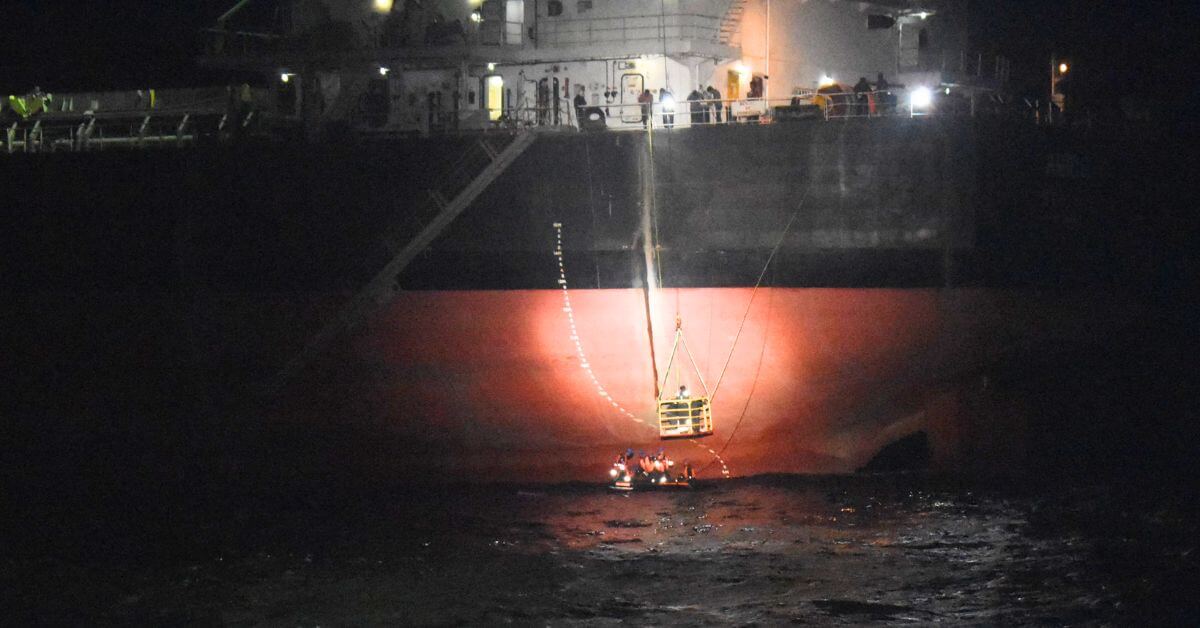
The Indian Coast Guard's swift rescue of a 36-year-old Bangladeshi crew member near the Andaman Islands is a reminder that maritime safety is, at its core, an information problem. The seafarer, who fell on board his vessel and suffered severe head and spinal injuries, was evacuated because the right data reached the right people in time. This is not a story about heroism alone, though that certainly played a part. It is a story about the quiet, unglamorous infrastructure that makes modern ocean rescue possible. The same logic applies to other recent incidents, such as the Cargo Ship Fire Prompts Evacuation Near Mykonos; Incident Under Investigation and the Bulk Carrier Freed After Prolonged Grounding Near Gladstone, Australia, where timely positional awareness was equally critical.
We tend to talk about ocean data in abstract terms: climate indicators, integrated data ecosystems, real-time monitoring. But here is the practical reality. A crew member's life was likely saved because someone on shore knew exactly where that vessel was, what its condition was, and how to route a rescue asset to it. That is the difference between a coordinated response and a delayed one. The Coast Guard's ability to act was not a matter of luck. It was a function of validated, measurable information flowing through established channels. For our readers, the takeaway is straightforward: every investment in ocean intelligence, whether it is a satellite pass, a buoy network, or a shared tracking system, is an investment in the capacity to respond when things go wrong.
What stands out here is the unremarkable efficiency of it all. There is no drama in the report, no mention of heroic last-second maneuvers. Just a clear sequence of detection, communication, and evacuation. That is the mark of a system working as designed. And it is worth contrasting with the Gladstone grounding, where a vessel sat for six days, not because the data was absent, but because the response to it was slow. The difference between six days and six hours is not physical capability; it is the speed at which information is translated into action. The same lesson applies to the Mykonos fire, where evacuation was ordered promptly, but the underlying risk remains under investigation.
Our honest take is this: we should stop treating these rescue stories as isolated incidents and start seeing them as evidence of what a properly calibrated maritime data ecosystem can do. The seafarer near the Andamans was not saved by a single heroic act. He was saved by a chain of information that held together under pressure. That chain includes satellite tracking, vessel reporting systems, and the human judgment of Coast Guard personnel who knew how to interpret the data they had. The question we should be asking is not whether the system works, but why it works so unevenly across different regions and jurisdictions.
If a reader asked us what to make of this story, we would say this: the next rescue will depend less on the weather and more on the quality of the data we choose to prioritize. Every gap in coverage, every delayed transmission, every unshared dataset is a potential life lost. The takeaway is not that the system is perfect, but that it is improvable. And the detail to watch is not the rescue itself, but the response time. If we can reduce that consistently, we are not just improving maritime safety; we are building the case for a global standard where no seafarer is out of reach. That is the measure of progress.