Our Take: A New Insight into Mammalian and Avian Evolutionary Threads
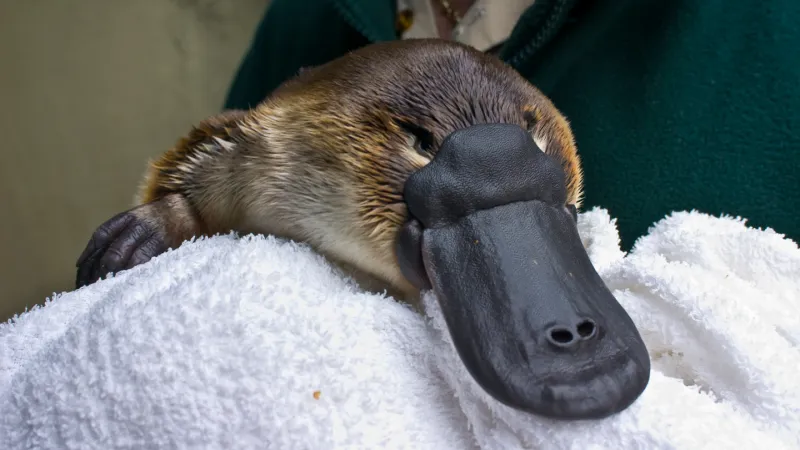
The recent discovery that platypuses possess hollow melanosomes, a characteristic previously observed only in avian species, offers a compelling new thread in the intricate tapestry of evolutionary biology. This finding, detailing pigment-bearing structures within the hair of these unique monotremes, moves beyond a simple biological curiosity to provide a tangible link between mammals and birds that is both scientifically significant and deeply informative. It underscores the profound interconnectedness of life on Earth and highlights how seemingly disparate species can share fundamental biological mechanisms, hinting at ancient commonalities that shaped their divergent evolutionary paths. Such empirical evidence is crucial for constructing a more complete understanding of vertebrate evolution, moving us closer to a validated narrative of how diverse life forms arose and diversified.
This revelation is particularly impactful as it offers measurable data points for understanding the selective pressures and genetic lineages that have guided mammalian and avian development. The presence of hollow melanosomes in platypus fur, a trait previously considered a defining characteristic of birds, challenges long-held assumptions and necessitates a re-evaluation of our phylogenetic models. It provides an opportunity for longitudinal studies, integrating this new data with existing genomic and morphological information to build a more robust and calibrated evolutionary framework. This is not about sensationalism, but about the precise, peer-reviewed accumulation of knowledge that allows us to unlock deeper insights into the complex history of life and the innovative biological solutions that have arisen over millennia.
The implications of this discovery resonate with World Data Ocean's mission to foster global collaboration and advance ocean intelligence. While this specific finding relates to terrestrial evolution, the underlying principle of uncovering shared biological heritage and understanding the mechanisms of adaptation is universal. It reinforces the idea that scientific exploration, driven by innovation and a commitment to clarity, can bridge disciplines and reveal unexpected connections. By embracing such validated insights, we enhance our collective ability to comprehend the intricate systems that govern all life, including the vast and vital oceans. This scientific advancement serves as a powerful reminder that understanding drives protection, and that by meticulously gathering and interpreting data, we can illuminate the path toward more effective stewardship of our planet.