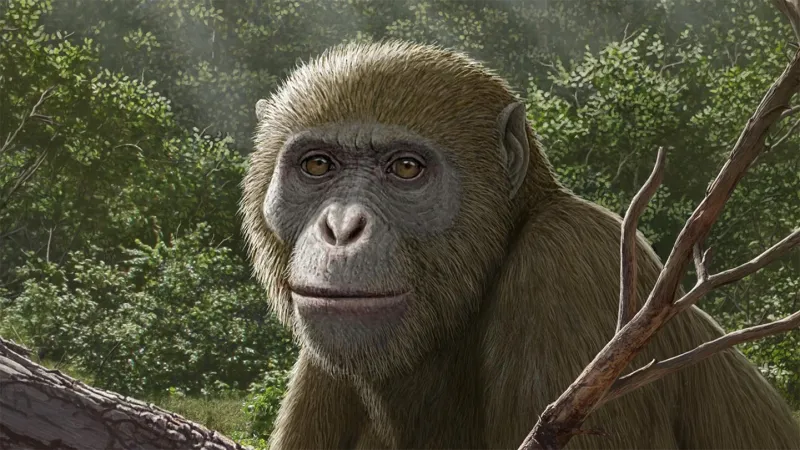
Our Take: North Africa Rewrites Early Ape Evolution Story
The recent discovery of fossil jaw remains in Egypt presents a significant paradigm shift in our understanding of early ape evolution. For decades, the prevailing scientific consensus, largely informed by extensive fossil evidence, pointed towards East Africa as the cradle of early hominoid evolution. This new evidence, however, compels us to re-evaluate these long-held assumptions. The discovery suggests that the origins of modern apes may lie further north, in North Africa, a region previously less emphasized in this specific evolutionary narrative. This finding underscores the dynamic and often surprising nature of paleontology, where each new fossil can fundamentally alter our picture of the past. It highlights the critical importance of continued exploration and rigorous scientific analysis across diverse geographical locations to build a comprehensive and accurate understanding of evolutionary history.
This compelling find is not merely an interesting footnote in evolutionary biology; it has profound implications for how we interpret the broader narrative of primate and human ancestry. By potentially relocating the earliest stages of modern ape development to North Africa, we open new avenues of research into the environmental conditions, ecological niches, and dispersal patterns that shaped these early primates. It suggests that the evolutionary journey was perhaps more complex and geographically varied than previously modeled. This necessitates a reassessment of existing fossil records, comparative anatomy studies, and potentially even our genetic analyses of extant ape populations to see if they align with this revised geographical origin. The scientific community will undoubtedly engage in robust debate and further investigation to validate and integrate this new data into our established frameworks.
The World Data Ocean, through its commitment to global collaboration and the integration of diverse scientific data, is well-positioned to support and disseminate findings such as these. Understanding the intricate tapestry of life's evolution, from the earliest hominoids to the present-day biodiversity of our oceans, requires a holistic approach. This discovery in North Africa is a prime example of how new, validated data can illuminate previously obscured aspects of our planet's history. It reinforces the imperative for continued investment in scientific exploration and the creation of accessible, integrated data ecosystems that enable researchers worldwide to connect disparate pieces of evidence. Ultimately, the pursuit of knowledge regarding our origins, whether on land or in the sea, is a shared endeavor that benefits all of humanity.