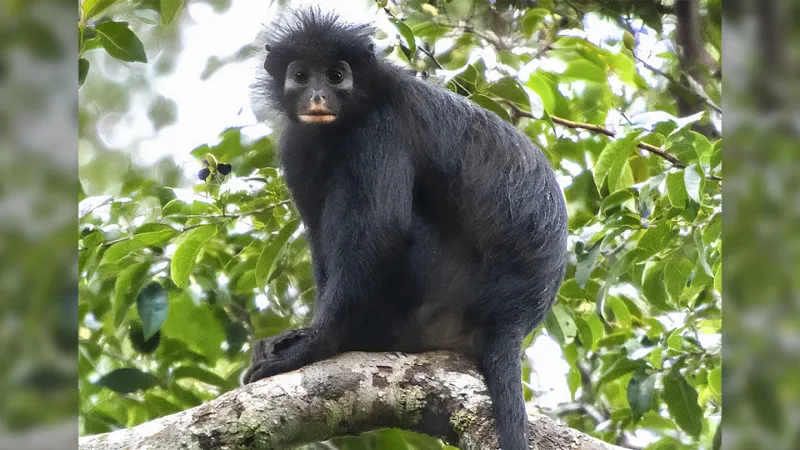
A canopy call, a partial photo, and a single DNA sample. That was enough to confirm what researchers now believe is a new primate species in the Congo Basin, and to raise the immediate question of whether it will survive long enough to be properly studied. This is not a story about a triumphant discovery alone. It is a reminder that taxonomy is not a distant academic exercise. It is the front line of conservation, and it is running out of time.
What makes this finding significant is not just the novelty of a new species, but the fragility of its context. The primate was identified through vocalizations and genetic material, methods that speak to the increasing precision of field biology. Yet the same tools that revealed its existence also expose how much remains unknown about the ecosystems we are still mapping. This mirrors the kind of methodological breakthroughs we have covered elsewhere, such as how Metal Ions Reveal Mechanism of DNA Strand Interaction showed that molecular-level insights can reshape our understanding of biological processes. Here, the insight is simpler and starker: if we cannot even catalogue what exists before it vanishes, every other conservation effort is operating with incomplete data.
There is a practical takeaway for researchers, funders, and policymakers. The discovery was made possible because someone was listening, because someone collected a sample, because a database existed to compare it against. This is the value of sustained, longitudinal observation, the kind that does not make headlines until a new species appears. It is the same principle behind the work on Fossilized Poop Reveals Feathered Dinosaur Traits Linked to Survival, where a single fossil helped clarify which traits mattered during a mass extinction. Here, the trait in question is not a feather or a beak, but the existence of a population so small and localized that its entire fate may hinge on a few square kilometers of forest.
Our honest take is this: the discovery is a call to action, but not in the alarmist sense. It is a call for calibration. A new primate species is not automatically a crisis simply because it is new. But the fact that it was found through a partial photo and a call suggests that it is rare, elusive, and likely under pressure from habitat loss and hunting. The next steps are not glamorous. They involve field surveys, population estimates, and habitat protection negotiations. That is unglamorous, slow, and essential work.
What we would tell a reader who asks about this story is straightforward: do not wait for the next headline. The scientific process here is not about dramatic breakthroughs but about incremental, verifiable steps. The DNA evidence is peer-reviewed. The vocalization data is empirical. The risk of extinction is not speculative; it is a direct consequence of the species' limited range and the pressures on the Congo Basin.
The concrete point to watch is whether this discovery translates into protected status before the next survey. If the species is listed as endangered within a year, the system worked. If it takes five years, the system failed. That lag time is where the real story lives. The species was found because the tools were in place. The question now is whether the response will match the evidence.