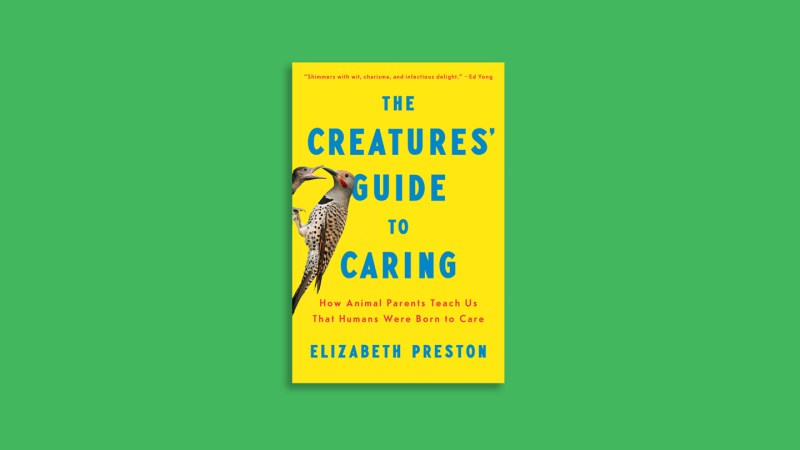
The natural world, in its intricate complexity, offers profound lessons that resonate far beyond its immediate ecological context. Elizabeth Preston's exploration in *The Creatures’ Guide to Caring* invites us to consider the remarkable diversity of animal parenting, revealing a spectrum of strategies honed over millennia of evolution. This perspective, grounded in observable scientific phenomena and empirical study, provides a valuable lens through which to examine our own approaches to family and community. By looking to the animal kingdom, we find not just fascinating behaviors, but validated principles of care, protection, and nurturing that underscore the fundamental drives of life. The book's approach, drawing from scientific observation to illuminate universal themes, aligns with our commitment to translating complex data into actionable understanding, demonstrating how insights from one domain can inform and enrich another.
Preston's work highlights how species, facing unique environmental pressures and developmental needs, have evolved distinct yet effective parenting models. From the intensive, almost microscopic care provided by some insects to the extended, socially complex guidance offered by marine mammals, each strategy is a testament to the adaptive power of nature. These are not simply anecdotal observations; they are the result of longitudinal studies and calibrated research that reveal the measurable impact of different parenting styles on offspring survival and well-being. The concept of "ocean intelligence," for instance, can be seen reflected in the sophisticated communication and cooperative learning observed in many aquatic species, where parental guidance is crucial for navigating complex environments and understanding vital resources. This integrated view of life, where individual actions contribute to broader ecological health, is a core tenet of our work in understanding the global ocean.
Ultimately, *The Creatures’ Guide to Caring* offers a powerful reminder of our interconnectedness. The principles of resilience, adaptation, and shared responsibility that govern animal families are mirrored in the challenges and opportunities facing human societies and the planet itself. By embracing the wisdom embedded in nature's diverse parenting strategies, we can foster more robust, compassionate, and sustainable approaches to raising future generations. This endeavor requires a commitment to clear, accessible knowledge, much like the precise data we strive to provide, ensuring that the lessons learned from the natural world can empower us to build a more secure and thriving future for all.