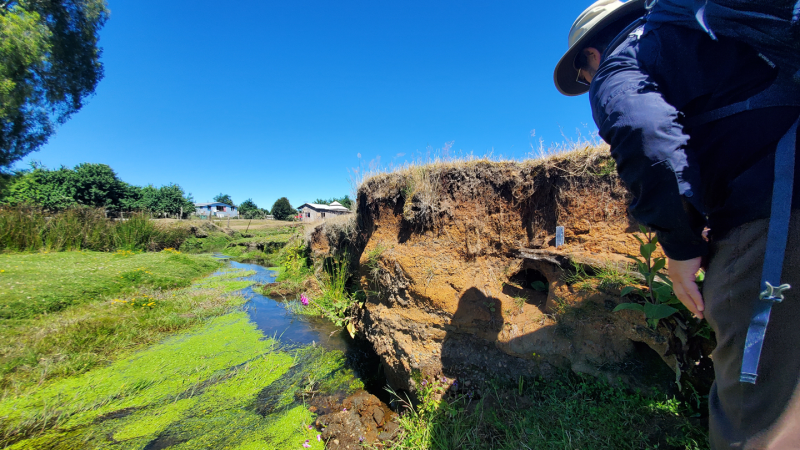
Our Take: Re-evaluating Timelines, Deepening Understanding
The recent findings concerning the Monte Verde archaeological site in Chile offer a compelling case for the iterative nature of scientific discovery. By employing advanced analytical techniques and revisiting previously established timelines, researchers are refining our understanding of early human migration and settlement in South America. The suggestion that human occupation at Monte Verde may have occurred thousands of years later than previously posited is not merely a revision of dates; it represents a critical step in the rigorous process of validating and recalibrating our knowledge base. This ongoing dialogue, characterized by the presentation of new empirical data and subsequent scholarly debate, is precisely how scientific consensus evolves. It underscores the importance of continuous investigation and the willingness to challenge established paradigms when confronted with robust, measurable evidence.
This re-evaluation highlights the crucial role of technological innovation in pushing the boundaries of scientific inquiry. The ability to conduct more precise dating, analyze trace materials with greater accuracy, and integrate diverse datasets allows for a more nuanced interpretation of archaeological evidence. When such advancements lead to revised timelines, it is essential to approach these conclusions with both intellectual curiosity and a commitment to scientific integrity. The fact that not all researchers agree on these new interpretations is a testament to the healthy skepticism that underpins sound scientific practice. It invites further research, encourages the exploration of alternative hypotheses, and ultimately strengthens the field by demanding greater clarity and more compelling evidence. This dynamic exchange is vital for building a comprehensive and accurate picture of our shared human past.
At World Data Ocean, we recognize that advancements in understanding complex systems, whether they are the migration patterns of early humans or the intricate dynamics of our planet’s oceans, are intrinsically linked. The spirit of rigorous investigation, the embrace of technological innovation, and the commitment to collaborative discourse are all fundamental to progress. Our work is dedicated to providing the integrated data ecosystem necessary for such advancements, fostering a global community of researchers and stakeholders who can build upon validated findings. The Monte Verde situation serves as a powerful reminder that our journey to comprehend the world is a continuous process of discovery, refinement, and shared learning. It is through this persistent pursuit of knowledge, grounded in measurable data and open to critical analysis, that we can truly deepen our understanding and inform responsible stewardship of our planet.