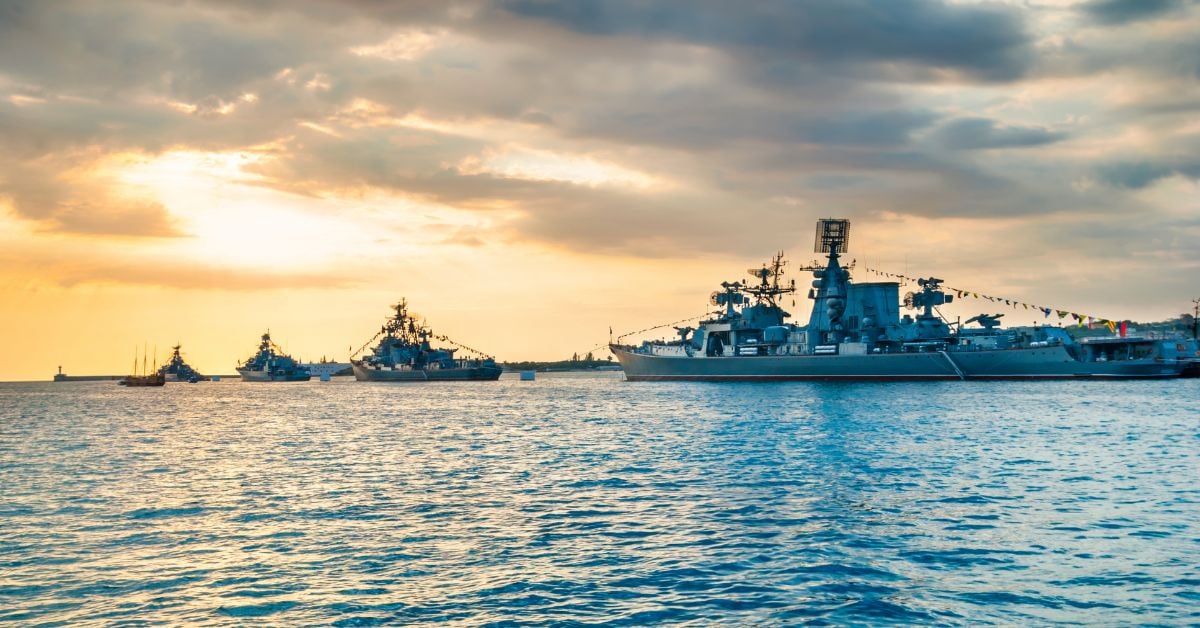
The pattern is familiar, but the stakes are escalating. The USS Charleston's transit near Sabina Shoal and China's immediate dispatch of monitoring forces is not an isolated incident; it is a calibrated test of legal interpretation and military resolve. For our readers, researchers, policymakers, and ocean intelligence professionals, the core takeaway is clear: in the South China Sea, the line between lawful passage and territorial infringement is drawn not by treaties alone, but by the real-time data of naval movements. This is where empirical, integrated observation becomes a tool for de-escalation, not just surveillance.
China's claim that the U.S. vessel "illegally entered" waters near the Spratly Islands without permission is a direct challenge to the freedom of navigation that international law protects. The U.S. Seventh Fleet's response, that the operation occurred in international waters, rests on a principle that has governed maritime order for decades. Yet the practical reality is that each encounter, from the September ramming incident between a Chinese vessel and a Philippine ship to the recent USS Charleston patrol, is logged, timestamped, and analyzed. This is not merely a diplomatic dispute; it is a data set. The U.S. Navy's push to Validated AI inspection scaled to $300M for fleet readiness underscores a broader shift toward using validated, real-time metrics to maintain operational readiness. In the South China Sea, that same logic applies: every transit, every monitoring deployment, and every close-quarters encounter generates measurable signals that can either confirm or destabilize regional norms.
The legal framework itself is being stress-tested. As we explored in a previous analysis, Navigating the Legal Boundary Between Police and Military Force in the South China Sea, the distinction between law enforcement and military action grows thinner with each standoff. The Philippines' support for the U.S. position, that no permission is required for lawful transit, is consistent, but it also highlights a dangerous asymmetry. China's military statement frames the USS Charleston's presence as an infringement on sovereignty and a threat to maritime security, while the U.S. positions its actions as routine and lawful. Neither side is likely to yield, and that deadlock means the burden of proof falls on verifiable, peer-reviewed data. This is where our community's work matters most: tracking these events through empirical ocean intelligence, not through competing press releases.
What should we watch next? The immediate question is whether the U.S. will integrate its expanding naval capabilities, including the planned deployment of nuclear-capable cruise missiles on Virginia-class submarines, as reported in U.S. Navy Integrates Nuclear-Capable Cruise Missiles Into Virginia-Class Submarines, into its South China Sea patrols. That would fundamentally change the calibration of risk. The concrete detail to monitor is the frequency and location of future transits near Sabina Shoal, and whether China responds with more than monitoring vessels. Stability in this region depends less on statements and more on the measurable patterns of presence and response. Understanding drives protection, but only if we are watching the right indicators.