Lost in Curiosity reveals the messy reality of doing science
Our take
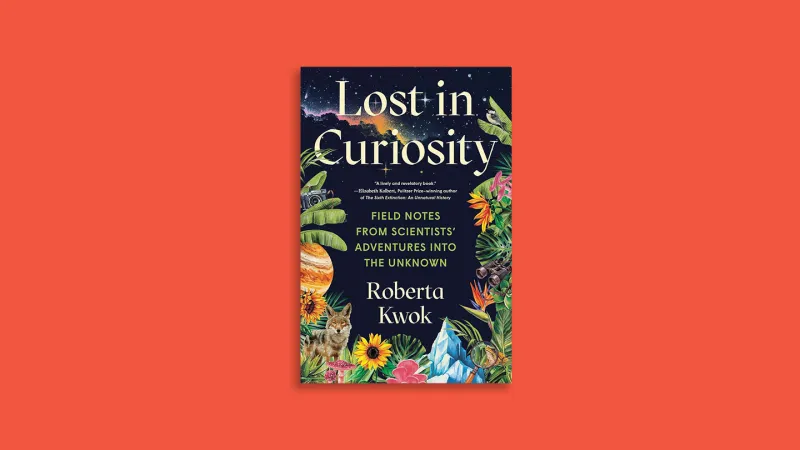
Roberta Kwok’s *Lost in Curiosity* arrives at a crucial moment, offering a timely and necessary demystification of the scientific process. Too often, the public perception of research is shaped by polished publications and triumphant breakthroughs, obscuring the iterative, often frustrating, and inherently messy reality behind discovery. Kwok’s work, as highlighted in her book, pulls back the curtain, revealing the persistent challenges of experimental design, data interpretation, and the inherent uncertainty that permeates even the most rigorously conducted studies. This is particularly relevant given recent discussions surrounding the politicization of science, as evidenced in [Here’s what happens when you put politicians in charge of science], which demonstrates the dangers of prioritizing political agendas over empirical evidence. Similarly, the meticulous work detailed in [Correction: From local discovery to global insights: deep-sea amphipod diversity in a high-seas marine protected area and its conservation implications] underscores the painstaking process of refining scientific understanding through careful observation and analysis, a process often far removed from the immediate gratification of a headline.
The book's value lies not in diminishing the achievements of scientists, but in fostering a more nuanced and realistic understanding of how knowledge is acquired. The inherent imperfections in the scientific method—the reliance on approximations, the potential for bias, and the constant need for validation—are not failures, but rather integral components of a system designed to self-correct and evolve. Kwok’s exploration of “negative results”—findings that contradict existing hypotheses—is particularly insightful. These results, often overlooked or even suppressed in the pursuit of publication, are vital for recalibrating scientific models and preventing the propagation of flawed assumptions. This resonates with the ongoing effort to ensure data integrity and rigorous methodology across disciplines, exemplified by the detailed genetic analyses presented in [Comparison of gene expression in the skin tissue of gray, humpback, and fin whales], which demand meticulous calibration and validation to ensure accuracy and reliability. The open acknowledgement of these challenges strengthens, rather than weakens, the credibility of scientific inquiry.
The broader significance of *Lost in Curiosity* extends beyond the scientific community. In an age of misinformation and increasing skepticism towards expertise, a deeper appreciation for the complexities of scientific reasoning is essential for informed decision-making. Understanding that scientific conclusions are often provisional, subject to revision based on new evidence, and rarely definitive, empowers individuals to critically evaluate information and engage in productive dialogue about complex societal challenges. The book implicitly advocates for a culture of intellectual humility, recognizing that even the most brilliant minds can be susceptible to errors and biases. This is particularly important as we navigate pressing global issues like climate change and biodiversity loss, where evidence-based policy decisions are paramount.
Ultimately, Kwok’s work serves as a valuable reminder that scientific progress is not a linear trajectory towards absolute truth, but a dynamic and iterative process of exploration, refinement, and adaptation. The ongoing quest to understand the ocean, in particular, requires a relentless commitment to rigorous data collection, integrated analysis, and collaborative problem-solving—the very principles that underpin the World Data Ocean’s mission. As we increasingly rely on ocean intelligence to inform conservation efforts and resource management, a clear-eyed understanding of the scientific process, warts and all, will be indispensable. What new methodologies and collaborative frameworks will emerge to further mitigate biases and accelerate the validation of ocean-related data in the coming decade?
Read on the original site
Open the publisher's page for the full experience