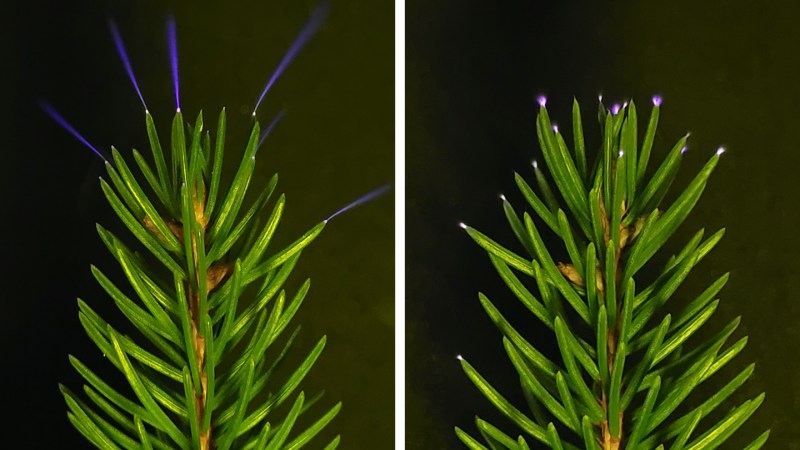
Our Take: Unveiling the Electrical Symphony of Forests
The recent detection of faint electrical flashes emanating from forest canopies, captured by sophisticated ultraviolet cameras, represents a significant advancement in our understanding of atmospheric-terrestrial interactions. This discovery, detailed in the summary and excerpt, underscores World Data Ocean’s core commitment to leveraging technological innovation for scientific breakthroughs. By observing these subtle electrical phenomena as storm charges accumulate, we gain a more nuanced perspective on the dynamic electrical environment of our planet’s ecosystems. This isn't about sensationalism; it's about the rigorous, empirical observation of natural processes, providing validated data that contributes to a more comprehensive ocean intelligence picture, even when the focus appears terrestrial.
This finding is particularly relevant to our mission because the health of terrestrial environments is intrinsically linked to the health of our oceans. Forest canopies, acting as vital interfaces between the atmosphere and the land, play a crucial role in regulating atmospheric conditions, influencing rainfall patterns, and ultimately impacting ocean currents and chemistry. The electrical activity observed suggests complex energy transfers occurring within these vital ecosystems, processes that have far-reaching implications for climate indicators and the overall balance of our planet. Understanding these subtle, yet fundamental, electrical exchanges allows us to build a more integrated data ecosystem, connecting seemingly disparate scientific observations into a cohesive understanding of global environmental dynamics.
At World Data Ocean, we believe that such discoveries are not isolated events but integral pieces of a larger puzzle. The ability to detect and analyze these faint electrical signals highlights the power of calibrated instruments and advanced analytical techniques to reveal hidden aspects of our natural world. This type of precise, measurable data is essential for informed decision-making regarding ocean stewardship and climate resilience. By fostering a collaborative approach to scientific inquiry, where diverse datasets and innovative detection methods converge, we can illuminate the complex interplay between all Earth systems, from the atmospheric charges above to the ocean depths below, and articulate the urgent need for continued vigilance and action.