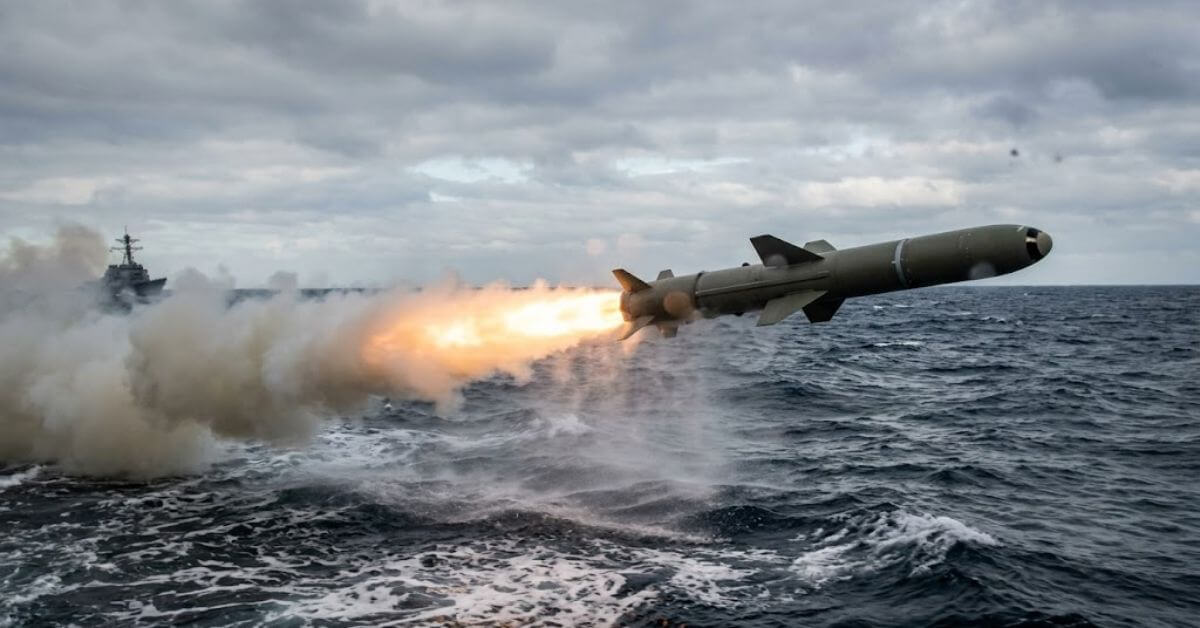
Japan's exploration of Indian military ranges for long-range missile testing is a practical signal that the Indo-Pacific security architecture is being hardened by logistics, not just declarations. This is not a hypothetical alignment; it is a bilateral decision to solve a specific, measurable problem: Japan's inability to safely train with its own developing weapons within its constrained territory. For readers tracking the intersection of defense technology and ocean strategy, the story matters because it reveals how coastal defence systems, and the data ecosystems that support them, are driving new patterns of international cooperation.
Japan's Type-25 anti-ship missile has a reported range of roughly 1,000 kilometers. Firing that weapon inside Japan's own borders is effectively impossible without risking civilian infrastructure or airspace. The same constraint applies to the small attack drones Japan is developing under its SHIELD coastal defence concept, where radio-frequency interference with civilian televisions and smartphones has already been flagged as a domestic obstacle. India's live-firing ranges, including the major facility at Chandipur, offer a solution. This is not an abstract diplomatic gesture; it is a direct answer to a technical bottleneck. The parallel with Australia is instructive, Japan test-fired an anti-ship missile there in 2023 and again during Talisman Sabre in 2025, and both defence ministers have since discussed a decade-long enhanced access arrangement. India now appears to be part of the same practical calculus.
This development connects directly to two other stories we have covered. The first is the growing competition in Undersea cable competition tests global data collaboration, where the race to control physical data infrastructure mirrors the race for access to physical training ranges. Both are about securing the hardware that enables modern military and economic operations. The second is the launch of North Korea's 5000-ton Choe Hyon signals new phase in naval force integration, a vessel designed for nuclear-armed operations that directly validates the threat calculus driving Japan's missile and drone expansion. Japan is not testing in India out of convenience; it is responding to a peer-level challenge that demands longer reach and more realistic rehearsal.
The concrete point to watch is the selection of specific Indian ranges. The reports do not name them, and that matters. Whether Japan gains access to coastal ranges on the Bay of Bengal or to inland facilities will shape the type of training possible, and the type of data collected. For an audience that values ocean intelligence and integrated data ecosystems, the question is not just where the missiles land, but what telemetry, environmental readings, and performance metrics are shared between the two countries afterward. That data, if made part of a peer-reviewed and calibrated framework, could become a measurable climate and security indicator in its own right.