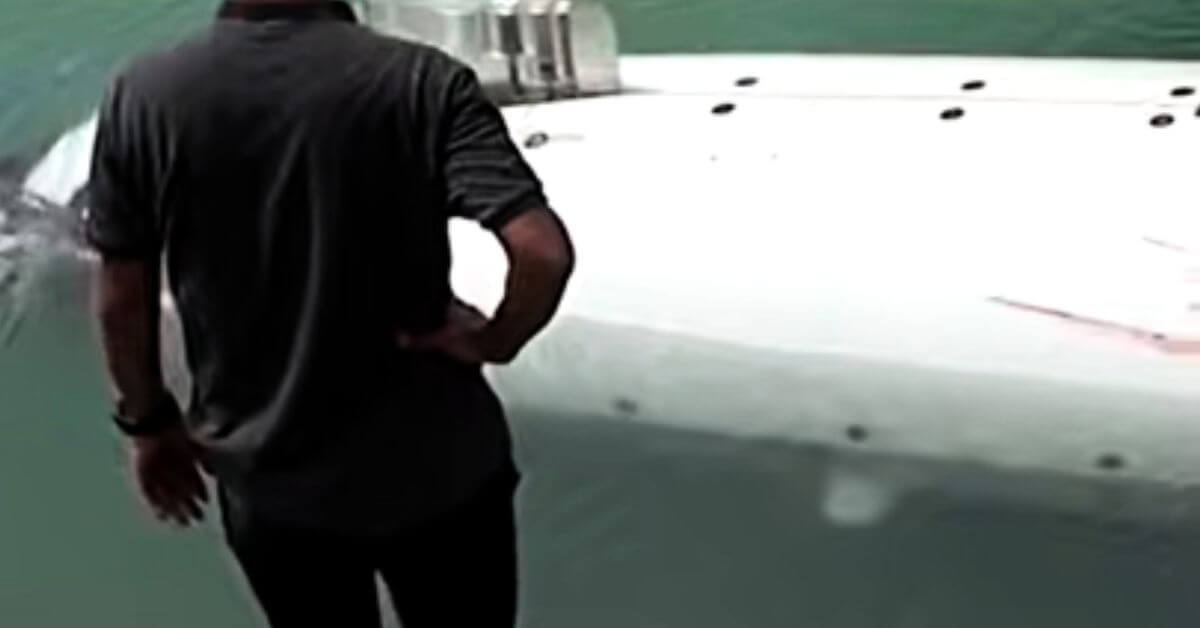
The recovery of an advanced U.S. unmanned submarine by Iranian forces in the Strait of Hormuz is not merely a headline about lost military hardware. It is a tangible signal that the physical security of ocean intelligence platforms is now a first-order variable in global maritime stability. The Islamic Revolutionary Guard Corps claims the drone was added to the U.S. fleet in 2025, and the accompanying video release represents a clear act of asymmetric information warfare. This incident unfolds against a backdrop of intense diplomatic and commercial pressure in the same waterway. As Eighty Nations Urge Reopening of Vital Strait of Hormuz Shipping Lane and Phased Negotiations Aim to Ease Restrictions on Strait of Hormuz continue, the capture of a state-of-the-art unmanned system introduces a new layer of friction into an already delicate equation.
For our readers, researchers, analysts, and maritime operators, this event forces a recalibration of assumptions. Unmanned underwater vehicles are not niche curiosities; they are the backbone of modern ocean intelligence, collecting empirical data on currents, temperature, salinity, and acoustic signatures. When a platform like this is physically recovered by a hostile state, the loss is not just the hardware itself. The more consequential loss is the integrity of the data stream. We must ask: was the data onboard encrypted and validated for tampering? Was the vessel's path logged and correlated with other assets in the integrated data ecosystem? The IRGC's video release suggests they are not just displaying a trophy, they are signaling that they have access to the system's physical and digital architecture. This is a measurable threat to operational security that extends far beyond the Strait.
The timing compounds the risk. The Gulf of Oman is already operating at capacity for ship-to-ship oil transfers, as Gulf of Oman STS Transfers Max Out Amid Rising Saudi Oil Exports documents. Every tanker movement in that corridor is a potential vector for economic disruption. An unmanned submarine capture does not stop oil flows, but it erodes the confidence in the surveillance systems that deconflict civilian and military traffic. If the data from that drone has been compromised, the ability to calibrate real-time traffic management and detect anomalies is degraded. For policymakers negotiating a phased reopening of the Strait, this is a concrete variable to watch: the technological trust between parties has taken a direct hit.
What we would tell a reader who asked about this is straightforward: do not treat this as an isolated incident. It is a stress test for the entire concept of shared ocean intelligence in contested waters. The specific takeaway to quote is this: *The recovery of a peer-reviewed military sensor platform by an adversarial state means the baseline assumption of data integrity in the region must now be treated as unvalidated.* Watch for whether the U.S. Navy issues a statement confirming or denying remote data wipe capabilities. That detail will tell us far more about the future of unmanned operations in the Hormuz than the video ever will.