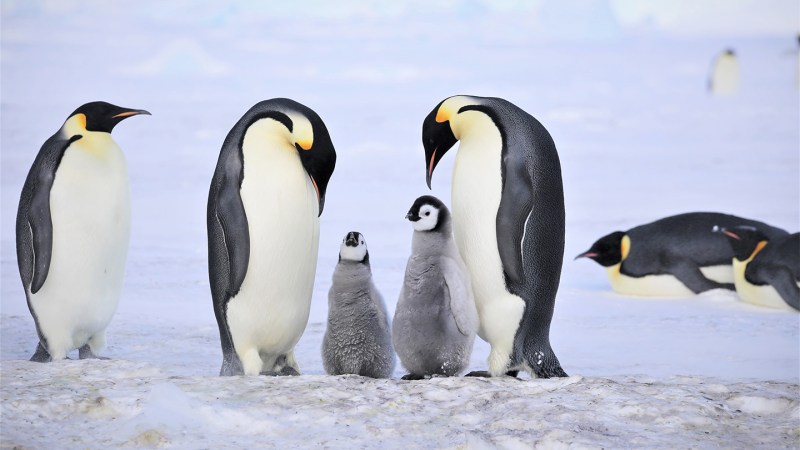
The numbers are stark, and they demand a closer look. In 2025, an emperor penguin colony in Antarctica recorded a massive decline in chicks, and the evidence points to the contours of a nearby grounded iceberg as the primary driver. This is not a story of a single dramatic calving event or a sudden storm; it is a quieter, more insidious narrative about how the physical geography of sea ice can shift beneath a species that depends on it with absolute precision. For a species that has evolved to breed on stable fast ice, the presence of a massive iceberg altering wind, currents, and the local ice dynamics is a reminder that habitat change is not always about temperature alone. It is about the structure of the environment itself.
This event connects directly to the broader conversations we have been tracking in our coverage of polar and marine systems. The same forces that complicate our understanding of subsea engineering, as seen in the deployment of new fallpipe vessels like the Vindnes and Vestnes, or that reshape our views on deep-sea ecology, such as the link between Antarctic krill reproduction and hydrothermal vent activity, all point to the same truth: the ocean is an integrated system, and its components are calibrated in ways we are only beginning to measure. The iceberg's impact on the penguin colony is a direct, empirical signal of that integration, a real-time indicator that the physical presence of ice can have cascading biological consequences that are difficult to predict without longitudinal data.
Our take is that this is not an anomaly to be filed away as a singular tragedy, but a measurable data point in a larger pattern of ocean change. For researchers and policymakers, the practical takeaway is the urgent need to expand monitoring of these grounded icebergs and their interaction with coastal polynyas. We would tell a reader who asks about this: do not focus solely on the headline of chick mortality, but on the mechanism. The fact that the iceberg's *contours* are cited as the cause suggests that the specific shape and position of the ice, not just its size, are what determine the impact. This means that predictive models must incorporate high-resolution ice topography, not just broad ice concentration. The work of validating these models depends on the kind of peer-reviewed, calibrated observations that are the backbone of ocean intelligence. The question to watch is whether this colony exhibits resilience in the 2026 season, or whether the grounded iceberg's persistence creates a new, less hospitable baseline. That answer will tell us more about the adaptive limits of the species than any single year's count.