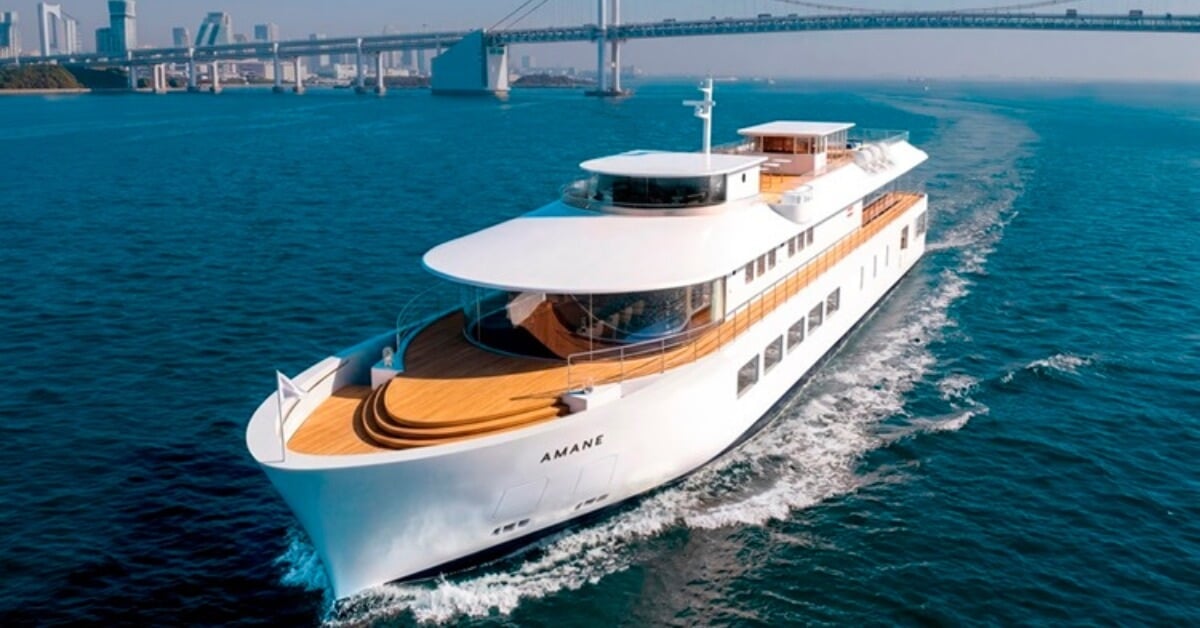
The naming of NYK's new cruise ship, *Amane*, at Maehata Shipbuilding in Sasebo is not a ceremonial footnote. It is a calibrated signal that hydrogen has moved from feasibility studies into the operational reality of ocean cruising. For an industry often criticized for its carbon intensity, this launch offers a measurable step toward decarbonization, not a promise of it. The vessel's arrival should be read alongside other recent maritime developments, such as Maritime Interdictions Yield 25,000 Pounds of Cocaine, Supporting Ocean Security and the Collaborative Shipbuilding Initiative Advances Ocean Data Capabilities in India, because together they illustrate a sector that is simultaneously tightening security, expanding data collection, and now rethinking its fuel chain. None of these efforts are isolated; they are integrated threads in the same fabric of ocean intelligence.
What stands out about *Amane* is not the novelty of a single ship, but the implication for fleet-level strategy. Hydrogen fuel cells produce power with water as the only emission, but the practical questions have always been about storage density, supply logistics, and port infrastructure. NYK's decision to move forward suggests those variables are being solved with an engineer's patience, not a marketer's hype. For our readers, the takeaway is direct: this is not a demonstration model. It is a commercial asset designed for a route that will test range, refueling intervals, and passenger expectations. The real story is whether the supporting hydrogen ecosystem in Japan can scale alongside the vessel. That is the metric to watch, because a single ship is a data point; a repeatable system is a transformation.
We would tell any operator or policymaker watching this launch to resist the urge to treat it as a standalone achievement. The same logic that drives this ship applies to the Alaska’s Base Kodiak to Gain Enhanced Arctic Capabilities with New Pier project, where infrastructure investment is being matched to mission requirements. In both cases, the vessel or facility is only as useful as the network that supports it. Hydrogen cruising will live or die on the availability of green hydrogen production capacity, bunkering protocols, and crew training. Those are unglamorous details, but they are the difference between a press release and a propulsion system that actually reduces emissions over a 20-year service life. The question is not whether *Amane* sails, but what happens when she needs to refuel in a port that has not yet built a single hydrogen tank.
Our honest take is that this launch earns cautious optimism, not applause. The industry has seen pilot projects before. What makes this different is the commercial posture: NYK is not asking for a waiver or a special exemption. They are signaling that hydrogen can carry passengers across the open ocean today. The open question is whether the fuel supply chain will catch up before the novelty wears off. We would tell a reader to track the vessel's first year of operations, specifically her bunkering schedule and any published energy consumption data. If those numbers are shared transparently, this becomes a benchmark. If they are not, treat the launch as a well-built prototype. The concrete point to watch is not the ceremony, but the first commercial voyage's refueling record. That will tell us if this is a new era, or just a very clean experiment.