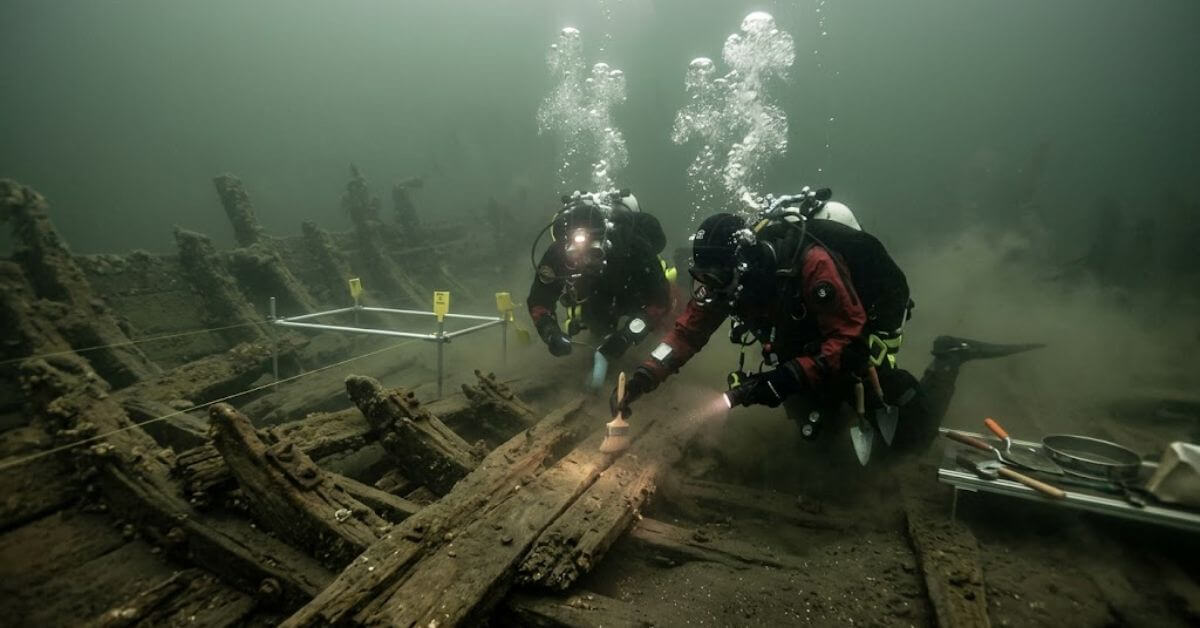
The recent discovery of a lost Danish warship, sunk centuries ago in Copenhagen Harbour, alongside the remains of a sailor, offers a poignant reminder of the ocean's enduring capacity to preserve history and connect us to our past. While the immediate news focuses on the archaeological significance and the potential identification of a lost crew member, this event underscores a broader truth: the ocean is a vast, dynamic archive, holding stories that continue to surface, revealing insights into human endeavors and the passage of time. Each submerged vessel, each seafloor artifact, is a data point, contributing to a richer, more granular understanding of maritime history, trade routes, and even the environmental conditions of bygone eras.
At World Data Ocean, we view such discoveries not merely as isolated historical curiosities, but as tangible manifestations of the deep, interconnected narrative the ocean holds. Our work in creating an integrated data ecosystem aims to unlock these layered stories, transforming raw oceanographic and environmental data into actionable ocean intelligence. By applying innovative technological solutions to gather and analyze information, we strive to illuminate the present and inform the future, much like this shipwreck illuminates the past. The meticulous process of archaeological excavation and analysis, though different in methodology, shares a fundamental principle with our own: the pursuit of validated, measurable insights derived from careful observation and scientific rigor. The potential identification of the sailor’s remains, for instance, relies on empirical evidence and careful comparison, mirroring our commitment to peer-reviewed findings.
This discovery serves as a powerful, albeit indirect, illustration of the importance of comprehensive ocean stewardship. The preservation of this warship, even through accidental submersion, highlights the ocean’s role as a conservator. However, it also implicitly points to the vulnerabilities that modern ocean environments face. Understanding the past, through discoveries like this, can inform our present actions. The more we can collect, calibrate, and integrate data across the global ocean – from the surface to the deepest trenches, and from remote sensing to in-situ measurements – the better equipped we will be to protect its invaluable resources and fragile ecosystems for future generations. This lost warship, a relic of human history, ultimately reinforces the critical need for us to safeguard the ocean’s ongoing story.