Our Take
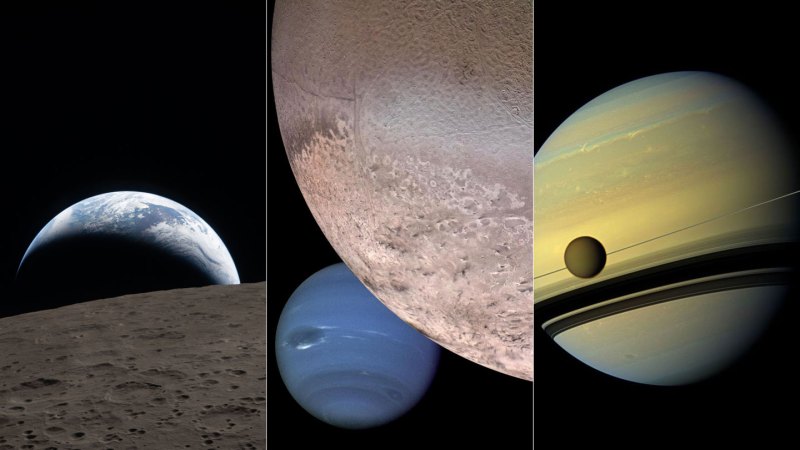
Therecent reflection on why every space mission insists on carrying a camera resonates far beyond nostalgia; it speaks to a validated practice of turning visual records into measurable scientific assets. Candice Hansen‑Koharcheck’s advocacy for space imagery continues to shape how we interpret data that travels from orbit to ocean floor, and the principle extends to terrestrial ecosystems as well. This perspective resonates with findings from Can we have our cake and eat it too? A collaborative pathway for ecological conservation and high-quality development in the river-sea convergence zone of the Yellow River Basin, which underscores the value of integrated visual records across ecosystems. Similarly, the recent Bigfin Squid encounter illustrates how a single calibrated frame can reveal behavioral nuances that raw telemetry alone might miss, reinforcing the idea that a camera is not a luxury but a calibrated instrument in an integrated data ecosystem.
Why does this matter now? The answer lies in the empirical chain that links a captured pixel to a climate indicator, to a policy decision, to a public call for stewardship. When a spacecraft returns an image, that image is first validated through peer‑reviewed processing pipelines, then calibrated against known reference standards, and finally made measurable for longitudinal analysis. The same rigor applies to deep‑sea footage, where a calibrated frame can become a benchmark for species behavior, habitat health, and even the calibration of ocean‑intelligence models. By embedding these visual outputs within a real‑time, peer‑reviewed workflow, researchers generate an evidence base that is both credible and actionable, allowing policymakers to move beyond anecdote toward measurable outcomes. The discipline required to preserve, tag, and archive each image mirrors the discipline needed to manage oceanic data streams, ensuring that every dataset contributes to a coherent, integrated narrative rather than a fragmented collection of anecdotes.
The broader implication is that visual documentation serves as a bridge between scientific authority and public engagement. A well‑crafted image can convey complex atmospheric feedback loops or oceanic circulation changes in a way that language alone cannot, thereby fostering a shared sense of responsibility. This bridge is most effective when the underlying processes are transparent, when the provenance of each frame is traceable, and when the imagery is treated as part of a larger, calibrated dataset rather than an isolated curiosity. In this light, the simple act of packing a camera becomes an act of purpose‑driven data stewardship, aligning with the brand’s commitment to credible, approachable communication that empowers diverse audiences to participate in ocean intelligence.
Looking ahead, the question worth watching is how future missions will integrate real‑time imaging with emerging ocean‑intelligence platforms to produce continuously updated climate indicators. Will the next generation of probes automatically tag and upload frames to an integrated data ecosystem, enabling on‑the‑fly analysis that informs both scientific models and public discourse? The answer will depend on maintaining the same disciplined, validated approach that Hansen‑Koharcheck championed, ensuring that every pixel returned to Earth contributes to a measurable, longitudinal record of our planet’s health.