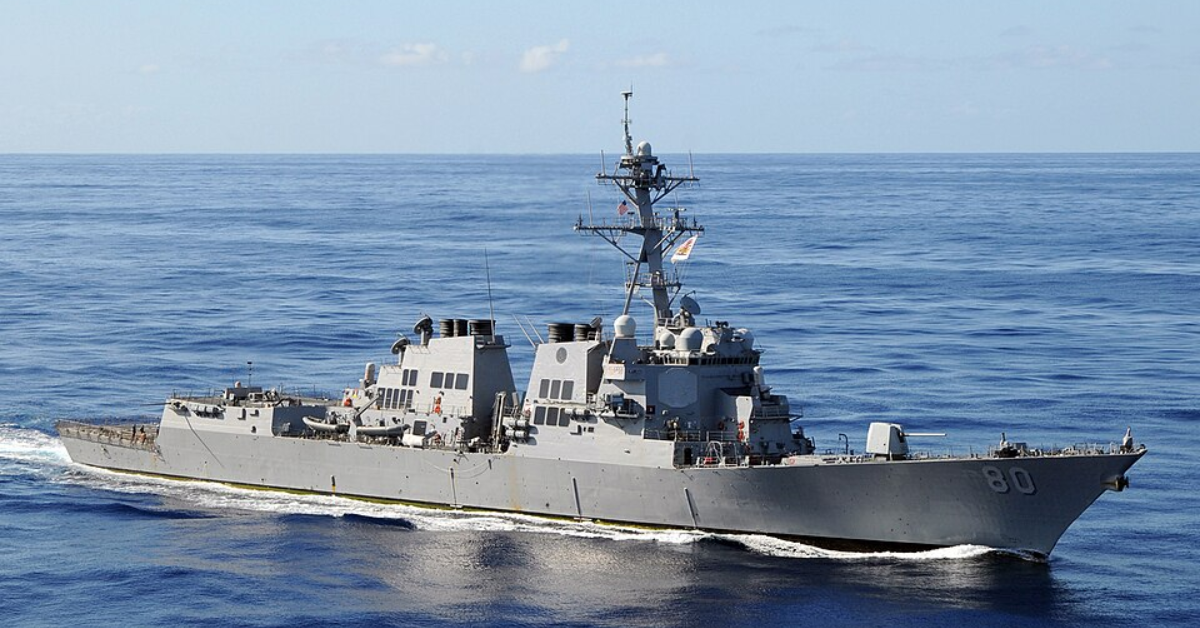
The U.S. Navy's decision to equip two new Arleigh Burke destroyers with GE Aerospace LM2500 gas turbines confirms something we have long observed: proven, iterative engineering often outpaces flashier competitors in mission-critical domains. This is not a story about a breakthrough; it is a story about sustained excellence. The future USS Ray Mabus and USS Robert R. Ingram will each rely on four LM2500 engines, extending a partnership that has already powered 75 active destroyers of the same class. For researchers and policymakers tracking naval readiness, the practical implication is clear: the backbone of the surface fleet will remain unchanged for at least another three decades, with demand projected through 2056.
This continuity matters because it creates a stable platform for integrating other advanced systems. Consider the recent SPY-6 Radar Upgrade Makes USS Pinckney a Calibrated Asset for Maritime Intelligence, which turned a single Arleigh Burke-class hull into a calibrated intelligence asset. That radar upgrade would be far less effective aboard an unproven power plant. The LM2500's 99 percent reliability rate, drawn from over 55 years of operational data and continuous hardware improvements, provides the electrical and mechanical foundation necessary for sensor fusion, data processing, and real-time decision-making at sea. When we say "from orbit to ocean floor," we mean that validated, integrated systems like this engine allow navies to focus on mission execution rather than mechanical troubleshooting.
The global context further reinforces why this order deserves attention. While the U.S. Navy standardizes around a trusted propulsion system, other actors are pursuing different strategies. The 5000-ton Choe Hyon signals new phase in naval force integration, representing North Korea's entry into larger surface combatants, a vessel whose operational reliability remains entirely unmeasured. Meanwhile, the Autonomous submersible extends naval reach 6,500 nautical miles across the Pacific demonstrates that unmanned systems are stretching logistical and power requirements in new directions. In this evolving environment, the LM2500's track record is not just a comfort; it is a strategic asset. The Navy does not need to validate a new propulsion system while simultaneously integrating new radar, weapons, and autonomous coordination tools. It can focus on the harder problems.
One specific takeaway stands out: the LM2500's reliability is not accidental. GE Aerospace's practice of carrying hardware design improvements from industrial applications into naval variants, combined with fielded experience across thousands of engines, creates an empirical feedback loop that few competitors can replicate. For the ocean intelligence community, this is a reminder that the most effective systems are often those we understand best. The destroyers ordered today will patrol waters where climate indicators are shifting and maritime boundaries are contested. Their ability to remain on station, collect calibrated data, and respond to threats depends on propulsion that is measured, validated, and proven. The question worth watching is whether this same iterative approach will be applied to the next generation of naval power systems, or whether the fleet will eventually need to trade reliability for range.