•1 min read•from @worlddataocean
Ever wonder what’s actually swimming in those deep blue waters without having to catch a single fish? Welcome to the era...
Our take
Ever wonder what lies beneath the ocean's surface without needing to catch a single fish? Welcome to the era of 'Ocean CSI.' At World Data Ocean, we are harnessing the power of environmental DNA (eDNA) to transform our understanding of marine ecosystems. By deploying autonomous underwater vehicles (AUVs) to collect water samples, we can detect DNA traces from marine life, enabling us to identify rare species and monitor biodiversity trends in real-time.
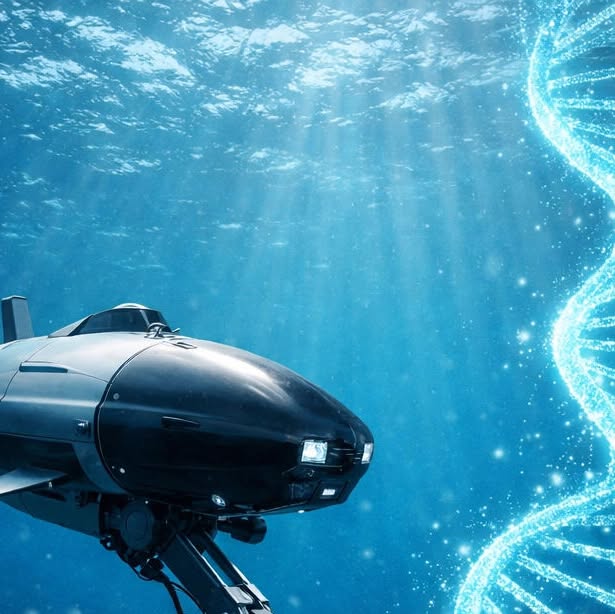
Ever wonder what’s actually swimming in those deep blue waters without having to catch a single fish? Welcome to the era of 'Ocean CSI.'
At World Data Ocean, we’re geeking out over how environmental DNA (eDNA) is changing the game. By using autonomous underwater vehicles (AUVs) to scoop up water samples, we can detect traces of DNA left behind by marine life. It’s like forensic science for the sea: allowing us to identify rare species and track biodiversity trends in real-time.
Our data portals and SDKs are built to handle this kind of complex, high-tech info, making it easier for researchers and teams to turn a jar of seawater into a clear picture of ocean health.
Want to see how we’re turning water samples into validated scientific insights? Head over to our site to explore our latest data portals.
#OceanCSI #MarineTech #eDNA #WorldDataOcean
Read on the original site
Open the publisher's page for the full experience
Related Articles
- Did you know a single 1.5-liter water sample can reveal more about ocean biodiversity than a traditional net survey? 🌊�...Did you know a single 1.5-liter water sample can reveal more about ocean biodiversity than a traditional net survey? 🌊🧬 Welcome to the era of eDNA. At World Data Ocean, we’re integrating these pioneering datasets into our portals, helping researchers and policy-makers map thousands of species with unprecedented precision. Whether it’s identifying elusive deep-sea life or monitoring ecosystem health in real-time, high-tech tools are making marine science more efficient and accessible than ever before. Ready to dive into the data? Link in bio to explore our latest biodiversity resources. 🔗 #OceanData #MarineConservation #eDNA #OceanIntelligence
- Turning Passion into Professional-Grade Science 🌊📈 High-quality ocean data isn't just for the ivory tower anymore. The...Turning Passion into Professional-Grade Science 🌊📈 High-quality ocean data isn't just for the ivory tower anymore. The UN Ocean Decade recently released new guidelines for citizen science data sharing, and we’re here for it! At World Data Ocean, we’re bridging the gap between community passion and rigorous scientific standards. Our tools are designed to help you contribute data that researchers and policymakers can actually use for real-time decision-making. Whether you're tracking marine debris or monitoring local sea temperatures, let’s turn your observations into global impact. 🌍✨ Explore our data portals and see how you can contribute to a healthier ocean. [Link in Bio] #OceanDecade #CitizenScience #MarineData #TechForGood
- Ever feel like you’re drowning in raw data before you even get to the real research? 🌊 We know the struggle. That’s why...Ever feel like you’re drowning in raw data before you even get to the real research? 🌊 We know the struggle. That’s why we built the Ocean Data Platform SDK. It’s all about helping you cut through the noise with efficient filtering and querying, so you can focus on what actually matters: the insights. Pair that with our Python-based oceanography training, and you’re not just looking at numbers anymore: you’re visualizing the pulse of the ocean. Whether it’s tracking currents or analyzing temperature shifts, we’re here to help you turn raw datasets into actionable intelligence. Science is collaborative, and we want to make sure you have the best tools in your kit. Let’s dive deeper into the data together. 💻🐋 #OceanData #PythonProgramming #MarineResearch #DataScience
- Ever wondered how long it takes to map a mountain range under the sea? Traditionally, it takes months of painstaking man...Ever wondered how long it takes to map a mountain range under the sea? Traditionally, it takes months of painstaking manual data processing. But at World Data Ocean, we're seeing a shift from months to mere days. For our 'Weekly Ocean Data & Innovation Highlights,' we're diving into the AI vs. Human speed gap. While a team of experts can spend weeks cleaning acoustic data, modern AI neural networks can process that same information up to 25x faster. This isn’t just about being quick: it’s about ocean intelligence in real-time. For our partners in conservation and the maritime industry, this speed is a game-changer. Faster mapping means faster protection for vulnerable ecosystems and smarter decisions for offshore operations. We're turning validated scientific data into immediate action. Science is moving fast, and we’re here to make sure you’re at the forefront of it. #OceanData #AIInnovation #MarineScience #DeepSeaMapping