Europe’s Largest Industrial Carbon Capture Facility Begins Operations At Yara Plant
Our take
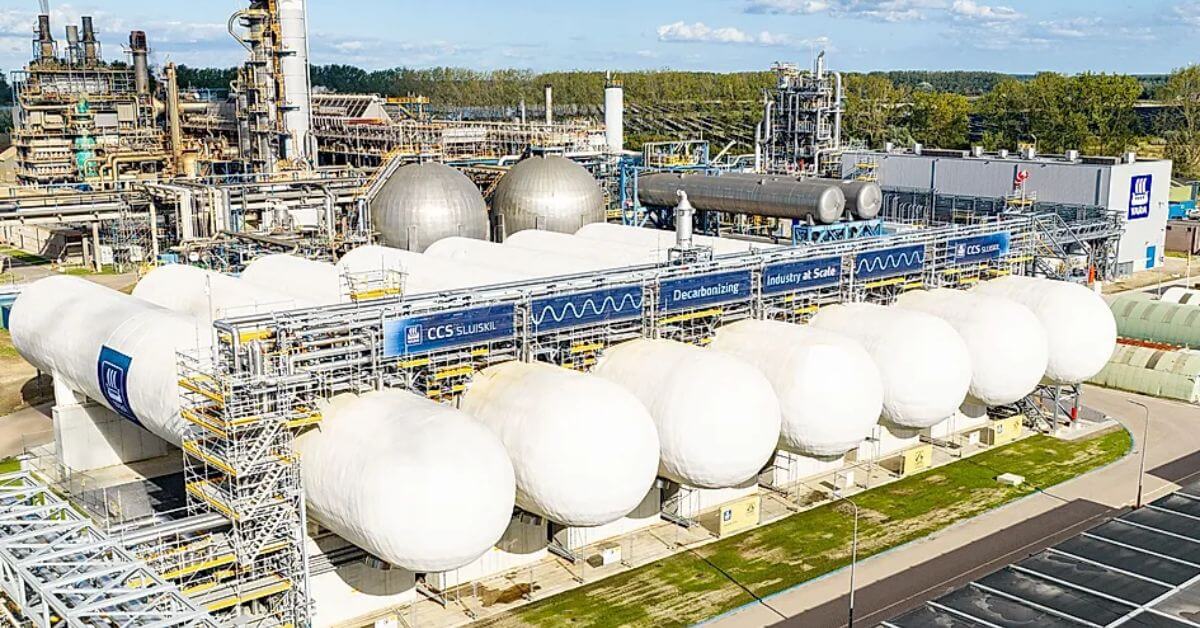
The commencement of operations at Yara Sluiskil, Europe’s largest industrial carbon capture facility, represents a significant, albeit incremental, step towards mitigating the impacts of industrial emissions on ocean health. The capacity to capture and liquefy up to 800,000 tons of CO₂ annually is a noteworthy achievement, particularly given the scale of ammonia and fertilizer production occurring at the Yara plant. This development arrives amidst a complex geopolitical landscape, as evidenced by recent events like [Russia Demands ‘Immediate Release’ Of Vessel Seized By Norway Over Naftogaz’s $4.2 Billion Claim], highlighting the interconnectedness of global energy markets and the ongoing legal and economic challenges arising from international disputes. Furthermore, Norway's continued commitment to sustainable maritime practices, demonstrated by initiatives like [Norway Launches NOK 68 Million Project to Accelerate Wind-Powered Shipping], underscores a broader regional focus on decarbonization, creating a supportive environment for technological advancements like carbon capture. The Yara facility’s operation, alongside these broader trends, speaks to a growing recognition that innovative solutions are essential for addressing climate change's multifaceted impacts.
The inherent value of this carbon capture facility lies not simply in its capacity, but in the validation it provides for a technology increasingly viewed as crucial for achieving net-zero targets. While direct emissions reductions remain the priority, the reality is that certain industrial processes, like ammonia production, are inherently carbon-intensive. Carbon capture and storage (CCS) offers a pathway to significantly reduce the carbon footprint of these vital industries. The process of capturing CO₂ from industrial sources and permanently storing it underground or utilizing it in other processes—such as synthetic fuel production—represents a calibrated approach to addressing emissions. The Yara facility’s integration of carbon capture into an existing industrial process is particularly important, demonstrating the potential for retrofitting existing infrastructure rather than solely relying on new, greenfield projects. This model offers a more economically viable and potentially scalable route toward widespread adoption, and reinforces the need for longitudinal data collection to assess long-term efficacy and environmental impacts.
However, it's critical to maintain a measured perspective. 800,000 tons of CO₂ captured annually, while substantial, represents a small fraction of Europe’s total industrial emissions. The success of this initiative hinges on its replicability and scalability. Challenges remain in terms of energy consumption associated with the capture process itself – ensuring that the carbon capture process doesn't simply shift emissions elsewhere – and the availability of secure and permanent storage solutions. The recent seizure of a Russian vessel, [Norway Seizes Russian Vessel At Ukrainian Firm’s Request To Enforce $4.22 Billion Arbitral Award], also serves as a reminder of the potential geopolitical complexities surrounding carbon storage and the importance of establishing robust international agreements and regulatory frameworks. A truly integrated data ecosystem, incorporating real-time monitoring of capture efficiency, storage integrity, and overall environmental impact, is essential for ensuring the long-term viability and responsible deployment of CCS technologies.
Looking ahead, the performance and operational data from the Yara facility will be invaluable for refining carbon capture technologies and demonstrating their feasibility on a broader scale. The focus must now shift towards driving down the costs associated with capture and storage while rigorously assessing the lifecycle environmental impacts. Ultimately, the success of CCS will depend not only on technological innovation but also on supportive policy frameworks, robust regulatory oversight, and a commitment to transparency and accountability. A crucial question to watch is whether this facility’s success will spur similar investments in other carbon-intensive industries, and whether the lessons learned can be effectively translated into a global, peer-reviewed best practice for industrial decarbonization.
The inauguration was marked by the presence of Norwegian Prime Minister Jonas Gahr Støre, Dutch Prime Minister Rob Jetten, European Commissioner for Climate, Net Zero and Clean Growth Wopke Hoekstra, and President and CEO of Yara International, Svein Tore Holsether.
“This is an important day for Yara and for European industry. The carbon capture facility in Sluiskil proves that large-scale industrial decarbonization is possible today. As global competition intensifies, Europe must find ways to cut emissions while keeping industry, jobs and critical value chains in Europe. That is exactly what this project is about,” says Svein Tore Holsether, President and CEO of Yara International.
Yara Sluiskil, Europe’s largest ammonia and fertilizer plant can capture and liquefy up to 800,000 tons of CO₂ annually from ammonia production thereby avoiding carbon taxation on these volumes. The CO₂ will be transported by ship to Norway, where it will be permanently stored beneath the seabed by Northern Lights.
With the right framework conditions in place, the project is expected to capture and store around 12 million tons of CO₂ over the next 15 years, making a significant contribution to European climate goals and industrial transformation.
A strategic investment in Europe’s industrial future
CCS is a critical part of the climate solution for energy-intensive industries, but also an important enabler of Europe’s industrial competitiveness. The technology makes it possible to reduce emissions from energy intensive industries like fertilizers, ammonia, cement and waste management while maintaining production, jobs and value creation in Europe.
“Europe needs practical climate solutions that deliver real emissions reductions while strengthening industrial competitiveness. The carbon capture and storage project at Sluiskil shows what is possible when innovation and cross-border cooperation come together. This is exactly the kind of project Europe needs to combine climate ambition with a strong and resilient industrial base,” says Wopke Hoekstra, European Commissioner for Climate, Net Zero and Clean Growth.
The project demonstrates how cooperation across value chains and national borders can unlock substantial emissions reductions in European industry. It also shows how shared infrastructure can help accelerate industrial decarbonization by enabling companies across Europe to access permanent CO₂ storage solutions.
“This is a milestone we have been looking forward to. We are proud to start operations together with Yara and to see the agreement signed in 2023 become reality. Together, we are demonstrating that capture and cross-border CO₂ transport and storage is a viable solution for European industry. This is an important step in the development of Europe’s carbon management market and shows what is possible when industry and governments work together to build the infrastructure needed for Europe’s transition,” says Tim Heijn, Managing Director of Northern Lights.
Key facts about Yara and Northern Lights’ CCS project
- Yara Sluiskil will capture up to 800,000 tons of CO₂ annually from ammonia production
- The CO₂ will be liquefied and temporarily stored at Yara Sluiskil
- Northern Lights vessels will transport the CO₂ to Øygarden, Norway
- The CO₂ will be permanently stored 2,600 meters below the seabed by Northern Lights
- The project is expected to capture and store approximately 12 million tons of CO₂ over 15 years
Driving low-carbon products and value chains
CCS enables Yara to further reduce the carbon footprint of its production and support low-carbon value chains across agriculture, industry, energy and shipping, including:
- Low-carbon fertilizers to support more sustainable food production
- Low-carbon ammonia for industrial applications and clean energy solution
- Low-carbon fuels for the maritime sector
Press Release
Read on the original site
Open the publisher's page for the full experience