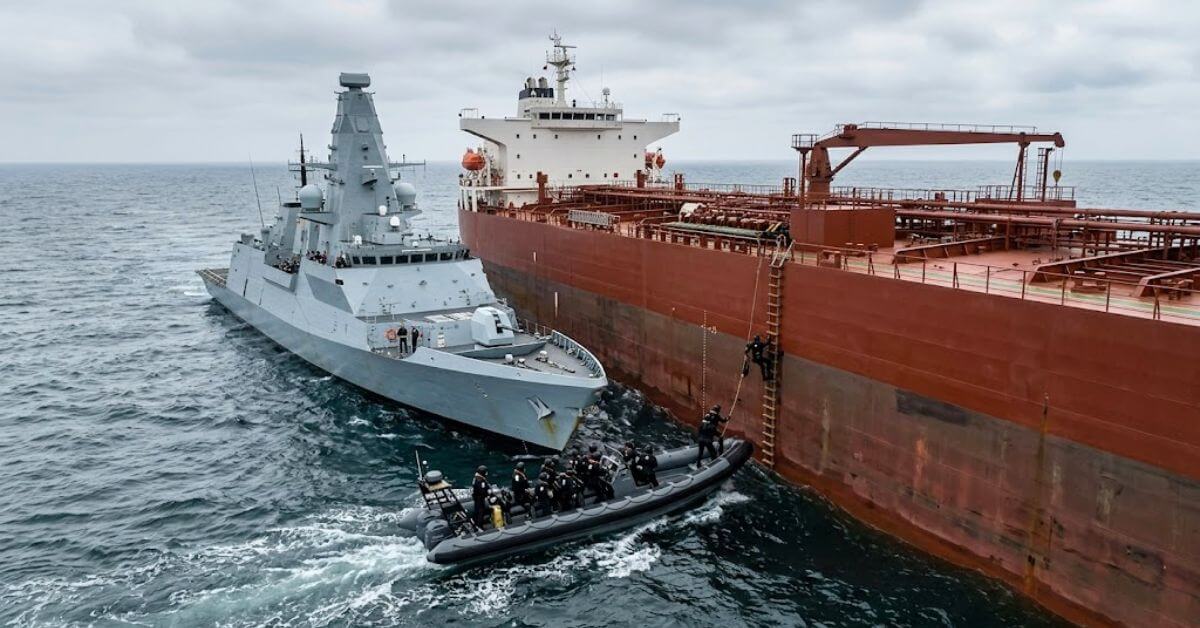
The recent authorization for armed forces to board and detain Russian tankers found in UK waters highlights a critical intersection of maritime security, international law, and the complex geopolitical landscape surrounding sanctions enforcement. While the immediate focus is on the violation of maritime sanctions, this development underscores a broader challenge: ensuring compliance with international regulations in the global maritime domain. The potential for legal action against owners, operators, and crew members involved in sanctions violations serves as a stark reminder of the responsibilities inherent in operating vessels across international waters. Such measures, while necessary for upholding sanctions regimes, also necessitate a clear understanding of the legal frameworks and operational protocols that govern them.
From World Data Ocean's perspective, this event prompts reflection on the broader implications for maritime data and intelligence. The ability to track, monitor, and verify the compliance of vessels is paramount for effective enforcement. This requires robust, integrated data ecosystems that can provide real-time insights into vessel movements, ownership, and operational history. The development of sophisticated ocean intelligence capabilities, drawing on validated data sources and advanced analytics, is crucial for identifying potential violations and supporting enforcement actions. The challenge lies not only in collecting this data but also in ensuring its accuracy, reliability, and accessibility to relevant authorities.
Ultimately, the enforcement of maritime sanctions, while a matter of international policy, relies on a foundation of empirical data and clear operational procedures. The complexities of global shipping, coupled with evolving geopolitical pressures, demand innovative approaches to monitoring and compliance. World Data Ocean is committed to contributing to a more transparent and accountable maritime environment through the development of advanced data solutions. Our focus remains on providing the validated, measurable, and integrated data necessary for informed decision-making, fostering a sense of shared responsibility for the integrity of our oceans and the global systems that govern them. Understanding drives protection, and in this context, comprehensive ocean intelligence is a vital tool for ensuring compliance and promoting a stable, rules-based international maritime order.