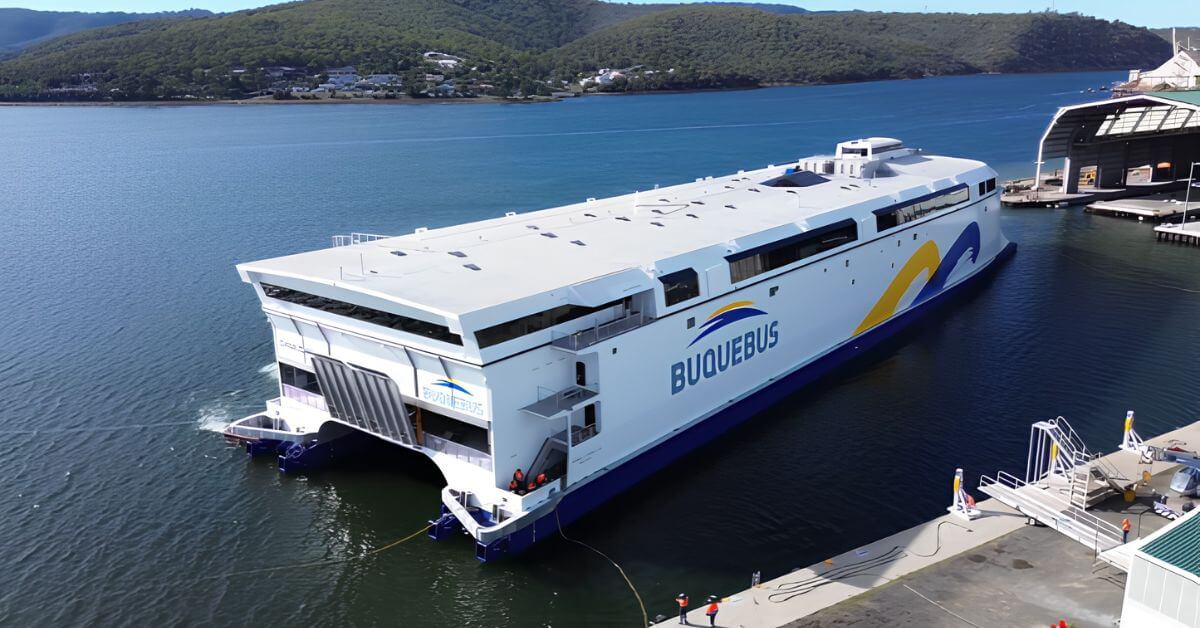
The departure of Hull 096 from Tasmania marks a concrete step in a longer arc of maritime decarbonization, one that deserves more than a headline glance. The vessel's journey aboard the MV Black Marlin to Uruguay for commissioning is not merely a logistical milestone; it is a calibrated test of how far battery-electric propulsion has come in a sector often defined by its caution. While the industry watches, we should note that this is the kind of measured progress that builds confidence, not the kind of hype that collapses under scrutiny.
We often report on the ocean's fragility, from invasive species disrupting local ecosystems to the sobering toll of passenger ferry disasters in Indonesia, as seen in our coverage of the Tracking an Invasive Species: Sea Star Collection in Port Phillip Bay and the ongoing Search Continues as Death Toll Climbs Following KM Virgo Transport 8 Sinking. Those stories remind us that the marine environment is unforgiving and that operational safety and ecological balance are non-negotiable. The electric ferry's commissioning journey, by contrast, offers a forward-looking counterpoint: a deliberate investment in reducing emissions without sacrificing performance. It is not a cure-all, but it is a signal that the sector can innovate while maintaining the rigor required for open-water operations.
Our take is straightforward: this is a moment to watch, not because a single vessel will change the industry overnight, but because it forces a practical question for operators and policymakers alike. If this commissioning succeeds, what does it mean for retrofitting existing fleets or planning new builds on tighter emissions budgets? The answer is not abstract. For a reader tracking these developments, the relevant metric is not the ship's size or the fanfare of its launch, but the data gathered during its sea trials and the reliability it demonstrates in real-world conditions. We would tell that reader to focus on the validation process ahead, not the spectacle of the journey.
The open question is whether this vessel will set a benchmark for operational endurance that others can cite with confidence, or whether it will reveal limitations that slow adoption. Either outcome is useful, as long as the findings are shared transparently. The specific detail to watch is how the commissioning data is integrated into future design standards, particularly for routes that demand extended range. That is the concrete consequence we are tracking, and it will shape whether this journey is remembered as a turning point or a footnote.