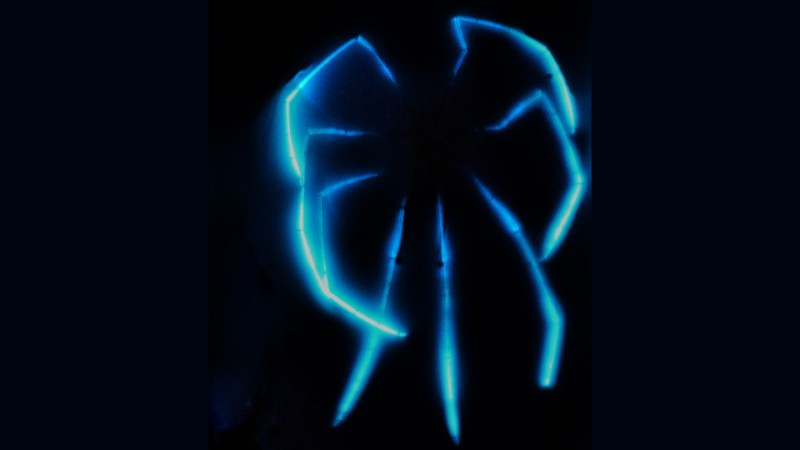
The recent discovery of bioluminescent deep-sea spiders in a trench near Australia is a reminder that the ocean's depths still hold phenomena that bridge modern science and historical record. An expedition returned with specimens whose glow may correspond to 19th century documents, suggesting that what we now validate with calibrated instruments was once observed and chronicled by mariners. This is not merely a curiosity; it is a thread connecting empirical ocean intelligence to the lived experience of those who sailed before us. For our readers, whether researchers, policymakers, or ocean enthusiasts, this finding underscores a practical truth: historical accounts can serve as legitimate data points when integrated with modern, peer-reviewed methods.
This story resonates with other recent coverage in our publication. Consider the prolonged grounding of a bulk carrier near Gladstone, Australia, which highlighted the logistical and environmental stakes of human activity in marine environments. Bulk Carrier Freed After Prolonged Grounding Near Gladstone, Australia is a case study in how our interactions with the ocean are often reactive and costly. Meanwhile, the question of whether fish experience cold or simply temperature change, explored in Do Fish Experience Cold, or Simply Temperature Change?, reminds us that our understanding of marine life is still being refined at a fundamental physiological level. The sea spiders sit at the intersection of these stories: they are a biological mystery, a potential key to historical navigation records, and a symbol of how much we still do not know about the ecosystems we rely on.
Our take is direct: this discovery is a call for integrated data ecosystems that include historical observations alongside real-time measurements. Too often, scientific authority is framed as purely contemporary, yet the glow of these spiders may have been recorded in logbooks and journals that predate our satellites and submersibles. For a reader asking what this means in practical terms, we would say: look for opportunities to digitize and cross-reference historical marine records with current longitudinal datasets. This is not about nostalgia; it is about leveraging every available source of ocean intelligence to improve climate indicators and conservation strategies. The sea spiders are a specific, measurable example of how past and present can converge.
The concrete point to watch is whether this bioluminescence is a consistent environmental marker. If the glow correlates with specific trench conditions, temperature, pressure, or chemical composition, it could become a tool for monitoring deep-sea health. The expedition's work is a step toward validating that hypothesis. We will follow whether future expeditions can replicate these observations and tie them to climate indicators. That is the kind of measurable, empirical question that moves ocean stewardship from anecdote to action.