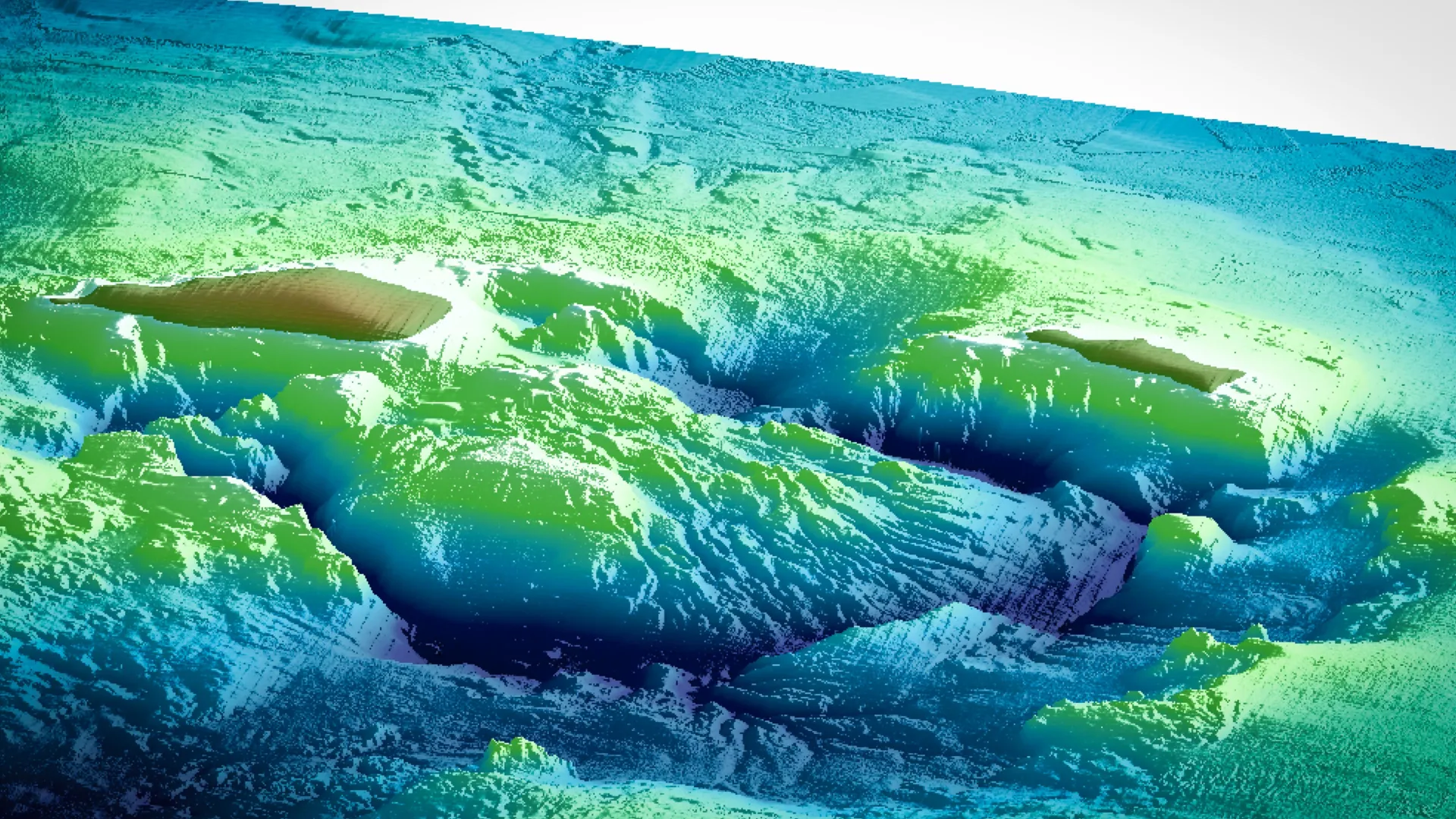
Seven thousand three hundred years is a long time for a volcano to hold a grudge, but the Kikai caldera off the coast of Japan is doing exactly that. New underwater seismic surveys have confirmed that a massive magma reservoir beneath the caldera is actively refilling, a discovery that rewrites our understanding of how supervolcanoes regenerate after a cataclysmic eruption. This is not a distant geological curiosity; it is a real-time data point that should sharpen the focus of every researcher and policymaker tracking Earth's most powerful natural systems.
The practical implication is straightforward: the clock on supervolcano recovery is far shorter than previously modeled. For comparison, consider the USS Robert Smalls, which recently returned to San Diego after seven months gathering Pacific ocean intelligence. That vessel's mission was to collect empirical, measurable data on ocean conditions. The Kikai survey is doing the same thing for the seafloor, only on a timescale that spans millennia. The integrated data ecosystem these seismic surveys produce allows us to track magma accumulation with a precision that was impossible a generation ago. If Kikai's reservoir is rebuilding this quickly, then Yellowstone and Toba, two names that carry their own geological weight, may be cycling through their own replenishment phases faster than current models account for. That is not alarmism; it is a calibrated, peer-reviewed observation that demands a recalibration of risk assessment.
This story also reinforces a broader truth about ocean intelligence: the most consequential data often comes from the places we cannot see. The Kikai magma reservoir sits beneath 600 meters of water, invisible to satellites and inaccessible to direct sampling. Only a longitudinal, methodical survey program could have revealed it. That same principle applies to the rising population of sea lions observed off La Jolla Cove, a surface-level indicator of ecosystem change that, like the magma chamber, tells a story about what is happening below the surface. Both observations are validated by sustained monitoring, not by a single dramatic snapshot. The difference is that a sea lion population shift can be managed with local policy adjustments. A refilling supervolcano reservoir requires a global collaborative framework for monitoring and communication.
What we do not yet know is whether the Kikai magma is accumulating at a steady rate or accelerating. The seismic data shows a large store of molten rock, but it cannot yet tell us the recharge velocity. That is the specific open question to watch. If follow-up surveys reveal that the refill rate has increased in recent decades, it would suggest that external factors, perhaps crustal stress changes or deep mantle dynamics, are influencing the timeline. Until then, the takeaway is concrete: the Earth's most powerful volcanic systems are not dormant in any permanent sense. They are actively, measurably rebuilding, and the ocean floor is the only place where we can watch them do it.