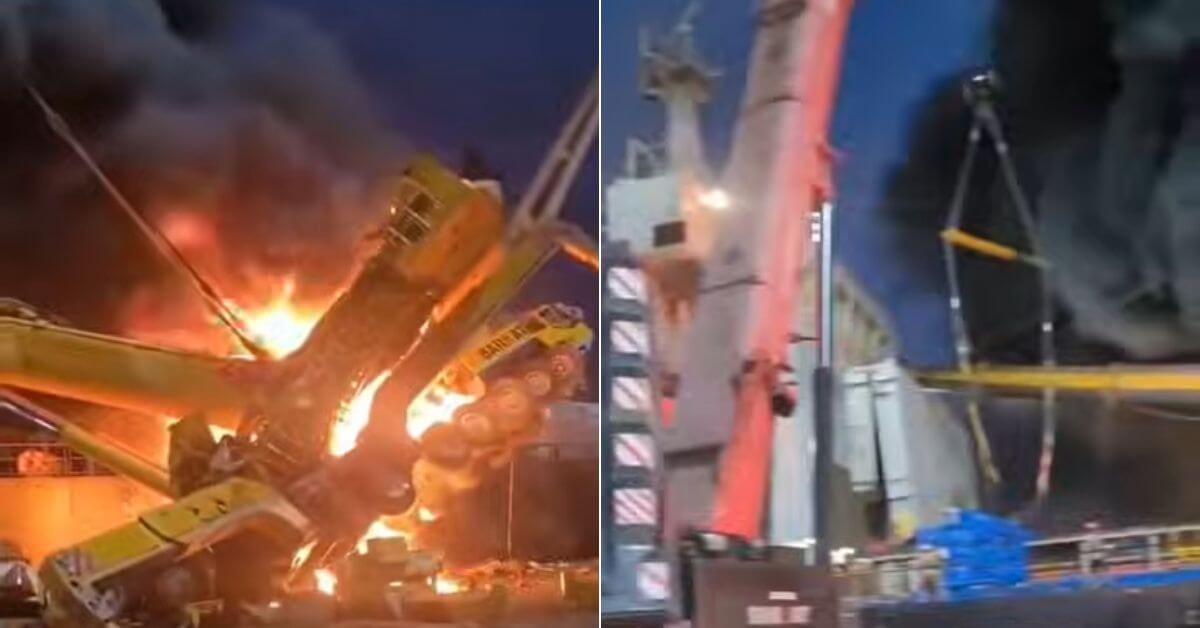
A fire aboard a crane during cargo unloading at Mumbai Port, which injured two crew members aboard the Barbados-flagged vessel Vienna, is a sharp reminder that the maritime industry's operational risks do not pause for technological advancement or global trade demands. The incident, which occurred around 7:30 p.m. while the ship was discharging cargo, underscores a persistent truth: the interface between human error, mechanical failure, and environmental pressure remains the most volatile point in the supply chain. This is not an isolated anomaly. In recent weeks, we have seen a Cargo Ship Fire Prompts Evacuation Near Mykonos that forced all 29 crew members to abandon a Greek-flagged vessel, and a Bulk Carrier Freed After Prolonged Grounding Near Gladstone, Australia that spent six days aground. Each event is a separate data point, but together they form a pattern that demands more than reactive investigation reports.
Our take is that the industry is treating symptoms rather than the systemic vulnerabilities that allow these incidents to recur. A crane fire is rarely just a crane fire. It is a stress test of maintenance protocols, crew training, and the margin for error that ports and operators are willing to accept under schedule pressure. When a fire breaks out during a routine unloading operation, the immediate response is to contain the flames and treat the injured, but the deeper question is why the risk assessment failed to prevent the ignition in the first place. We do not need to wait for the official inquiry to recognize that the current approach to safety management, while data-rich in theory, is often reactive in practice. The industry collects terabytes of sensor data, but we are still not effectively calibrating that information into preventive action across the fleet.
For our readers, the practical implication is clear: operational resilience cannot be an afterthought. Whether you are a port authority, a shipowner, or a charterer, the cost of these disruptions extends far beyond repair bills or delayed schedules. It erodes trust in the reliability of the entire logistics network. Look at the incident in Mumbai alongside the Russia Calibrates Export Revenue for Northern Sea Route Icebreaker Fleet story: as nations and corporations push for new routes and faster transits, the margin for operational error should shrink, not expand. The push for efficiency must be matched by an equally rigorous commitment to safety investments, not just compliance checkboxes.
What we would tell a reader who asks us about this incident is to watch the investigation's findings on the crane's maintenance history and the crew's response time. The specific consequence to monitor is whether Mumbai Port will mandate immediate audits of all its cargo-handling equipment, a move that could ripple through other Indian ports. If the industry is serious about ocean intelligence and integrated data ecosystems, it must treat every fire, grounding, and evacuation as a valuable dataset. The question is not whether the next incident will happen, but whether we will have learned enough to prevent it from becoming a trend.