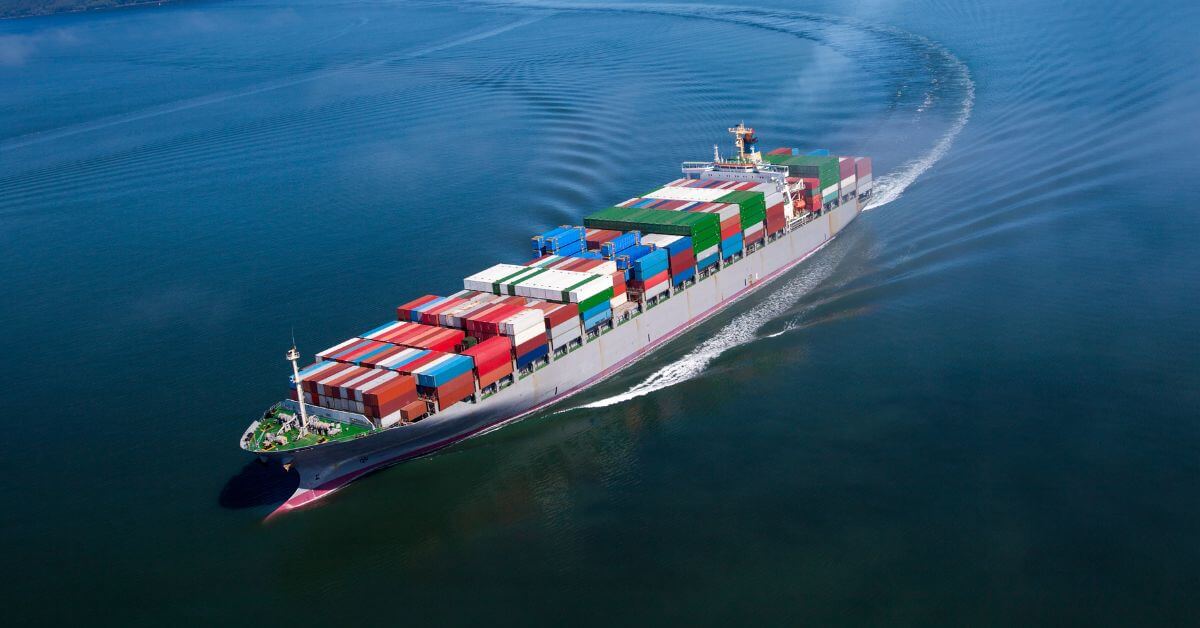
The electrification of short-sea shipping just passed a critical threshold, and the implications for measurable emissions reductions are more concrete than many analysts have acknowledged. Hanwha Power's receipt of Approval in Principle from the American Bureau of Shipping for a 1,700-TEU container vessel powered entirely by containerised batteries and shore charging is not merely a design exercise, it is a validated pathway toward zero-emission regional logistics. For an industry that has struggled to move beyond pilot projects, this represents a calibrated step toward an integrated data ecosystem where vessel performance, charging cycles, and cargo throughput can be tracked in real time.
The vessel's 151 MWh energy storage system, housed in units handled like standard containers, solves a spatial problem that has long constrained battery-electric ship design. By treating batteries as interchangeable cargo, Hanwha Power has created a system that allows flexible replacement and scalable operation without sacrificing cargo capacity. This matters because the world is simultaneously confronting a measurable global deficit in safe, low-carbon energy infrastructure, a gap that Scaling validated energy systems to meet a measurable global deficit has documented in detail. Short-sea routes, with predictable distances and port turnaround times, are the natural proving ground for this technology before it can be extended to longer trades.
Yet the announcement leaves several empirical questions unanswered. Hanwha Power has not disclosed the vessel's service speed, operating range, or charging time. These are not minor details, they determine whether the ship can compete with conventional diesel-powered feeders on the routes it is designed to serve. If the vessel requires several hours of shore charging per port call, the operational economics shift significantly. The company has also completed basic design for a 1,000-TEU version, suggesting a modular approach, but without longitudinal data on battery degradation under marine conditions, the total cost of ownership remains speculative. Meanwhile, the parallel push toward alternative marine power sources continues: Maritime Reactor Fuel Purchase Moves Floating Nuclear Power Toward Deployment reminds us that zero-emission propulsion is not a single-technology race.
What makes this development worth watching is not the ship itself but the signal it sends to port operators and classification societies. ABS approval means the design has passed a peer-reviewed safety and engineering review, lowering the regulatory risk for early adopters. If Hanwha Power can demonstrate a working vessel on a short-sea corridor, say, between South Korean ports or within the North Sea, the data will feed directly into the climate indicators that policymakers and fleet operators rely on. The specific figure to track is not the TEU capacity but the charging infrastructure deployment timeline. Without shore power installations at both ends of the route, the containerised batteries are merely expensive cargo.