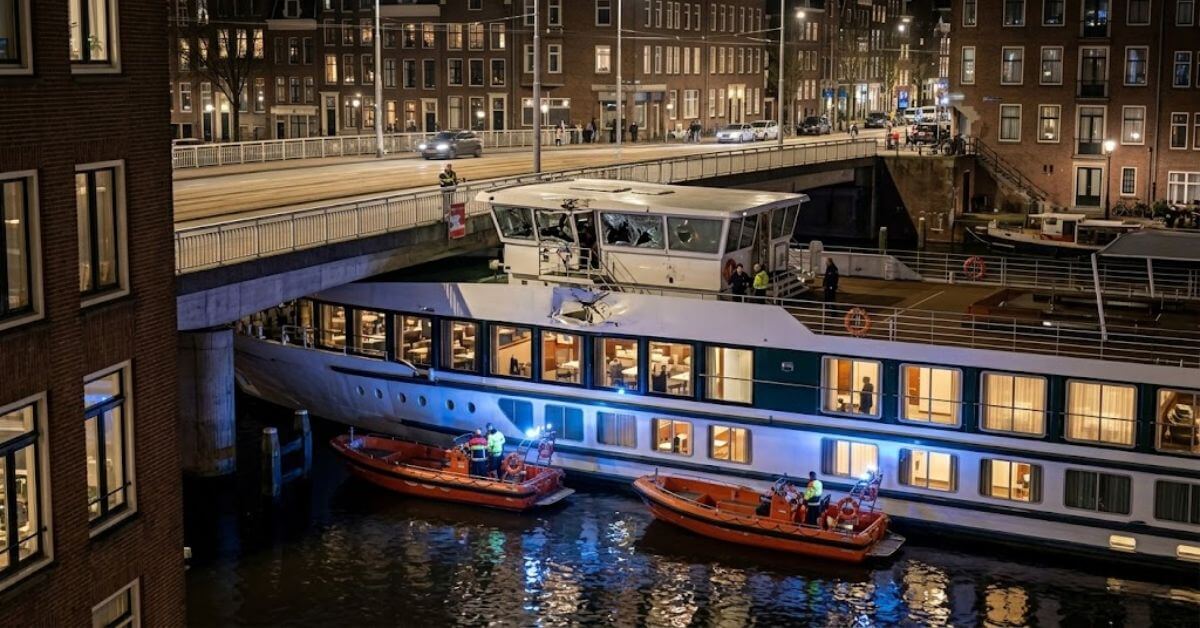
The recent incident involving a cruise ship in Amsterdam, where a collision and subsequent power failure disrupted passage, serves as a potent, albeit unintended, illustration of the complex interplay between human activity and critical infrastructure. While this particular event occurred on inland waterways, the underlying principles of operational integrity and the cascading effects of disruption resonate deeply with the challenges facing our global oceans. Vessels, whether navigating rivers or vast seas, are vital conduits for commerce, exploration, and leisure. Their safe and unimpeded movement relies on a sophisticated understanding of environmental conditions, robust technological systems, and diligent operational protocols. When these elements falter, as evidenced by the Amsterdam incident, the consequences can extend beyond immediate logistical challenges, highlighting the inherent vulnerabilities within our interconnected maritime systems.
This disruption underscores the importance of comprehensive data and predictive analysis in maritime operations. While the immediate cause may have been a specific technical failure or navigational error, the broader implications point towards the need for continuous monitoring and intelligent systems that can anticipate and mitigate risks. World Data Ocean is dedicated to building such an integrated data ecosystem, one that provides real-time insights and validated information essential for safe and efficient maritime traffic. Our work focuses on developing ocean intelligence that enables better decision-making, from optimizing shipping routes to understanding the impact of environmental variables on vessel performance. The ability to access and interpret precise, measurable data is paramount in preventing incidents and ensuring the long-term sustainability of marine activities.
Events like the Amsterdam cruise ship incident, though localized, serve as a reminder of our collective responsibility in safeguarding the vital arteries of global trade and exploration. They highlight the critical need for robust, scientifically informed approaches to maritime management. By fostering global collaboration and leveraging technological innovation, we can move towards a future where such disruptions are minimized, and ocean passages are characterized by efficiency, safety, and a deep respect for the environment. Understanding drives protection, and it is through the continuous collection and application of empirical data that we can better navigate the complexities of our oceans and ensure their continued vitality for generations to come.