Cochin Shipyard Lays Keel For First Of Six Next-Gen Missile Vessels For Indian Navy
Our take
The keel-laying for the first of six Next-Generation Missile Vessels (NGMVs) at Cochin Shipyard represents a significant advancement in India’s naval modernization program. These high-speed vessels, capable of reaching 33 knots and accommodating a crew of 80, underscore a strategic shift towards a more agile and responsive maritime defense posture. The development comes at a time of heightened geopolitical complexity in the Indo-Pacific region and reflects India's commitment to safeguarding its extensive coastline and maritime interests. This investment in indigenous shipbuilding capabilities aligns with broader national security objectives and contributes to reducing reliance on foreign suppliers. Recent tensions in the Indian Ocean, as highlighted by Pakistan Accuses Indian Warship Of ‘Dangerous Manoeuvres’ In Its EEZ Before Collision With Naval Vessel, demonstrate the need for robust naval presence and rapid response capabilities in the region, and the NGMVs are designed to fulfill that need. Furthermore, the ongoing challenges facing global shipping, such as the reduced transits through the Panama Canal due to drought, as reported in Panama Canal To Cut Ship Transits Again Due To Severe Drought Linked To El Niño, emphasize the importance of maintaining secure sea lanes and the ability to respond to maritime disruptions.
The decision to commission these vessels through Cochin Shipyard is particularly noteworthy, reflecting India's focus on strengthening its domestic defense industrial base. This aligns with the "Make in India" initiative and fosters technological self-reliance, creating skilled jobs and stimulating economic growth within the country. The project’s success will depend on several factors, including efficient supply chain management, adherence to quality standards, and timely integration of advanced technologies. The U.S. Navy’s recent contract for Landing Craft Utility Vessels, as detailed in U.S. Navy Awards Contract To Build Multiple Landing Craft Utility Vessels, provides a relevant comparative example of large-scale naval shipbuilding programs and highlights the importance of streamlined processes and innovative construction techniques. The NGMVs will likely incorporate advanced sensor suites, missile systems, and integrated communication networks, enhancing their operational effectiveness in diverse scenarios, from anti-ship warfare to coastal defense. Empirical data gathered from operational deployments of similar vessels worldwide will inform the ongoing calibration and refinement of these systems.
Beyond their immediate military utility, the NGMVs contribute to India’s broader strategic influence in the Indian Ocean region. Their presence will enhance maritime domain awareness, facilitate search and rescue operations, and support humanitarian assistance and disaster relief efforts. The integrated data ecosystem required to effectively manage and deploy these vessels will necessitate enhanced collaboration between various government agencies and maritime stakeholders. Longitudinal data collection on vessel performance and operational effectiveness will be crucial for continuous improvement and adaptation to evolving threats. The ability to gather and analyze real-time data from these platforms will provide valuable ocean intelligence, informing strategic decision-making and enabling proactive responses to emerging challenges. Validated assessments of the NGMVs' impact on regional security will be essential for demonstrating the program's value and justifying further investments in naval modernization.
Looking ahead, the successful integration of these NGMVs into the Indian Navy's fleet will be a key indicator of India's evolving naval capabilities and its commitment to maintaining a secure maritime environment. The challenge will lie in ensuring seamless interoperability with existing naval assets and adapting operational doctrines to fully leverage the vessels' advanced capabilities. A critical question to watch is how India will balance the deployment of these missile vessels with other priorities, such as coastal security and maritime infrastructure development, in a region characterized by complex geopolitical dynamics and increasingly frequent climate-related disruptions.
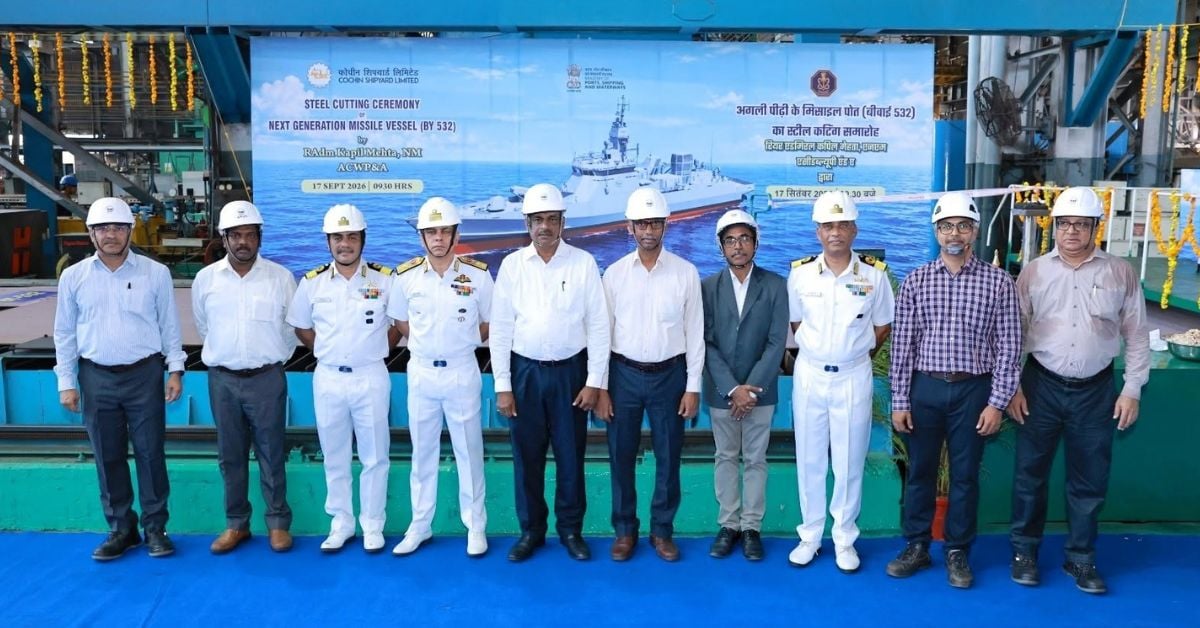
Cochin Shipyard Limited (CSL), the largest shipbuilding facility in India, has laid the keel for the first of six Next Generation Missile Vessels (NGMV) being built for the Indian Navy.
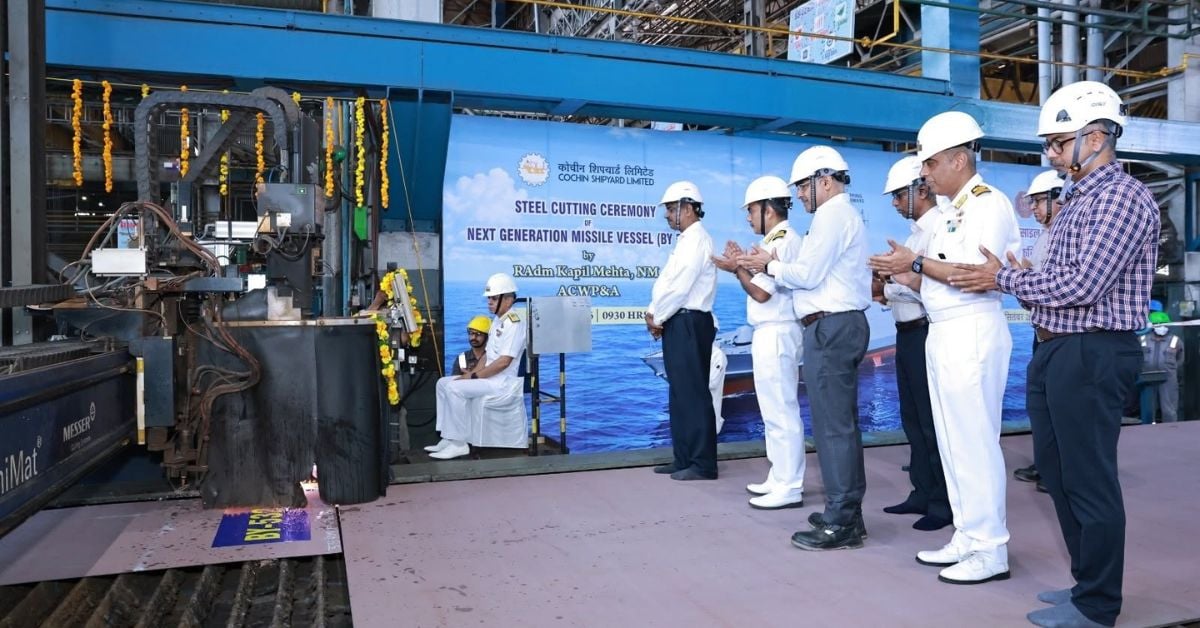
Vice Admiral Sanjay Sadhu, Controller of Warship Production and Acquisition at Integrated Headquarters, Indian Navy, laid the keel for the first vessel, BY 531, at a ceremony on September 18.
CSL has a contract with the Indian Navy to build six NGMVs. The contract was signed on March 30, 2023. The project is also CSL’s first entry into building advanced weapon-intensive platforms for the Navy, the shipbuilder said.
The NGMVs are planned as high-speed vessels. They will have a maximum speed of 33 knots, with a crew of 80 personnel on each ship.
The vessels will carry several weapons and sensors. These include surface-to-surface missile systems, anti-missile defence systems, air surveillance radars and fire control radars, CSL said.
The main role of the vessels will be to attack enemy warships, merchantmen and land targets. They will also be used for maritime strike and anti-surface warfare operations.
CSL said the vessels can be used as sea-denial platforms against enemy ships, especially at choke points.
The vessels will also have defensive duties. These include local naval defence and protecting offshore development areas from threats at sea.
The ships will be fitted with integrated platform management systems, propulsion and auxiliary machinery, power generation and distribution systems, and damage-control machinery.
CSL Chairman and Managing Director Jose V.J., Rear Admiral Kapil Mehta, ACWP & A, and S. Harikrishnan, director (operations), attended the keel-laying ceremony.
Flag officers and senior officials from the Southern Naval Command were also present. Officials from the Warship Overseeing Team, representatives of the Indian Register of Shipping, Navy and CSL officials, supervisors and shipyard workers also attended.
The keel laying marks the formal start of construction of the first NGMV. CSL said the project is being built under the government’s Aatmanirbhar Bharat initiative.
References: PTI, The Hindu
Read on the original site
Open the publisher's page for the full experience