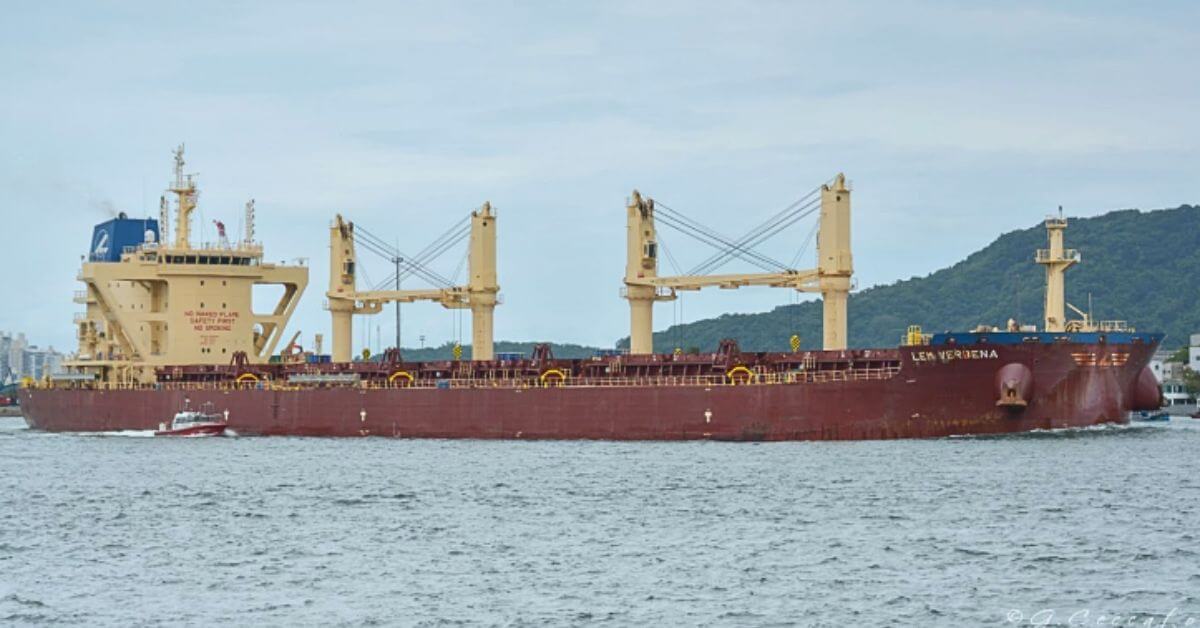
The recent incident involving a $5.5 million engine room fire aboard a bulk carrier, reportedly linked to a calibration failure, underscores a critical point: the profound interconnectedness of operational integrity and the complex systems that govern maritime safety. While this event occurred in an engine room, its implications resonate across the broader spectrum of ocean-facing industries. Each component, each measurement, and each calibration plays a vital role in ensuring the secure and sustainable operation of vessels and, by extension, the health of our oceans. Understanding the precise factors that lead to such failures, through rigorous data analysis and scientific investigation, is fundamental to preventing future occurrences. This incident serves as a stark reminder that even seemingly minor operational deviations can have significant financial and environmental consequences.
At World Data Ocean, we advocate for a proactive, data-driven approach to maritime operations. Our focus on integrating real-time data and employing validated analytical methods aims to build an ocean intelligence ecosystem that anticipates and mitigates risks. The principle of calibration is not confined to engine components; it extends to the accuracy of our sensor networks, the reliability of our predictive models, and the integrity of our long-term environmental monitoring. When instruments are precisely calibrated, they provide us with empirical data that informs crucial decisions, from route planning to emissions monitoring. Conversely, calibration failures can lead to a cascade of inaccuracies, potentially masking underlying issues or leading to misinformed actions, as this incident tragically illustrates.
The consequences of operational failures in maritime settings are multifaceted, extending beyond immediate financial loss to potential environmental impacts. While the reported fire was contained within the vessel, similar systemic issues, if unaddressed, could compromise the safe transport of goods or lead to environmental contamination. This is why our commitment to fostering global collaboration and sharing validated, peer-reviewed findings is so crucial. By illuminating the precise causes of such events, like the calibration failure described, we enable a collective learning process. This shared knowledge empowers researchers, policymakers, and industry stakeholders to implement more robust safety protocols and invest in technologies that enhance the longitudinal monitoring and protection of our ocean environments. Understanding drives protection, and precise data is the bedrock of that understanding.