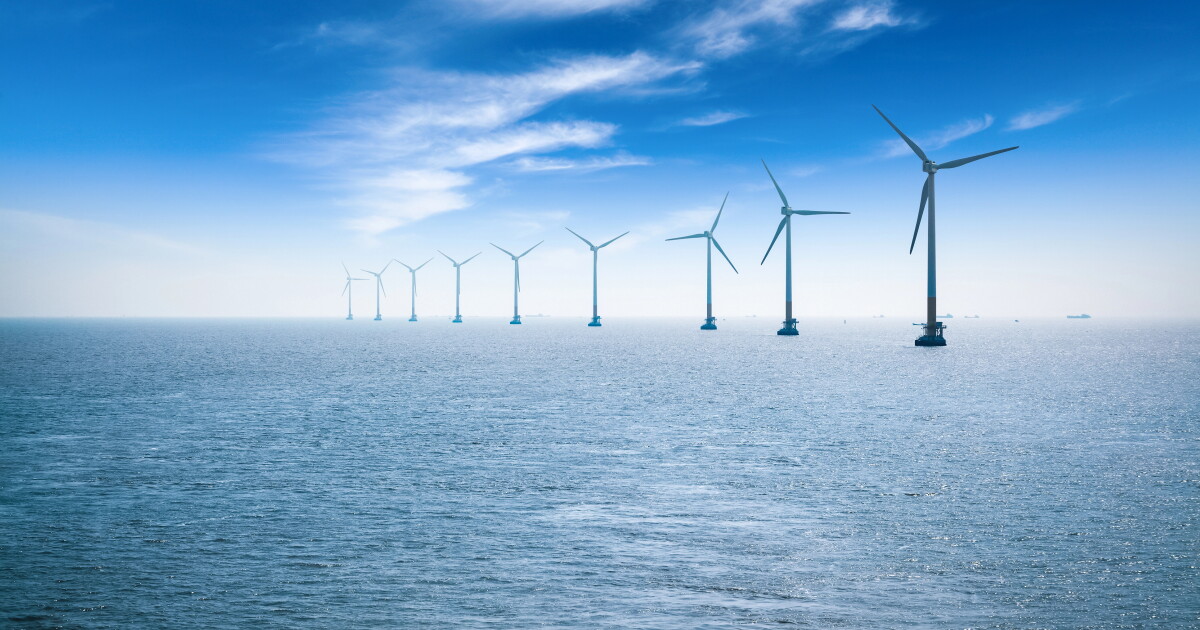
The subsea data center now online and powered by a single wind turbine is not a curiosity, it is a calibrated proof point. By anchoring computing capacity directly on the seabed and feeding it with offshore wind, this deployment validates that critical ocean infrastructure can operate independently of terrestrial grids. For the ocean intelligence community, that changes the practical calculus of where and how we gather data.
This matters because the ocean's most revealing signals are often its most remote. A wind-powered underwater data center eliminates the need to run power cables to distant moorings or rely on battery-swap missions that limit deployment duration. The result is a platform that can host real-time processing for sensor arrays, acoustic monitoring, and climate indicators without the latency of surfacing data. It is a direct enabler of the kind of integrated data ecosystem that makes ocean observation continuous rather than episodic. Consider the contrast with the Shallow-water coral sighting near Naxos raises climate questions we recently covered: that observation was a single swimmer's encounter, valuable but isolated. A subsea data center fed by wind could, in principle, host the continuous monitoring infrastructure that turns such anecdotal sightings into longitudinal, calibrated records.
The design is also a practical stress test for subsea operations. Running electronics underwater at scale demands solutions for heat dissipation, pressure tolerance, and biofouling, problems that parallel those faced by seafloor observatories and cabled arrays. If this wind-powered unit proves reliable over months and years, it provides an empirical template for deploying edge computing on the continental shelf. The Singapore Hub Advances Digital Twins and AI for Ocean Decarbonisation shows how digital models depend on high-frequency, high-resolution data; a validated subsea data center is the hardware backbone that makes those models accurate.
The open question is scale. A single turbine powering a single pod is a controlled experiment. The next step is whether this design can be replicated across wind farms, turning offshore energy infrastructure into a distributed network of ocean intelligence nodes. That would mean peer-reviewed climate indicators streamed from hundreds of submerged processors, not occasional shipboard surveys. The specific takeaway is this: the ocean is no longer just a place to measure, it is now a place to compute.