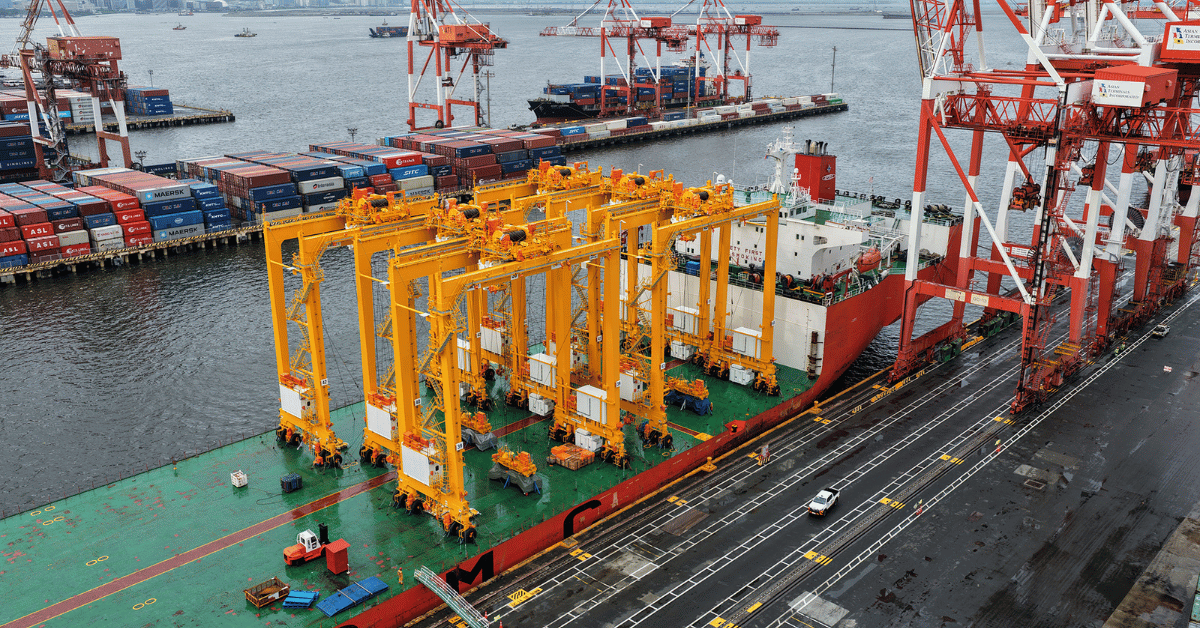
Six new hybrid rubber-tyred gantry cranes at Manila South Harbour represent a measured, practical step toward modernizing port infrastructure while reducing emissions. DP World and Asian Terminals have commissioned these units to boost capacity and safety, with lower-emission operations as a core design feature. The move is not a revolution, but it is a calibrated response to the pressure that ports face: handle more cargo, do it faster, and do it with a smaller carbon footprint. That is the kind of incremental, validated progress that maritime stakeholders can observe and replicate.
This development sits alongside other port expansions that signal a broader pattern of strategic investment. Paradip Port Designated a Mega Port, Anchors Eastern India's Maritime Growth under India's Ports Act of 2025, positioning itself as a hub for regional trade. Meanwhile, Record Port Activity Reflects Rising Chinese Exports Amid Trade Uncertainty shows Chinese ports handling 7.279 million TEUs in a single week. Manila's hybrid cranes do not match the scale of those mega-port operations, but they address a specific bottleneck: how to increase throughput without locking in decades of diesel dependency. That is a practical lesson for any port operator facing similar constraints.
For our readers, whether you manage terminals, advise on logistics policy, or study port emissions, the takeaway is concrete. Hybrid RTG cranes offer a middle path between fully electric systems that require grid upgrades and conventional diesel units that are cheap upfront but expensive over time. The Manila deployment provides real-world data on fuel savings, maintenance intervals, and operational uptime. We would tell a reader who asks about this: watch the empirical results from these six units. If they deliver measurable reductions in fuel consumption and emissions without sacrificing lift cycles per hour, the case for retrofitting existing fleets with hybrid technology becomes stronger. If they fall short, the industry learns where the trade-offs actually lie.
One detail to track is how these cranes integrate with the port's existing power management systems. Hybrid technology is only as effective as the software that decides when to draw from batteries, when to run the generator, and when to capture regenerative energy. The real test is not the crane itself but the integrated data ecosystem that optimizes its performance in real time. Manila South Harbour is now a live laboratory for that question. The answer will matter for every port weighing hybrid options.