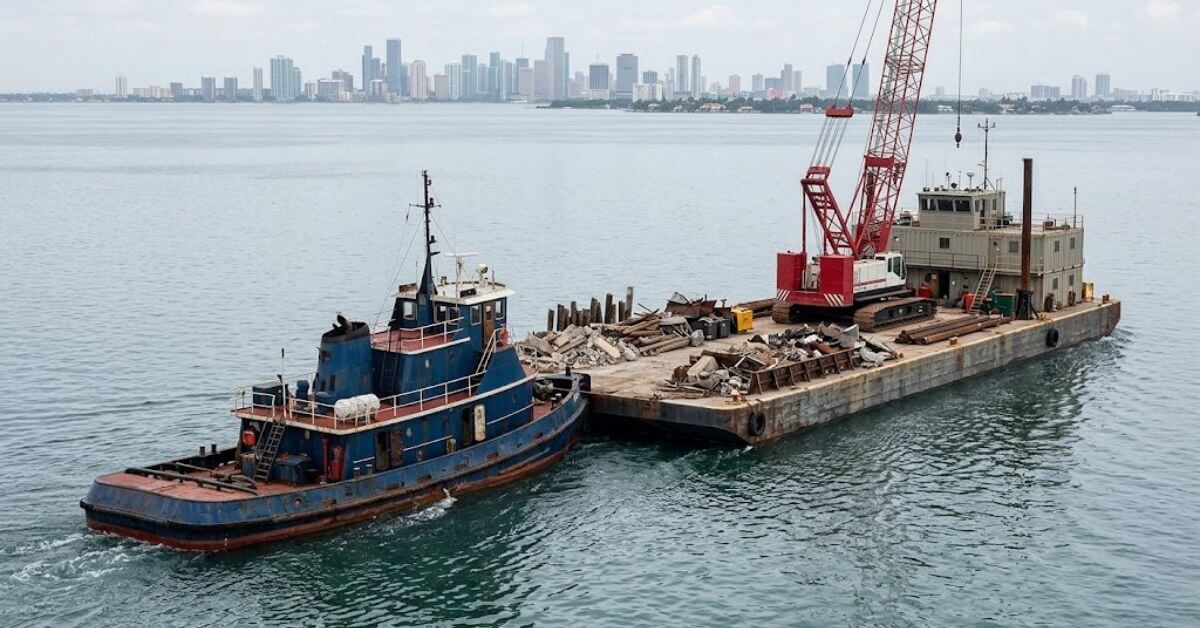
The recent tragedy in Biscayne Bay, where a sailboat collision resulted in loss of life, underscores a critical and often overlooked aspect of our relationship with the marine environment: the intersection of human activity and the inherent vulnerabilities of our waterways. While the immediate focus is on the legal ramifications for the captain involved, this incident serves as a stark reminder that even routine operations, when conducted without the utmost precision and awareness, can have devastating consequences. The debris transport, a seemingly straightforward logistical task, highlights how the infrastructure and industrial elements of our coastal communities can directly impact recreational and ecological spaces. Understanding the flow of such activities, the vessel traffic patterns, and the environmental conditions present at any given moment is paramount to preventing future occurrences.
At World Data Ocean, we believe that comprehensive, real-time ocean intelligence is not merely an academic pursuit but a fundamental necessity for safeguarding both human lives and marine ecosystems. The ability to integrate data from diverse sources – including vessel tracking systems, environmental sensors, and predictive modeling – allows for a more nuanced understanding of the complex dynamics at play in areas like Biscayne Bay. This integrated data ecosystem can provide crucial insights into potential hazards, enabling proactive measures to mitigate risks. For instance, understanding the typical routes for debris transport, combined with real-time weather and sea state data, could inform operational planning and alert vessels to potential conflicts with other maritime users. This is not about assigning blame, but about building a robust framework for safety and stewardship.
The imperative for enhanced ocean intelligence extends beyond accident prevention. It is intrinsically linked to the broader goal of ocean stewardship. As we increasingly rely on our marine environments for resources, transportation, and recreation, our understanding of their capacity and resilience must deepen. The data we gather, calibrate, and analyze contributes to a longitudinal understanding of how human activities, from large-scale infrastructure projects to individual vessel movements, influence the health and safety of our oceans. This empirical knowledge is essential for developing informed policies, innovative solutions, and fostering a global culture of shared responsibility. Ultimately, the tragedy in Biscayne Bay is a call to action, urging us to leverage technological advancements and collaborative efforts to ensure that our interactions with the ocean are characterized by foresight, respect, and an unwavering commitment to preserving its vital role in our planet's future.