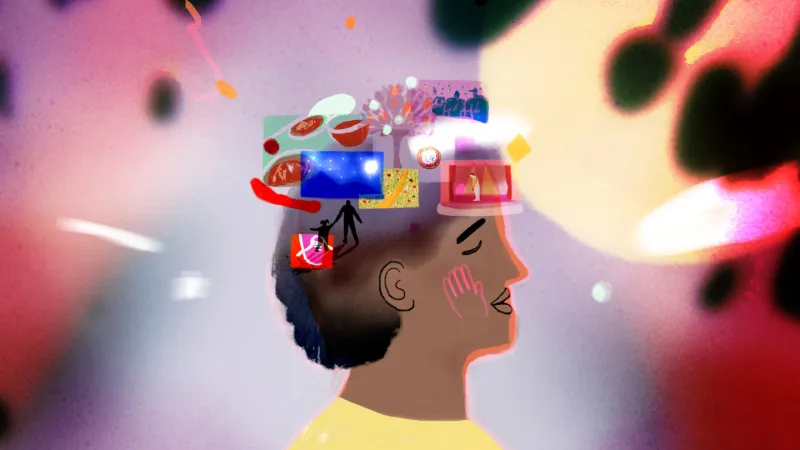
In fiction, a flawless memory is the ultimate tool: the detective who recalls a车牌号 from across a crowded street, the scientist who retrieves a formula from a single glance. It is a seductive idea, the promise of total recall as a form of control. But as the article "Beyond Perfect Recall: Why Our Imperfect Memories Matter" suggests, our brains are not hard drives, and their tendency to edit, distort, and even forget is not a flaw in the system; it is the system. For an audience that values precision and data, this might feel like an uncomfortable truth, yet it is precisely this imperfection that allows us to function, create, and adapt in a world that demands we prioritize what truly matters.
Our take is that this is not just a neurological curiosity; it is a fundamental design principle that should shape how we approach everything from scientific research to personal resilience. If we remembered everything with perfect fidelity, we would drown in noise. The act of forgetting is not a loss of information but a process of calibration, a way of distilling the essential from the incidental. This is the same logic that underpins our own work at World Data Ocean: we do not simply collect every data point; we integrate, validate, and model it so that patterns emerge from the noise. A memory that is too perfect is like an unprocessed dataset, unwieldy and devoid of meaning. It is the interpretive layer, the ability to connect disparate dots while discarding the irrelevant, that generates what we call intelligence. This is why we believe that the "flaw" of human memory is not an obstacle to understanding but the very mechanism that enables it.
Practically speaking, this challenges the notion that more data or better retention is always the answer. For our readers, whether they are policymakers or students, this means that the act of forgetting should be viewed as an active skill, not a passive failure. You are not losing ground by letting go of a specific statistic or a minor detail; you are making space for the larger narrative. We would tell a reader who worries about their imperfect recall that the goal is not to capture everything but to build a resilient framework for understanding. Instead of fighting the brain's natural tendency to generalize, we should lean into it, using tools like note-taking and peer review as external scaffolds, but trusting our cognitive processes to do the heavy lifting of synthesis. The takeaway here is clear: a memory that is "good enough" is often more useful than one that is perfect, because it forces us to engage with the material rather than simply storing it.
The open question this raises is profound: if our memories are reconstructions rather than replicas, how much of our shared "ocean intelligence" is also a collective act of storytelling? We watch for the moment when we stop asking "what did we remember?" and start asking "why did we remember it that way?" That is the difference between a library and a mind, and it is the latter that holds the key to our survival. Our advice is to stop treating your memory like a failing hard drive and start treating it like a living, breathing ecosystem. The concrete point to watch is the next time you confidently recall a fact: ask yourself not if it is true, but why it survived the purge. That answer will tell you more about your own priorities than any perfect recording ever could.