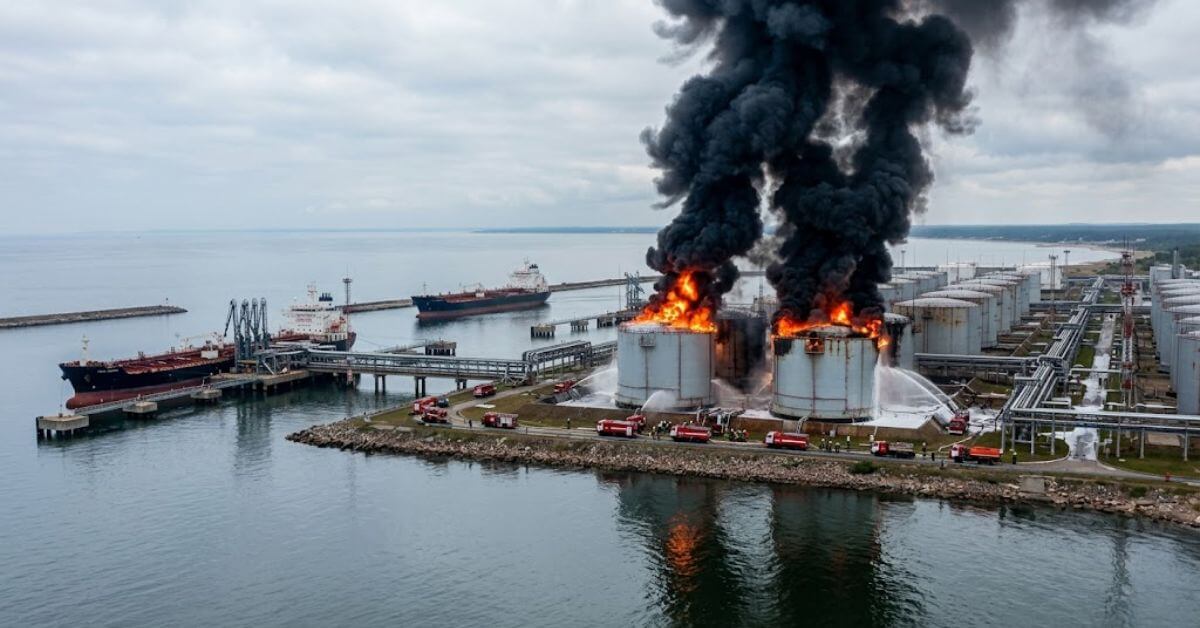
Recent events underscore the intricate and often fragile connections between geopolitical stability and the critical infrastructure that supports global commerce, particularly within vital marine arteries. The reported Ukrainian strikes impacting oil storage and loading facilities in Russia's Baltic ports serve as a stark reminder of how localized conflicts can reverberate across international supply chains and influence global energy markets. Such disruptions, while stemming from immediate military actions, highlight the broader vulnerability of energy transportation networks, which are essential for both economic prosperity and the functioning of modern societies. At World Data Ocean, we view these developments not merely as isolated incidents, but as data points within a larger, interconnected system that demands comprehensive understanding and robust monitoring.
The visible plumes of smoke rising from the affected port facilities, a scene captured and disseminated widely, speak to the tangible, immediate consequences of such attacks. Beyond the immediate environmental impact of fires and potential spills, these disruptions carry significant economic implications. The suspension of oil loadings directly affects the flow of energy resources, potentially leading to price volatility and impacting downstream industries that rely on these commodities. For those engaged in monitoring global trade and resource management, such events necessitate a swift assessment of their scale, duration, and potential ripple effects. Our commitment lies in providing the validated, measurable data required to understand these complex dynamics, moving beyond the immediate headlines to analyze the underlying trends and long-term implications for ocean health and global resource security.
The incident also brings into sharper focus the importance of secure and resilient maritime infrastructure. The Baltic Sea, a crucial trade route for Russia and a gateway to European markets, is particularly sensitive to disruptions. The capacity to rapidly assess the damage, understand the operational impact, and predict the timeline for restoration is paramount for all stakeholders, from port authorities and shipping companies to international regulatory bodies and climate researchers. World Data Ocean champions the development of an integrated data ecosystem that can provide real-time insights into such critical events, enabling more informed decision-making and fostering a proactive approach to managing risks within our global maritime systems. Understanding drives protection, and in this context, it also drives resilience and stability in the face of evolving geopolitical realities.