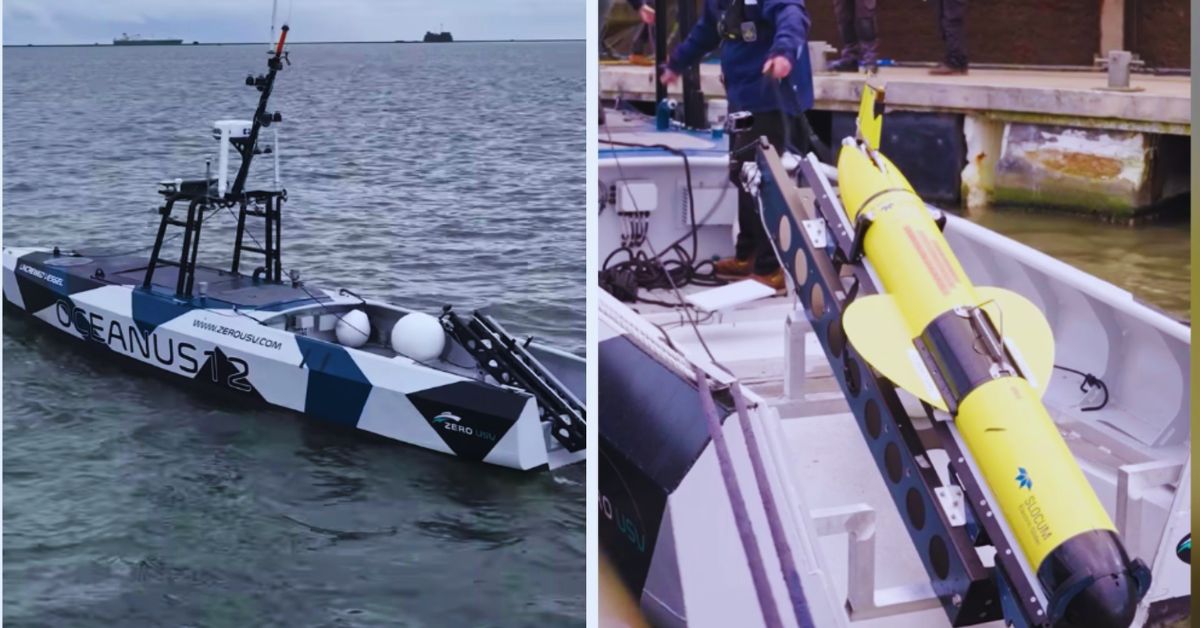
The recent advancement by British tech firm ZeroUSV, successfully executing the world’s first autonomous launch of an ocean glider from an uncrewed surface vessel (USV), represents a significant stride in our collective capacity for ocean data collection. This innovation underscores a pivotal shift towards more efficient, scalable, and ultimately, more impactful ocean intelligence gathering. By integrating autonomous glider deployment with uncrewed surface vessels, we are not only streamlining logistical complexities but also extending the reach and duration of critical oceanographic monitoring. This development aligns directly with World Data Ocean’s mission to foster a global, collaborative approach to understanding and protecting our oceans, demonstrating how technological innovation can translate into tangible progress for scientific research and environmental stewardship.
This autonomous launch capability is more than just a technical feat; it’s a testament to the power of forward-thinking solutions in addressing the urgent need for comprehensive ocean data. The ability to deploy gliders from USVs, particularly in remote or challenging environments, promises a more consistent and longitudinal stream of empirical data. This enhanced data flow is crucial for identifying subtle yet critical climate indicators, tracking ecological shifts, and validating complex oceanographic models. At World Data Ocean, we recognize that validated, measurable data forms the bedrock of effective ocean stewardship. Innovations like this enable us to build more robust, integrated data ecosystems, moving us closer to a real-time understanding of ocean health and its intricate relationship with global climate systems.
The implications of this technological leap are far-reaching. It signifies a move towards a more autonomous and data-driven approach to ocean science, minimizing human risk while maximizing data acquisition. This aligns with our commitment to purpose-driven research that yields measurable impact. As we continue to expand our understanding of the ocean's vital role in planetary health, the importance of scalable and efficient data collection methods cannot be overstated. World Data Ocean is committed to championing and integrating such advancements, fostering a collaborative environment where cutting-edge technology and scientific rigor converge to provide the ocean intelligence necessary for informed decision-making and effective conservation efforts.