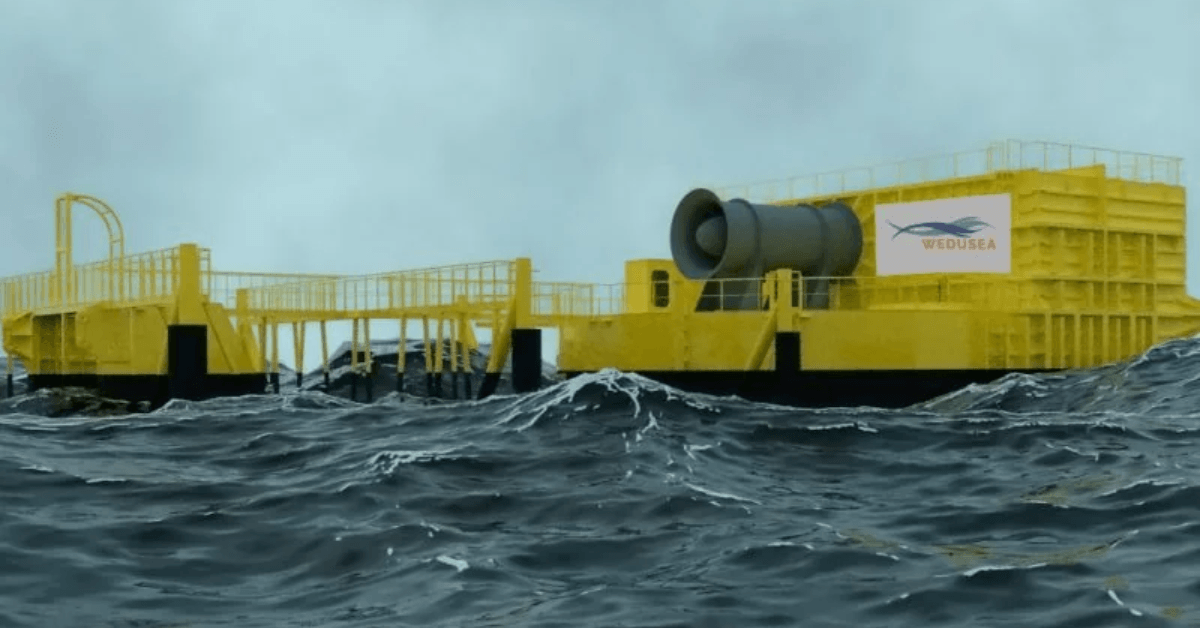
The deployment of a 1 MW wave energy buoy off Orkney, backed by €19.6 million in European and UK funding, represents a calibrated step toward validating ocean energy as a measurable contributor to the grid. This is not a speculative prototype; it is a peer-reviewed engineering trial with a two-year marine licence, a defined mooring berth at EMEC's Billia Croo site, and a turbine adapted specifically for Atlantic conditions. For our readers, who track the gap between pilot projects and integrated energy systems, this is the kind of empirical data point that matters. The OE Buoy's design, with no moving parts below deck and a sealed machine room, reduces mechanical risk while its oscillating water column converts wave motion directly into electricity. That simplicity is a deliberate engineering choice, and it deserves close attention as the device begins feeding power into the UK grid via an underwater umbilical. This trial builds on the momentum we have seen in other marine energy validation efforts, such as the Validated Sensor Trials Aboard Boaty McBoatface Advance Floating Wind Intelligence, where advanced ocean sensors are being tested to monitor marine life and support floating offshore wind operations. Together, these projects underscore a shift from isolated demonstrations toward an integrated data ecosystem where wave, wind, and sensor technologies cross-validate one another.
What makes this trial particularly instructive is the transparency around its constraints. The OE Buoy is rated at 1 MW, but its sister unit in Hawaii, installed in July 2024, has a potential capacity of 1.25 MW, and the Orkney model uses a different Wells turbine to handle rougher seas. That adaptation acknowledges a fundamental reality: wave energy converters must be calibrated to local conditions, not treated as one-size-fits-all hardware. The consortium behind the WEDUSEA project, involving 14 partners from five countries and co-funded by Horizon Europe and Innovate UK, also signals that ocean energy's path to commercial viability depends on sustained international collaboration, not isolated national efforts. This mirrors the methodological rigor we examined in Measuring Blue Bioeconomy rigor reveals critical data gaps and methodological divides, where inconsistent measurement frameworks hindered comparability across blue economy initiatives. The Orkney trial, by contrast, operates within a controlled test site with a pre-approved environmental monitoring plan from EMEC, which will study marine habitat above and below water at every deployment stage. That longitudinal data collection is exactly the kind of validated baseline that the sector has lacked.
The practical takeaway is direct: if this two-year grid-connected trial produces reliable power output and environmental impact data, it will provide the first real-world, peer-reviewed benchmark for floating wave energy at utility scale in North Atlantic conditions. The buoy's performance will feed directly into climate indicators and ocean intelligence models that policymakers and grid operators trust. EMEC's role as an independent observer, tracking marine life throughout the deployment, also addresses a persistent concern about ecological disruption, one that has slowed permitting for other marine renewables. For our audience, the specific detail to watch is how the adapted Wells turbine performs under sustained Atlantic swells compared to the Hawaii unit's performance in Pacific conditions. That comparison, once published, will tell us whether wave energy can move beyond site-specific niches toward a replicable, integrated energy solution. The question is no longer whether the technology works, but whether it works reliably enough to earn a permanent place in the grid mix.