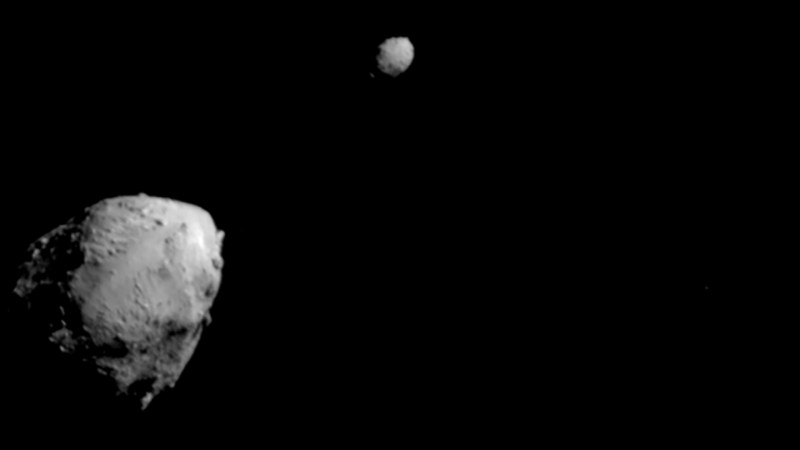
The recent confirmation that the joint solar orbit of the asteroid Didymos and its moonlet Dimorphos has been measurably altered represents a significant advancement in our understanding of celestial mechanics and the potential for directed planetary defense. This development, stemming from the Double Asteroid Redirection Test (DART) mission, moves beyond theoretical modeling to provide empirical evidence of our capacity to influence asteroid trajectories. The initial success of DART in impacting Dimorphos and demonstrably shifting its orbit around Didymos was a critical proof of concept. The subsequent data, now confirming a measurable alteration in their combined path around the Sun, underscores the profound implications of this achievement. It validates the precision of our technological interventions and opens new avenues for scientific inquiry into the long-term effects of such actions on larger orbital systems. This is not merely an academic curiosity; it is a tangible step towards a future where humanity can actively safeguard our planet from potential extraterrestrial threats.
The scientific community's rigorous validation of this orbital shift highlights the power of collaborative, data-driven research. The integration of observations from multiple observatories and sophisticated analytical tools has been crucial in distinguishing the subtle but significant changes in the Didymos-Dimorphos system's heliocentric orbit from natural variations. This demonstrates the efficacy of an integrated data ecosystem, where diverse sources converge to provide a more complete and accurate picture of complex phenomena. The term "ocean intelligence" finds a parallel here; just as we strive to understand the vastness and complexity of our oceans through data, so too can we apply similar principles to the solar system. The ability to track and analyze these minute orbital adjustments with such confidence speaks to the maturity of our observational capabilities and the robustness of the scientific methodologies employed. It is a testament to the ongoing pursuit of knowledge through meticulous measurement and peer-reviewed analysis.
This confirmed orbital alteration serves as a powerful reminder of our growing influence within the solar system and the imperative for responsible stewardship of this newfound capability. While the DART mission was focused on deflection, the principles behind it—precise application of force, accurate trajectory prediction, and comprehensive data analysis—are foundational to a broader strategy of space resource management and planetary safety. As we continue to develop technologies that allow us to interact with celestial bodies, the importance of understanding the long-term consequences of our actions becomes paramount. The journey from understanding to protection is intrinsically linked. This development reinforces the necessity of continued investment in scientific research, international cooperation, and the development of advanced technologies that can contribute to the long-term habitability and safety of our planet. It is through such purposeful, impact-oriented endeavors that we can truly harness the power of innovation for the benefit of all.