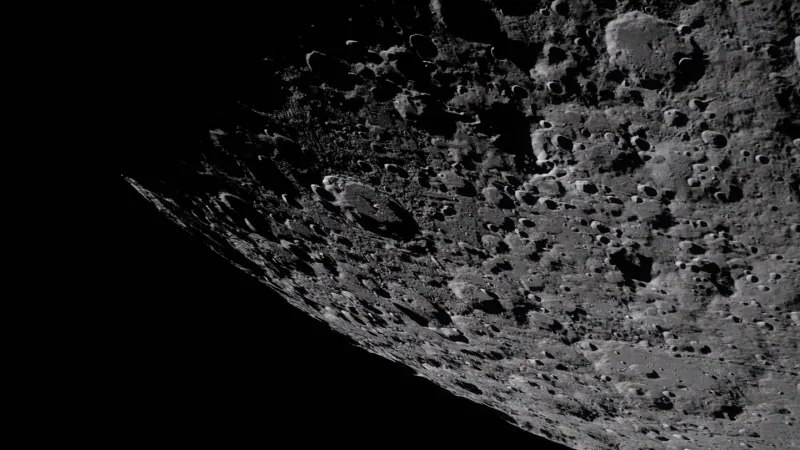
The Artemis II mission, a pivotal step in humanity's return to lunar exploration, has concluded its direct phase, yet its true scientific legacy is only now beginning to unfold. The wealth of data gathered during this historic flyby represents a significant leap forward, offering unprecedented insights into the lunar environment and the complex systems that govern it. This mission serves not merely as a prelude to future crewed landings, but as a crucial foundation for a new era of lunar scientific discovery. The comprehensive datasets, meticulously collected and now undergoing rigorous analysis, hold the potential to refine our understanding of lunar geology, the distribution of resources, and the long-term effects of space exposure on both human physiology and technological components. World Data Ocean recognizes the profound implications of such data and is committed to supporting its accessibility and integration into the global scientific knowledge base.
The value of the Artemis II data lies in its breadth and depth, encompassing a variety of scientific instruments designed to capture information across multiple spectra. From high-resolution imagery of the lunar surface to detailed measurements of radiation levels and the space environment, this mission has provided a rich tapestry of information. Our role is to facilitate the transformation of this raw data into actionable intelligence. By employing advanced analytical techniques and fostering collaborative research efforts, we aim to unlock the full scientific potential of this mission. This involves not only making the data readily available to the international research community but also developing tools and platforms that enable its seamless integration with existing lunar and Earth-based datasets. Such an integrated data ecosystem is essential for drawing comprehensive conclusions and identifying patterns that might otherwise remain hidden.
Ultimately, the Artemis II mission underscores the interconnectedness of space exploration and terrestrial scientific endeavors. The knowledge gained from our celestial neighbor can inform our understanding of Earth's own geological history, its climate evolution, and the challenges of long-duration space travel, which has direct implications for our stewardship of our home planet. World Data Ocean is dedicated to championing this holistic approach, believing that scientific progress thrives on open access, collaborative inquiry, and a shared commitment to pushing the boundaries of human knowledge. The data from Artemis II is a testament to what can be achieved when scientific ambition is coupled with technological innovation and a global perspective, paving the way for future discoveries that will benefit all of humanity.