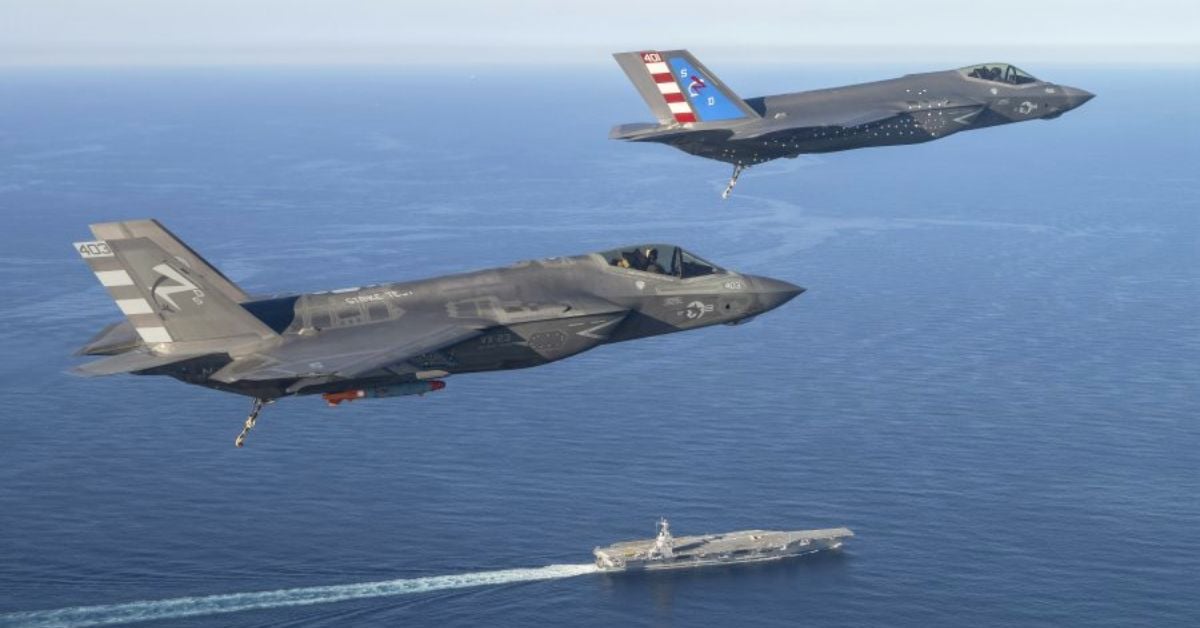
The successful arrested landing of an F-35C on the future USS John F. Kennedy is a calibrated step forward, not a finished story. This test validates that the electromagnetic launch and recovery systems of a Ford-class carrier can handle the specific stresses of a fifth-generation fighter, but it also reminds us that integration at sea is a process of measured, iterative validation. For our readers, whether they track naval aviation, allied defense planning, or the logistical chains that sustain power projection, this event confirms that the Navy is methodically closing the gap between the Ford-class's advanced technology and the operational demands of the carrier air wing.
The test, conducted by VX-23's "Salty Dogs" alongside the F-35 Integrated Test Force, collected empirical data on how the ship's electromagnetic catapults and arresting gear perform with the heavier, reinforced F-35C. This is not a one-off demonstration; it is part of an Aircraft Compatibility Testing programme designed to surface problems before the carrier formally enters service. The Navy took preliminary acceptance of *Kennedy* in late September, and the ship is now in a phase where the crew gains experience while the shipbuilder completes remaining systems work. This mirrors the practical, data-driven approach we saw in the Autonomous drone navigation validates precision landing without GPS or radar story, where the Navy tested a drone's ability to land on moving ships without GPS. Both efforts rely on real-time measurement to certify systems under realistic conditions, not on theoretical performance.
What this means for the fleet is concrete. The F-35C's larger wings and strengthened tail hook are designed for the high-energy environment of carrier operations, but the Ford-class's electromagnetic systems introduce variables that the older Nimitz-class steam catapults do not. The data collected from this test will inform how the Navy sequences launches and recoveries, adjusts system parameters, and trains pilots. It also feeds into the broader question of how the carrier air wing evolves. The Marine Corps already operates the F-35C from carriers, and the Navy's ability to integrate the fighter with *Kennedy* will shape deployment schedules and maintenance planning for years. The fact that one of the test aircraft carried inert JDAM bombs externally suggests the Navy is also assessing how external stores affect launch and recovery performance, a detail worth watching as the testing continues.
The Navy's path to formal delivery of *Kennedy* in spring 2027 now includes a validated baseline for F-35C operations, but the work is not done. More testing is required to understand how the fighter's stealth and sensor systems interact with the carrier's electromagnetic environment, and how the ship's systems perform under sustained, high-tempo operations. The Transpacific shipyard completes inaugural US Navy maintenance project story reminds us that the global maintenance network for these advanced platforms is still maturing. The specific question to track is whether the electromagnetic launch system can maintain consistent performance across the full weight range of F-35C configurations, clean, with internal weapons, and with external stores, without requiring excessive recalibration. That answer will determine how quickly *Kennedy* can generate sorties in a contested environment.