Our Take: Ancient Sea Cow Reveals Thriving Ecosystem in Fossil-Rich Qatar
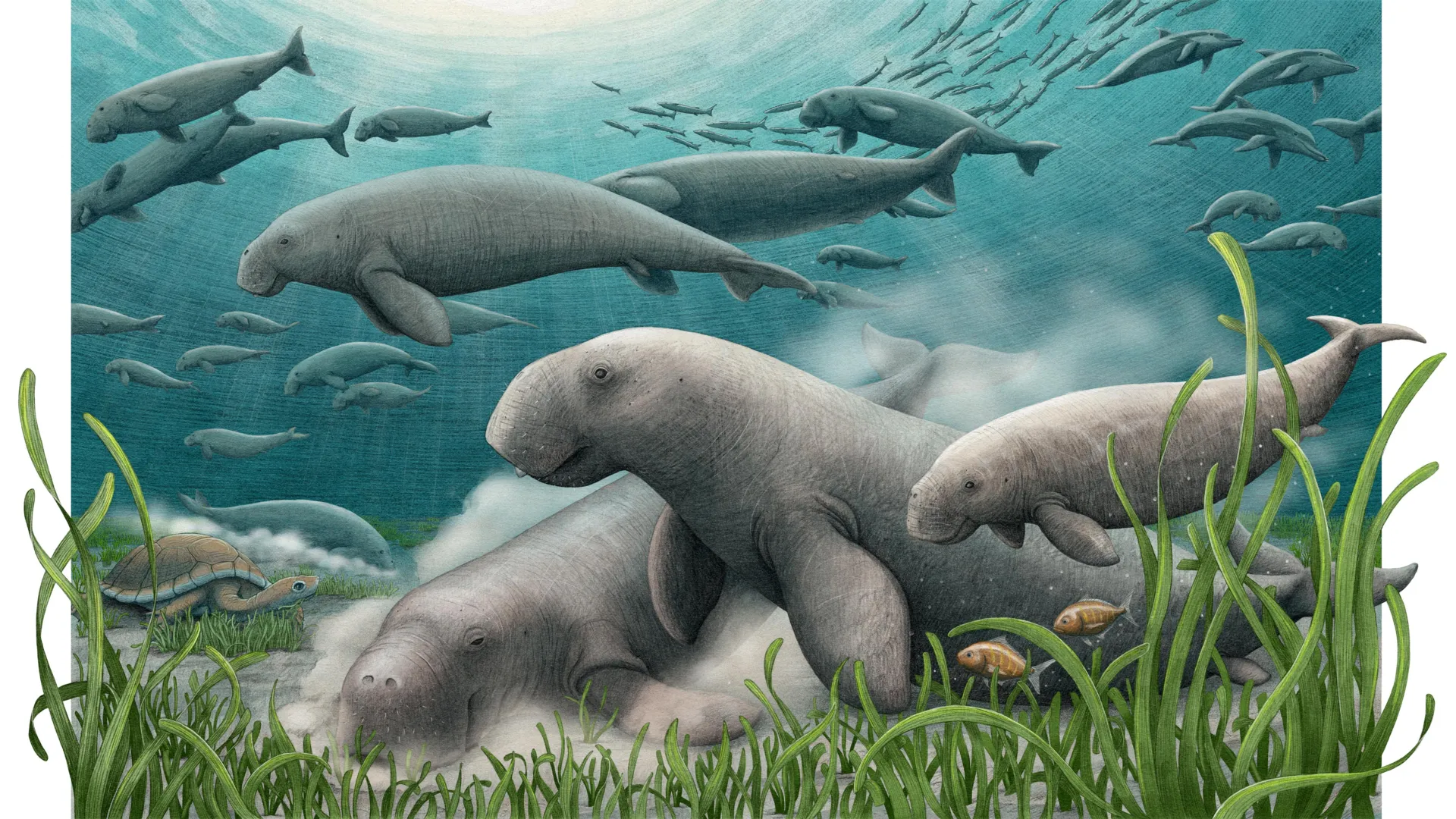
The recent discovery of a newly identified sea cow species in Qatar, dating back over 20 million years, offers a compelling glimpse into the Arabian Gulf's ancient ecological richness. This fossil site, distinguished by the densest collection of sea cow bones ever found, provides empirical evidence of a once-thriving marine environment characterized by abundant seagrass meadows. These ancient sirenians, small in stature but significant in their ecological impact, played a crucial role in shaping their habitat, a function that resonates remarkably with that of modern dugongs. By grazing, they actively influenced the seafloor's topography, demonstrating a continuous ecological legacy that spans millennia. Understanding this historical dynamic is not merely an academic pursuit; it directly informs our capacity to predict and manage the resilience of contemporary seagrass ecosystems in the face of ongoing environmental shifts.
This finding underscores the profound interconnectedness between species and their environments, a principle central to World Data Ocean's mission. The identification of this ancient sea cow species, alongside the dense fossil record, allows for a calibrated assessment of past biodiversity and ecosystem health. It highlights how long-term, measurable changes in marine environments can be elucidated through the meticulous study of fossil evidence. The ecological niche occupied by these ancient animals, and the subsequent longevity of that role through modern dugongs, offers a valuable longitudinal study in ecosystem function. This data is critical for building robust models that can project how current seagrass habitats, vital for carbon sequestration and supporting marine life, will respond to the pressures of climate change.
At World Data Ocean, we recognize that insights gleaned from such discoveries are foundational to effective ocean stewardship. The integrated data ecosystem we are building aims to connect these historical narratives with real-time ocean intelligence. By weaving together paleontological findings, ecological observations, and climate data, we can develop a more comprehensive understanding of oceanic resilience and vulnerability. The research emerging from Qatar serves as a powerful reminder that the health of our oceans is a story that spans geological time, and that understanding its past is paramount to safeguarding its future. This discovery reinforces our commitment to fostering global collaboration in scientific inquiry, ensuring that validated knowledge about our planet’s blue heart is accessible and actionable for all.