Our Take: Re-evaluating Ancient Marine Life: The Case of the 300-Million-Year-Old Cephalopod
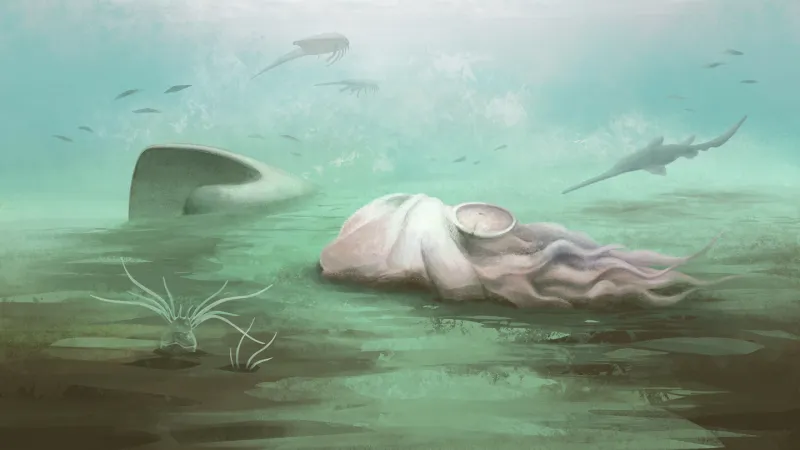
The scientific pursuit of understanding our planet's history is a continuous process of discovery, refinement, and, at times, re-evaluation. When researchers announced in 2000 the discovery of what was believed to be the oldest fossil octopus, dating back over 300 million years, it represented a significant milestone in our comprehension of cephalopod evolution. This finding, if confirmed, would have pushed back the known timeline for the emergence of octopuses, offering invaluable insights into the early diversification of these remarkable marine invertebrates. However, the nature of scientific inquiry is such that initial interpretations are always subject to further scrutiny and new evidence. The ongoing re-examination of this fossil, suggesting it may instead be a partially decomposed nautilus, underscores the critical importance of rigorous analysis and the iterative process that defines scientific progress.
This potential reclassification highlights a fundamental challenge in paleontology: the interpretation of fossil evidence. The preservation of ancient organisms is a rare and often incomplete phenomenon. Fossilization processes can alter the original structure, and the subsequent geological history of a specimen can lead to distortion or partial degradation. Distinguishing between closely related or similarly structured ancient life forms, especially when faced with imperfect preservation, requires meticulous attention to detail and the application of comparative anatomy and taphonomy. A fossil that bears superficial resemblance to one species might, upon closer inspection of specific morphological features—such as the arrangement of appendages, the structure of the shell, or internal anatomical remnants—be more accurately identified as another. This careful, empirical approach is essential for building a reliable timeline of life on Earth.
The ongoing debate surrounding this ancient cephalopod fossil serves as a powerful illustration of the scientific method in action. It demonstrates that scientific understanding is not static but rather a dynamic and evolving landscape. The initial excitement of a groundbreaking discovery is tempered by the scientific imperative to verify and validate findings through further research and peer review. World Data Ocean champions this dedication to scientific integrity, recognizing that robust, validated data and meticulous analysis are the cornerstones of true ocean intelligence. By embracing the process of re-evaluation, even when it challenges prior conclusions, we reinforce the credibility of scientific endeavor and ensure that our collective knowledge about the ocean's past, present, and future remains as accurate and impactful as possible. This commitment to precision and clarity allows us to foster a global understanding of ocean health and the urgent need for its stewardship.