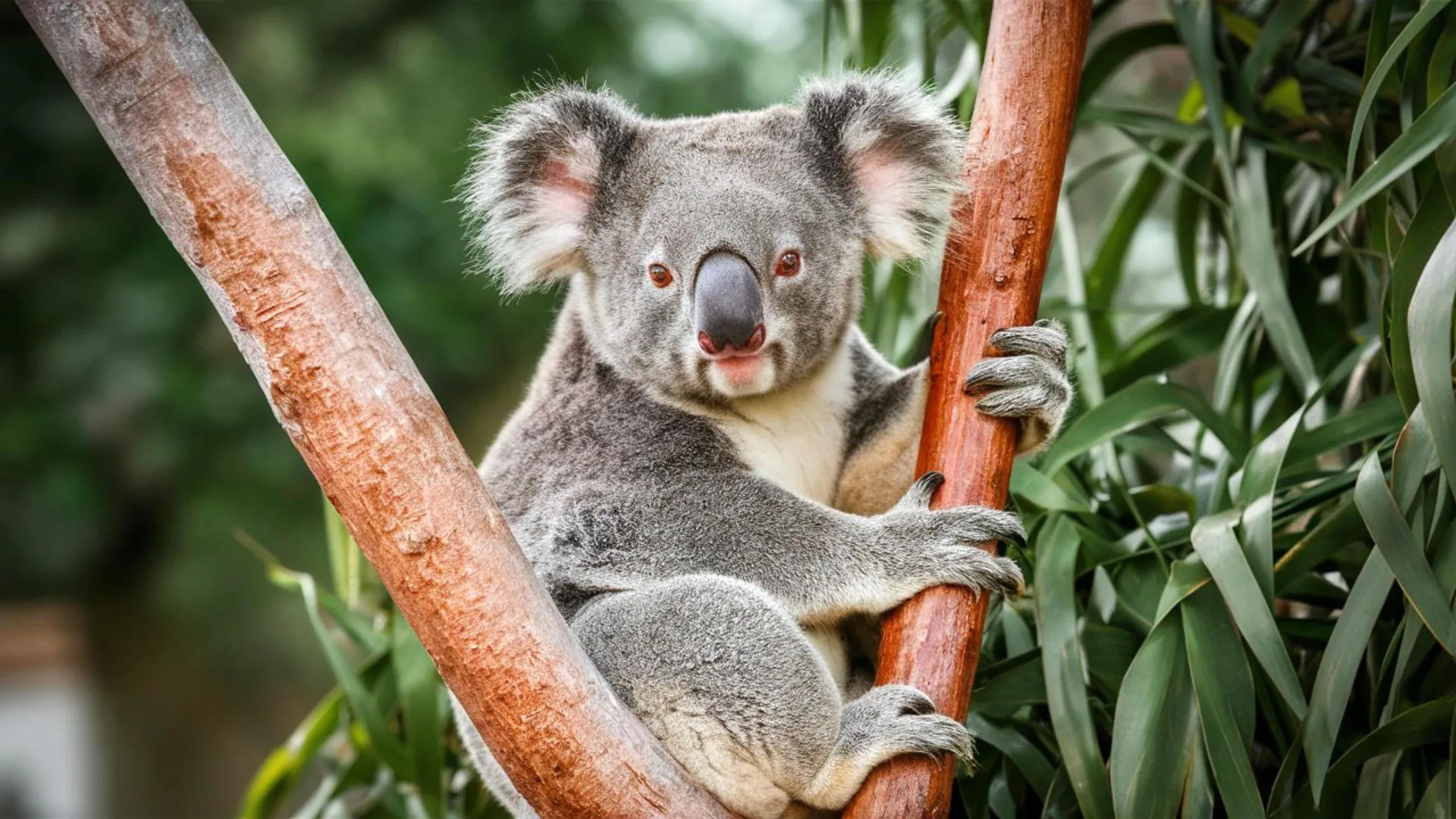
The koala's story has always carried an air of fragility, but the fossil record could only hint at the depths of that vulnerability. Now, by calculating the koala's mutation rate for the first time and analyzing hundreds of genomes, researchers have pinned down a dramatic population collapse roughly 100,000 years ago, long before humans reached Australia. Every living koala descends from that small, resilient group. That is not just a detail about the past; it is a measurable fact about the present, one that should recalibrate how we think about species resilience in the face of climate stress.
This study lands in stark contrast to the kinds of marine and geological stories we often track, such as the Bulk Carrier Freed After Prolonged Grounding Near Gladstone, Australia, where human error and infrastructure collide with immediate coastal risk. Here, the threat was not a single vessel or a sudden event, but a slow, planetary shift in aridity and temperature. The koala's ancient bottleneck is a reminder that climate-driven extinction risk is not a new phenomenon. What is new is the precision with which we can now measure it. That precision is not academic. It gives conservation managers a baseline for genetic health that they simply did not have before. If a species like the koala can contract to a tiny remnant and recover, the question is not whether it can survive, but what it loses along the way.
We would tell a reader who asked about this study that the real news is not the collapse itself, but the method. Mutation rates are the clock by which all evolutionary history is read, and until now, no one had calibrated that clock for koalas. That means every previous estimate of their demographic history was a guess. This work turns a guess into a measurement. It also changes the calculus for modern conservation. When we talk about genetic diversity, we are not just talking about numbers in a lab; we are talking about the capacity to adapt to a changing planet. The fact that koalas bounced back once does not guarantee they will do so again, especially when their habitat is now fragmented by roads, fires, and land clearing. The same era that produced this ancient survivor is not the one we live in now, as evidenced by the Fossilized Poop Reveals Feathered Dinosaur Traits Linked to Survival, which shows that even among survivors, specific traits determine who makes it through a mass extinction.
What we find most striking is the implication for how we sequence conservation action today. If we accept that a species can persist through a severe genetic bottleneck, then the argument for protecting current populations becomes less about preventing any loss and more about preserving the breadth of adaptive options. The koala's genome is not a fixed asset; it is a living archive of past choices, and this study shows that archive is thinner than we assumed. The takeaway we would underline for policymakers and researchers alike is this: genetic monitoring is no longer a luxury for charismatic megafauna. It is a practical tool for measuring resilience in real time, as essential as tracking sea surface temperatures or fault lines. The next time someone asks why we should care about a single species, point to this study and note that the koala has already survived one existential threat. The question is whether we can say the same for the ecosystems they inhabit, and whether we are willing to use the tools we now have to find out. Watch for the next step: whether this mutation rate gets integrated into national recovery plans, because that will tell us if the lesson was truly learned.