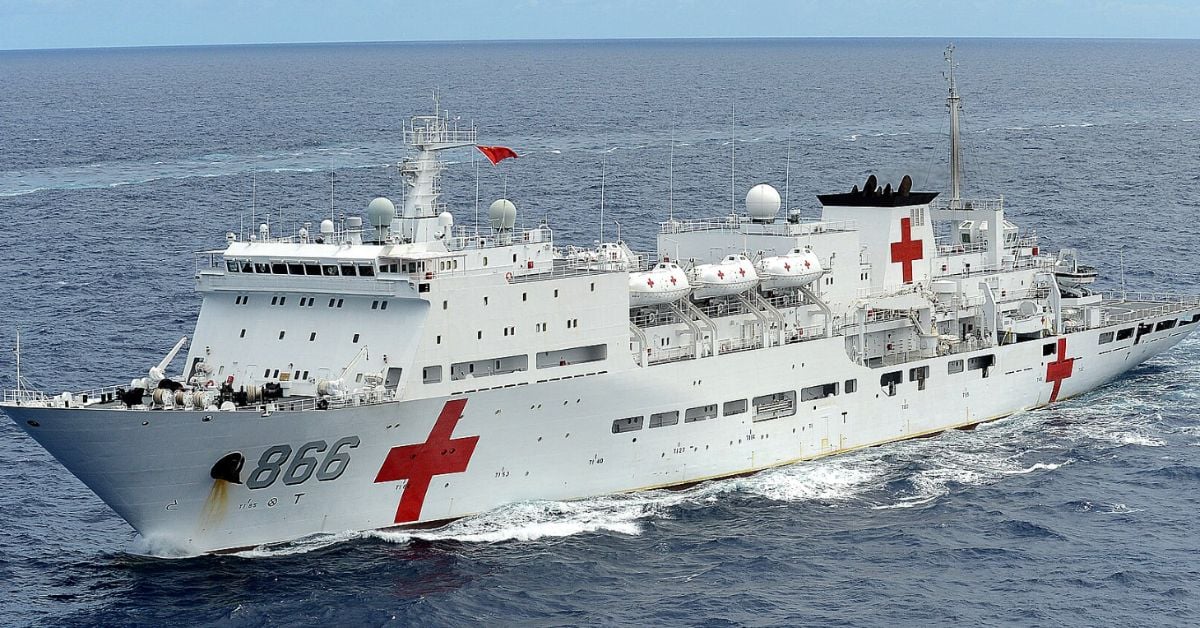
The arrival of the 10,000-ton Auspicious Ark in Abidjan represents a tangible model of how maritime assets can serve humanitarian ends, and we believe this is a deployment worth watching closely. This is not merely a diplomatic port call; it is a calibrated demonstration of how naval capability, medical expertise, and international partnership can converge into measurable, real-time impact for local communities. For our readers, researchers, policymakers, and ocean enthusiasts alike, the mission offers a concrete case study in the operational logistics of ocean-based humanitarian aid, a field where data on outcomes is often scarce.
The Type 920 hospital ship, commissioned only last year, carries more than 100 doctors from the PLA Northern Theater Command Navy and the Naval Medical University, with 18 clinical departments and eight operating theatres. During its week-long stay, the crew will treat patients, visit the Military Hospital in Abidjan, and conduct disease-prevention outreach at a local university. This mirrors a pattern we have seen before: the ship's previous stop in Guinea, where it treated locals onboard and sent units to the China-Guinea Friendship Hospital, suggests a replicable protocol for short-duration medical missions. The broader context is also instructive. While the Auspicious Ark conducts its mission, we are simultaneously tracking the commissioning of India's indigenously built Indigenous Multipurpose Vessel Samarthak Joins Indian Navy at Karwar, a vessel designed for oceanographic research and humanitarian assistance. Both ships illustrate a growing trend: navies are increasingly integrating medical and scientific capabilities into their fleets, moving beyond traditional combat roles to address shared challenges in ocean health and human welfare.
The practical significance for our audience is twofold. First, the deployment provides a rare opportunity to collect empirical data on the effectiveness of ship-based medical interventions in West Africa, data that could inform future integrated data ecosystems for disaster response. Second, it raises an open question about how such missions can be coordinated with existing health infrastructure. The ship's doctors are meeting local leaders and students, but the real test will be whether the treatments and awareness campaigns produce measurable, longitudinal improvements in community health outcomes. We note that the diplomatic framing, renewing a partnership begun in 1983, is purposeful, but the operational details matter more. For instance, the ship left Qingdao in July for a 200-day deployment covering South Asia and Africa, a schedule that demands precise logistical planning across multiple jurisdictions. How the medical team adapts to varying local conditions, from port facilities to disease prevalence, will yield insights that go far beyond any single mission. The one detail to watch is whether the ship's next port of call produces comparable data on patient volume and treatment types, allowing for a cross-site comparison that could validate the model for broader adoption.