research
69 stories filed under research on World Data Ocean. The newest of them: “Advancing Earth System Science: A Call for Collaborative Research.”, “Illuminating the Deep: A Conversation with Ocean Pioneer Dr. Sylvia Earle”, and “Eleuthera's Depths: Fieldwork Imagery from the Bahamas”. Understanding drives protection, and this call for collaborative research on Earth system science reflects that principle. Dr. A Global Hub for Ocean Intelligence 4 World Data Ocean is a centralized digital platform where researchers, scientists, and ocean enthusiasts converge to… The list below is every research story on World Data Ocean, newest first.
Advancing Earth System Science: A Call for Collaborative Research.
Understanding drives protection, and this call for collaborative research on Earth system science reflects that principle. This persistence, moving from theoretical frameworks to computational models, shows a dedication we share. They've sought dialogue elsewhere with limited success, which is why this invitation matters. For those exploring similar questions, our related article, "Calibrated ocean intelligence, now within reach through integrated data discovery," offers a practical entry point. Earth system science thrives on shared inquiry, not isolated effort. We're glad to see this conversation starting.
Illuminating the Deep: A Conversation with Ocean Pioneer Dr. Sylvia Earle
Dr. Sylvia Earle has spent a lifetime making the invisible visible, and her latest conversation cuts straight to the heart of why ocean intelligence matters. She speaks with the calm authority of someone who has seen the deep transform, yet her urgency is unmistakable. We admire how she translates complex marine systems into calls for action that feel both personal and collective. For those inspired to explore further, our piece on integrating citizen science for ocean intelligence complements her perspective beautifully.

Eleuthera's Depths: Fieldwork Imagery from the Bahamas
Fieldwork imagery from Eleuthera's depths brings the Bahamas into sharper focus. The Olympus Tough TG-6 captures what survey work often misses: the quiet structure of reef systems and the play of light through clear water. These pictures remind us that visual documentation is its own form of measurement, complementing the data streams we rely on elsewhere. For readers tracking how coastal observations connect to broader ocean intelligence, our related piece on integrated subsea cables offers a wider lens on marine infrastructure.

Unexplained Phenomenon Detected Near Redondo Beach, Washington State
A single unexplained phenomenon has been detected in the waters off Redondo Beach, Washington State, and it appears isolated to that specific location. The observation raises more questions than answers, and we are inclined to treat it with the same empirical curiosity that drives our broader ocean intelligence work. It is a reminder that despite our advanced monitoring, the deep sea still holds surprises we have yet to calibrate or fully understand. We will be watching closely.
Empirical Evidence: Young Scientists Document Ocean Changes, Challenge Climate Denial
Diane and Bronwyn didn't wait for a lecture to prove what they already suspected. They gathered their own observations, measured what they could, and brought the evidence to their science teacher. Their work is a reminder that empirical truth doesn't require permission. Climate denial weakens when met with calibrated, real-world data. These young women aren't just documenting change; they're modeling how inquiry can counter assumption.
Expanding Oceanographic Research Horizons: Career Opportunities in Canada
Canada's oceanographic community extends well beyond Bedford. For a physical oceanographer and a hydrology-focused civil engineer, the University of British Columbia's Institute for the Oceans and Fisheries and the University of Victoria's Ocean Networks Canada offer strong research pathways, while Quebec's Institut des sciences de la mer provides coastal expertise. These hubs value the integrated data ecosystem you both represent. For broader context on collaborative observation, our piece on "Bridging Data Gaps: Integrating Citizen Science for Ocean Intelligence" complements this career landscape.

Hidden Worlds: Discover the Microscopic Life of Ocean Plankton
A single drop of seawater holds a universe in motion, and this reel captures that hidden vibrancy with genuine curiosity. The original poster's enthusiasm for the aquarium's plankton microscope is contagious, and their call to identify the swirling zooplankton turns observation into a shared puzzle. It is a simple, honest invitation to look closer. For those inspired to explore how such microscopic life connects to broader systems, our related article on integrated subsea cables offers a glimpse into the vast network above these tiny creatures.
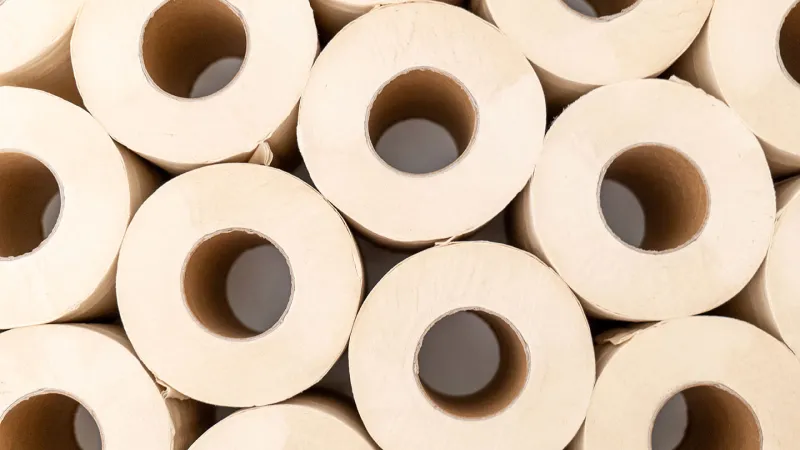
Beyond the Hype: Evaluating Bamboo Toilet Paper’s True Environmental Impact
Bamboo toilet paper is often marketed as the sustainable choice, yet its environmental credentials deserve closer scrutiny. The carbon footprint data remains surprisingly thin, leaving a gap between perception and proof. We appreciate the intent behind greener consumer options, but claims need empirical backing, not just good optics. For context on how we track ecological systems, our piece on integrated subsea cables offers a parallel on data-driven decisions. The wipe debate is far from settled, and researchers are right to push for measurable answers.

Ocean Salinity Shifts: A Longitudinal Analysis, 1955–1998
For four decades, the ocean has been quietly rewriting its own chemistry. The 2005 analysis by Boyer, published in *Geophysical Research Letters*, tracks linear salinity shifts from 1955 to 1998, offering empirical evidence of changing evaporation and precipitation patterns. This is not abstract data; it is a measurable climate indicator. Understanding these long-term trends sharpens our view of planetary change.
Ocean Intelligence: Eleven Data Innovations Transforming Our Understanding.
The ocean remains the most observed yet least understood system on Earth, and the World Economic Forum's Ocean Intelligence: Eleven Data Innovations Transforming Our Understanding confronts this paradox head-on. Eleven empirical tools, from integrated data ecosystems to real-time climate indicators, replace speculation with validated insight. It is a measured, peer-reviewed approach to stewardship, and it pairs well with our coverage of how integrated subsea cables now carry 99% of global data beneath the waves.
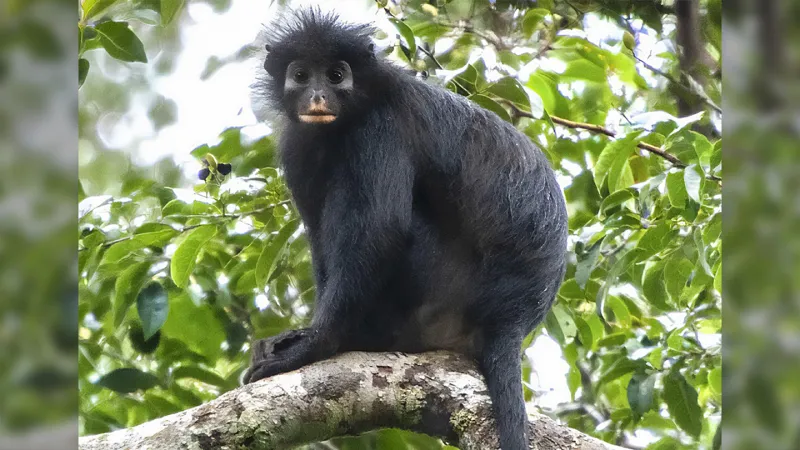
New Primate Species Discovered in Congo, Facing Potential Extinction.
A single canopy call and a partial photo were enough to signal something unknown in the Congolese treetops. DNA confirmed it: a new primate species, already facing potential extinction. Discovery at this stage is a race against time, not just a moment of celebration. The finding underscores how much remains unmapped in our natural world. For those tracking biodiversity loss, this is a sobering reminder of what is at stake.

Exploring the Cook Islands Depths: A 2026 ROV Expedition.
In 2026, a new ROV expedition will descend into the waters surrounding the Cook Islands, aiming to transform our understanding of a region whose depths remain largely unmeasured. This is not a hunt for spectacle; it is a methodical effort to gather empirical data where none currently exists. The mission's value will be defined by its calibrated instruments and the peer-reviewed findings they produce.
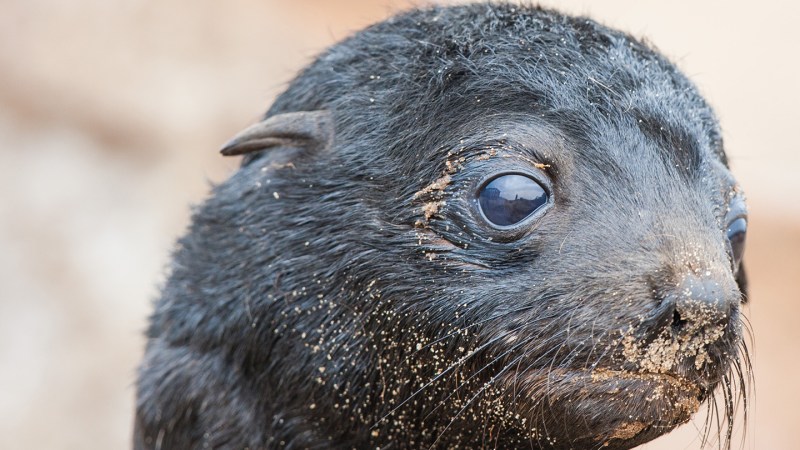
Evolutionary Scan Reveals Ancient Origins of Seals’ Dual Hearing
Pinnipeds hear with remarkable clarity in both air and water, a dual ability that evolved far earlier than previously understood. By scanning the ears of hundreds of marine mammals, researchers have traced this acoustic adaptability to ancient origins, revealing a sensory advantage that likely shaped their survival across changing environments. It is a precise, empirical reminder that evolution often works through subtle, measurable refinements.
Bridging Research and Collaboration: Marine Science Opportunities in Indonesia
A Fulbright research grant is a commitment to shared understanding, and for this student, it starts with a practical problem: securing a sponsor. The visa requires a named partner, even when funding is self-arranged. This is a common hurdle, but one that demands creative networking. The request is straightforward, and the solution lies in connection. For those in Indonesian marine science, your networks are the bridge. We recommend reading *Bridging Data Gaps: Integrating Citizen Science for Ocean Intelligence* for related context on collaborative research.
Mapping the Deep: Cook Islands ROV Exploration Set for 2026
In 2026, the Cook Islands will bring its seabed into sharper focus through a dedicated ROV exploration campaign. This is the kind of methodical, on-the-ground ocean intelligence we need more of, moving from satellite-level observation to direct, calibrated observation of the deep. It is a precise step for mapping what remains unseen. For a broader look at how these efforts connect, our piece on mapping American Samoa's seabed offers a useful regional comparison. Understanding drives protection, and this work is a clear example.
Florida Gap Year: Charting a Course for Marine Biology Exploration
A gap year after college is a strategic investment, not a pause. For this graduate, the Disney College Program offers a unique base for marine biology exploration. The best courses in Orlando are those that provide practical, transferable skills, such as GIS mapping or data analysis, complementing the SCUBA certification already in motion.
Charting a Course: Top Colleges for Marine Science and Campus Life
Choosing a college means weighing the depth of its marine science program against the energy of its campus life. You want a place where you can study ocean ecosystems and still pack the stadium on a Saturday. That balance is achievable, but it takes a specific kind of institution to pull it off. We've pinpointed several large universities that offer both strong research opportunities and a vibrant social scene.
Beyond the Lab: Finding Your Ideal Marine Science College
Choosing a college means weighing the program against the pulse of campus life. You want rigorous marine science, but you also want the roar of a Saturday stadium and a campus that feels alive. That balance is achievable. Large universities with strong research programs and vibrant social scenes do exist. For a student seeking warm weather, school spirit, and a path into marine ecology, the search should focus on institutions where both the lab and the lawn are inviting.
Ocean Heat and Oxygen Loss Linked to Ancient Marine Extinctions
Ancient marine extinctions carry a warning that reaches across millions of years. Ocean heat and oxygen loss, the same forces stressing today's seas, align with past die-offs in the fossil record. The study, published in PNAS, offers empirical grounding for what climate indicators already suggest. We treat this as more than a historical footnote, it is a calibrated measure of risk. For deeper context, our related piece on Cascadia's fragmented subduction zone shows how geological processes compound biological vulnerability.
Beyond the Shore: Exploring Career Paths with a Marine Biology Degree
A marine biology degree does not lock you to the shoreline, but the question of whether it opens doors beyond the tide is more nuanced than a simple yes. The skills you build, from data analysis to rigorous research design, are transferable, yet they require deliberate framing. A strong curriculum matters, but so does your initiative to connect those dots for employers.
Tracking the Elusive Giant Squid: A North Atlantic Research Challenge
The giant squid remains one of the ocean's most persistent mysteries, and this North Atlantic research challenge underscores why. Tracking an animal that rarely surfaces demands more than patience; it requires calibrated, real-time observation across a vast, integrated data ecosystem. The work is difficult, but the potential to turn sparse sightings into empirical knowledge is worth the effort. For context on how such data networks function elsewhere, our related article, "Integrated Subsea Cables Enhance Data Transmission Across the Indian Ocean," offers a useful parallel.