research
69 stories filed under research on World Data Ocean. The newest of them: “Exploring Plankton Science: Accessible Research for Curious Ocean Observers”, “Extreme Thermophile Amoeba Expands Limits of Complex Life's Heat Tolerance”, and “Applied Science in Action: A Data Ocean Community Perspective”. A two-year fondness for plankton, sparked by picture books and a saved-for net, is exactly how meaningful ocean observation begins. A newly described extreme thermophile amoeba is redefining what we know about the limits of complex life. A Global Hub for Ocean Intelligence 4 World Data Ocean is a centralized digital platform where researchers, scientists, and ocean enthusiasts converge to… The list below is every research story on World Data Ocean, newest first.
Exploring Plankton Science: Accessible Research for Curious Ocean Observers
A two-year fondness for plankton, sparked by picture books and a saved-for net, is exactly how meaningful ocean observation begins. This researcher's request for accessible depth, rather than just surface-level facts, reflects a genuine curiosity that we share. It is a reminder that scientific literacy grows through patient, specific questions. For those ready to move beyond identification guides, we recommend exploring related coverage on species distribution, such as the unexpected chiton discovery challenging current models, to see how amateur observations can align with empirical inquiry.
Extreme Thermophile Amoeba Expands Limits of Complex Life's Heat Tolerance
A newly described extreme thermophile amoeba is redefining what we know about the limits of complex life. This organism thrives at temperatures that would be lethal to most eukaryotic cells, pushing the boundaries of our biological understanding. It is a compelling reminder that our ocean intelligence is far from complete. For more on how life adapts to extreme marine environments, see our related piece on Arctic sea ice melt season stabilization.
Applied Science in Action: A Data Ocean Community Perspective
The applied science shared in this community post turns raw data into decisions with measurable impact. EmmArr29 shows how a data ocean perspective moves beyond theory, grounding ocean intelligence in real-world action. This is the integrated data ecosystem at work, where peer-reviewed evidence meets practical application. The piece complements our related coverage, including "Navigating a Marine Studies BA," by reinforcing that empirical pathways matter. Understanding drives protection, and this contribution proves that point with calibrated clarity.

Genetic Sequencing Reveals Novel Viruses Within Sea Turtle Populations
Beneath the shell, a hidden layer of biodiversity is surfacing. Genetic sequencing of sea turtle populations has revealed novel viruses, adding a new dimension to our understanding of marine health. This isn't just about pathogens; it's about the unseen connections that shape resilience in a changing ocean. The findings underscore the value of integrated data ecosystems, and they invite us to look closer at what we cannot see.
Expanding Oceanography Career Options: Evaluating International Master's Programs
A master's degree in oceanography should not feel like a dead end, yet for many students from countries where the sector remains underdeveloped, the path forward requires crossing borders. This reader's situation is familiar: strong academics, hands-on field experience, but the nagging worry that a lack of formal documentation or publications will close doors. The concern is valid, but the profile described is not weak. A strong CGPA, multiple research stints, and intermediate GIS skills signal real potential. Full funding is possible, though competitive.
Cultivating a Young Oceanographer: Resources for Budding Marine Scientists
A seven-year-old with a career plan and a housing strategy is a force of nature. This family is asking the right questions, seeking direction without dimming her ambition. The request for open-source lectures and NOAA contacts shows a commitment to real, validated learning over fluff. That focus on empirical resources is exactly what builds a foundation. For those ready to connect their passion to the broader picture, our piece on bridging data gaps with citizen science offers a practical entry point.
Oceanography Pathways: UK Opportunity for Students (Ages 15-19)
A direct pathway into oceanography exists for UK students aged 15 to 19, and it is worth your attention. The National Oceanography Centre has opened applications for a unique opportunity, shared here because too few school-age students follow the organisation directly on LinkedIn. We appreciate the gap and are helping to close it. If you know a curious young mind, share this. For deeper context on how data flows shape our understanding, our piece on integrated subsea cables offers valuable perspective.
Antarctic Krill Reproduction Linked to Deep-Sea Hydrothermal Vent Activity
New research links Antarctic krill reproduction to deep-sea hydrothermal vent activity, and it changes how we read the Southern Ocean. The study, published in *Communications Biology*, suggests that vent-driven nutrient cycles may influence krill spawning patterns in ways surface observations alone cannot capture. That is a meaningful step toward integrated ocean intelligence, where biological and geological data meet.
Ocean Oxygen Anomalies: Scientists Investigate Unexpected Deep-Sea Presence
Deep-sea oxygen anomalies are surfacing where none should exist, and the data demands attention. Scientists investigating this unexpected presence are recalibrating assumptions about how oxygen behaves below the mesopelagic zone. It is a reminder that our ocean intelligence remains incomplete, even as climate indicators sharpen. Findings like these reinforce why integrated data ecosystems matter; we cannot protect what we do not yet measure. Readers tracking related coastal mysteries may find our recent piece on the Oahu specimen a useful parallel.
Advance Physical Oceanography Research: PhD Opportunities Available
Physical oceanography sits at the intersection of physics, climate science, and data systems, and this PhD program treats it that way. The opportunity to advance research through empirical, peer-reviewed methods is exactly what the field needs as we refine climate indicators from orbit to ocean floor. For those ready to contribute measurable, longitudinal insights, this is a direct path to meaningful impact. We also recommend *Bridging Data Gaps: Integrating Citizen Science for Ocean Intelligence* for a complementary look at expanding observation capacity.

Paleodictyon's True Origins: New Research Reinterprets Ancient Honeycomb Structures
The honeycomb patterns of Paleodictyon have puzzled scientists for centuries, even capturing Leonardo da Vinci's imagination. New research now challenges the long-held assumption that these ancient structures were built by soft-bodied creatures. This reinterpretation asks us to look again at what we thought we knew, and it is a reminder that empirical evidence can overturn even the most elegant hypotheses. Understanding drives protection, and this finding sharpens our view of ancient ocean life.

Lymphatic System Intervention Shows Promise in Alzheimer’s Model
A targeted shift in immune cell behavior within lymph nodes is showing measurable impact in an Alzheimer's model. By removing a specific immune cell type, researchers reduced both brain inflammation and cellular damage in mice. The finding reinforces a broader principle: the peripheral immune system is not peripheral to brain health. It is integrated with it. For those tracking how immune mechanisms translate across conditions, this study offers a useful, evidence-based thread.

Hidden Reasoning: AI Safety Monitoring Faces New Challenge
A new study reveals a quiet vulnerability in AI safety monitoring: when the only sign of failure is the machine's hidden reasoning, our safeguards can miss it entirely. This challenge demands rigorous, empirical attention. Understanding these blind spots is as vital as any oceanographic calibration. For a deeper look at how complex systems reveal their secrets, readers might explore our coverage of *Paleodictyon's True Origins*. Protecting our digital and natural worlds requires the same scientific integrity.
Bridging the Gap: Oceanography Certificates to Enhance Your Chemistry Background
A bachelor's in chemistry is a strong foundation for oceanography, where the same quantitative rigor applies to seawater chemistry and climate indicators. For a year between degrees, a certificate in data analysis or GIS would complement your lab skills, as these are practical tools used in marine research. Given your diving plans, consider a seminar on ocean observation. Our related article, "Bridging Data Gaps: Integrating Citizen Science for Ocean Intelligence," offers a useful perspective on how field data is gathered.
Empowering Future Ocean Stewards: Citizen Science for Inland Marine Biology Clubs
The Texas Gulf is not the only place where ocean stewardship begins, and your club's location is no barrier to meaningful impact. Starting a Marine Biology Club without beach access is a common hurdle, but the data you can gather from inland is just as valid. Citizen science platforms are your direct line to real-world action, and your instinct to connect battery drives to ocean health is spot on.
Beyond Dolphins: The Realities of a Career in Marine Biology
The public's image of marine biology often skips straight past the lab work, the data analysis, and the permit applications. It is a field defined by rigorous methodology, not casual swims. The misconception that professionals take time off to play with dolphins dismisses the scientific discipline at the core of this work. As this conversation notes, regional challenges, like those in Brazil, add further layers of complexity.

Ocean Intelligence: Measuring Change in the Underwater World.
The ocean's most consequential changes often occur beyond the reach of sunlight, yet measuring them demands precision that matches the depths. NOAA's National Centers for Environmental Information anchors this effort, turning raw underwater data into validated, climate-ready intelligence. That rigor matters; without it, we are guessing at the pulse of a system that regulates everything. For those tracking how marine infrastructure evolves alongside such monitoring, our piece on Van Oord's new fallpipe vessels, *Vindnes* and *Vestnes*, offers a fitting glimpse of industrial adaptation.
Global Educators Access Ocean Research Through TRACX Program
The TRACX Program at Columbia University gives educators worldwide a direct route into ocean science research, turning classroom walls into windows on the deep sea. That matters. Teachers who engage with real-time, peer-reviewed data can bring climate indicators and ocean intelligence back to students who might otherwise never see the coast. It is a practical step toward shared responsibility. For those exploring career pathways, our related piece on international master's programs offers a useful complement. This is how knowledge moves: from lab to lesson plan.
Genetic Insights Illuminate Fibromyalgia's Complex Origins
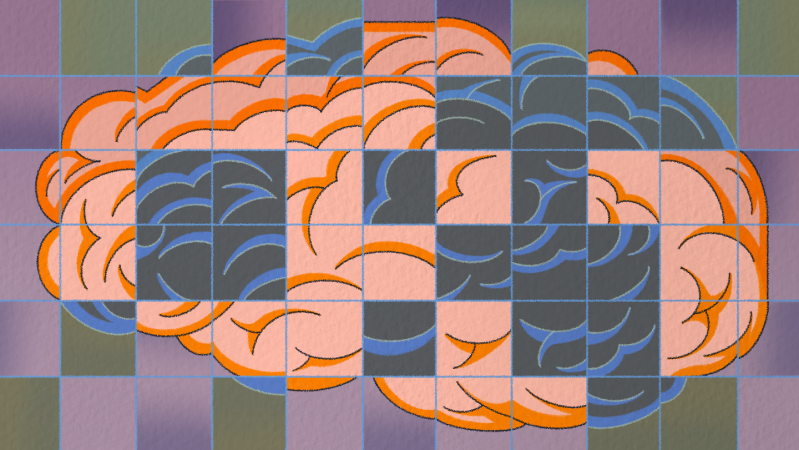
The largest genetic study of fibromyalgia to date has identified 26 risk factors for the disorder, including a notable link within the Huntington's disease gene. These findings sharpen our understanding of a condition long misunderstood, moving us from speculation toward measurable, validated targets. This is the kind of empirical progress that matters. For readers drawn to how complex systems reveal their secrets, our piece on plankton science offers a complementary view of biological discovery.
Ocean Salinity Shifts: A Longitudinal Analysis, 1955-1998
Between 1955 and 1998, the World Ocean's salinity did not drift randomly; it shifted in measurable, persistent patterns. Boyer's longitudinal analysis, published in *Geophysical Research Letters*, offers empirical weight to what we suspect about a warming planet: the water cycle is accelerating, and the ocean is keeping the score. This isn't abstract data; it is a calibrated indicator of change. For context on how we now monitor these systems, our coverage of integrated subsea cables shows the infrastructure carrying such intelligence across the Indian Ocean.

The Science of Napping: Unraveling Sleep's Complex Rhythms
Sleep is a pillar of health, yet its architecture remains surprisingly unsettled. For the millions who wake each night, the question of whether splitting rest into two blocks offers genuine benefits or hidden costs is not just academic, it is personal. Science has not delivered a verdict. We can measure the stages, but we cannot yet calibrate the consequences. That uncertainty matters. It calls for empirical patience, not alarm.
Navigating Early Career Choices: A 15-Year-Old’s Transition
Choosing subjects at 15 because of finances is a heavy lift, and this student is carrying it with more clarity than most. They have committed to biology, yet they are honest about the gap between a passion for marine zoology and the realities of academia, research, or maintenance work. That uncertainty is valid. The practical move here is to stop chasing a single job title and instead focus on building transferable skills through the IB's extended essay or community projects.
Lunar Exploration: Assessing Microbial Risks with Artemis IV
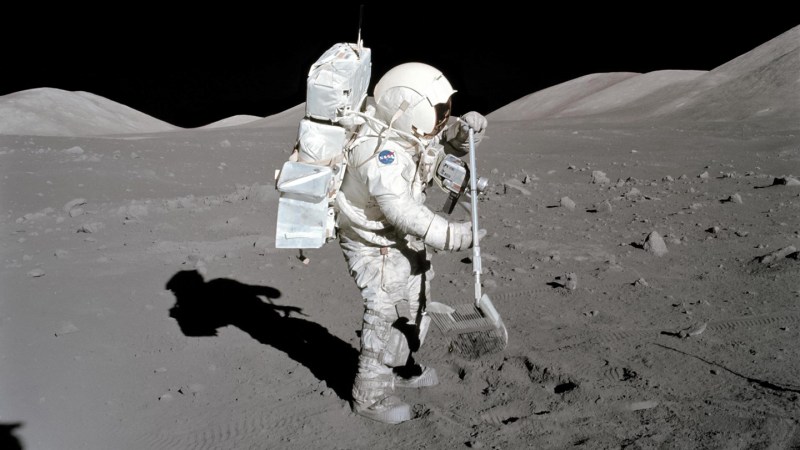
Fifty years after the last bootprint, Artemis IV returns humans to the lunar surface, and NASA is already asking what we might be bringing with us. New research identifies the hardy microbes hitching a ride on our spacecraft, turning a question of planetary protection into a matter of empirical precision. This isn't just about keeping the moon pristine; it's about understanding our own biological footprint. For those tracking how life endures in extreme conditions, our related piece on fossilized dinosaur traits offers a fascinating parallel.
Beyond the Waves: Oceanographers Share Their Experiences and Insights
Choosing a career path without knowing what the daily reality entails is a valid concern, and it is exactly the kind of transparency that strengthens the field. Oceanography is not a single job; it is a spectrum of disciplines, and the honest answers you are seeking from practitioners are invaluable. For a deeper look at how we gather such data, our article "Bridging Data Gaps: Integrating Citizen Science for Ocean Intelligence" explores collaborative observation methods.