marine environment
marine environment at World Data Ocean is a file of 44 stories. The newest of them: “Black Sea stability is a measurable climate and food security indicator”, “Deep-sea survey confirms 200,000 leaking barrels of Cold War radioactive waste”, and “Submerged servers validate a new frontier for efficient ocean intelligence”. Black Sea stability is a measurable climate and food security indicator. Two hundred thousand barrels of Cold War-era radioactive waste are now visibly leaking on the Atlantic seafloor. A Global Hub for Ocean Intelligence 4 World Data Ocean is a centralized digital platform where researchers, scientists, and ocean enthusiasts converge to… The list below is every marine environment story on World Data Ocean, newest first.
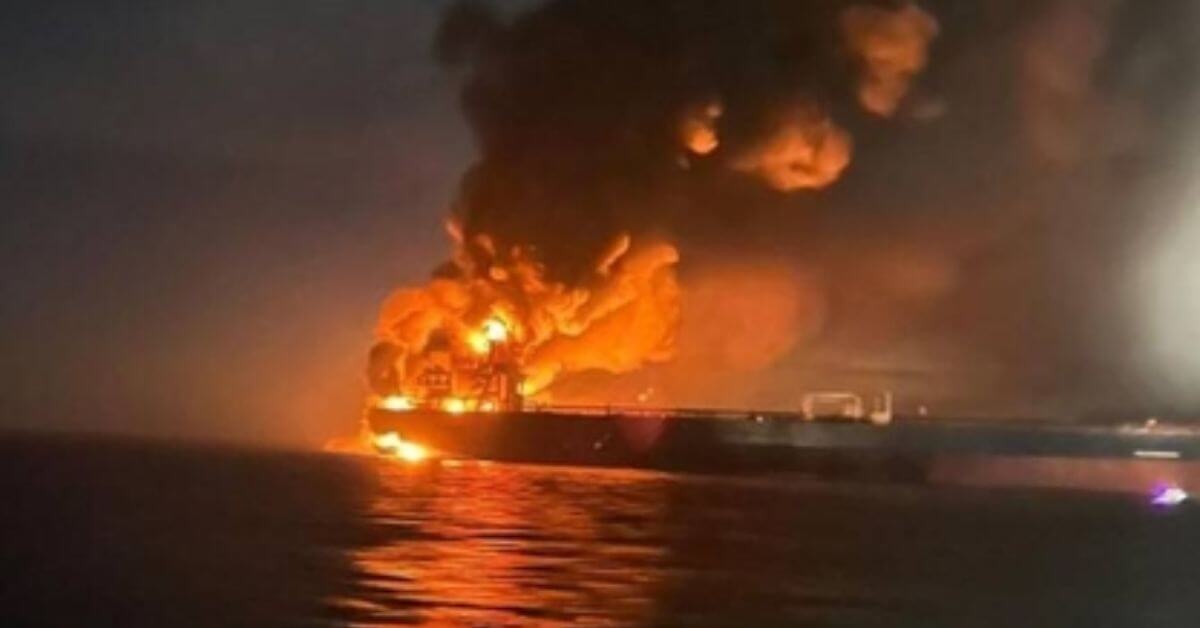
Black Sea stability is a measurable climate and food security indicator
Black Sea stability is a measurable climate and food security indicator. When maritime attacks disrupt grain shipments, the consequences ripple far beyond regional borders. Turkish Foreign Minister Hakan Fidan's warning underscores a basic truth: ocean intelligence is food intelligence. These waters are not a side conflict. They are a calibrated signal of global risk. For deeper context on mounting maritime threats, see our coverage of the recent attacks that injured two Indian seafarers.
Deep-sea survey confirms 200,000 leaking barrels of Cold War radioactive waste
Two hundred thousand barrels of Cold War-era radioactive waste are now visibly leaking on the Atlantic seafloor. A new deep-sea survey confirms what many feared: this historical dumping was never truly contained. The measured data are sobering, but they also empower action. This is not an alarm, it is empirical evidence demanding a calibrated, global response. Understanding drives protection. For more on how we track ocean pollutants, see our coverage of "Seafloor sediment confirmed as a vast plastic pollution reservoir."
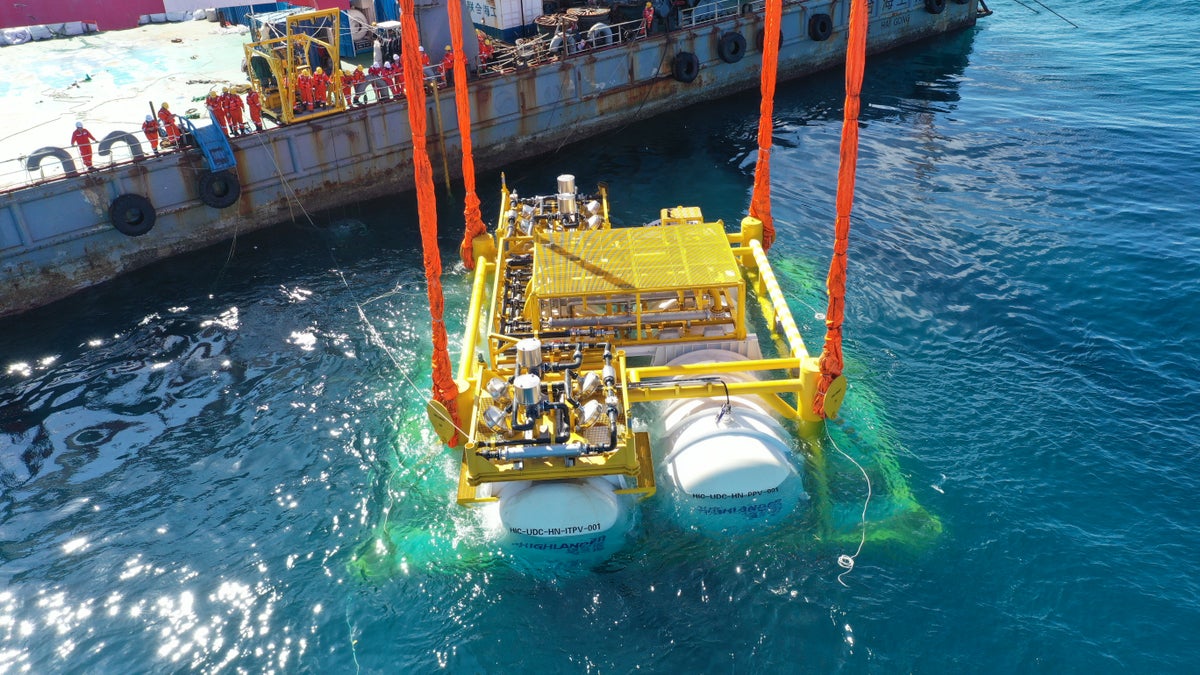
Submerged servers validate a new frontier for efficient ocean intelligence
Submerged data centers validate a new frontier for efficient ocean intelligence. China's deployment of ocean-cooled servers is not a speculative experiment, it is a measurable step toward integrating computing infrastructure with the marine environment. This approach addresses a real constraint: the energy cost of keeping processors cold. For a fuller picture of how life and energy move through these systems, see our related mapping of life's mass across oceans, land, and deep subsurface.
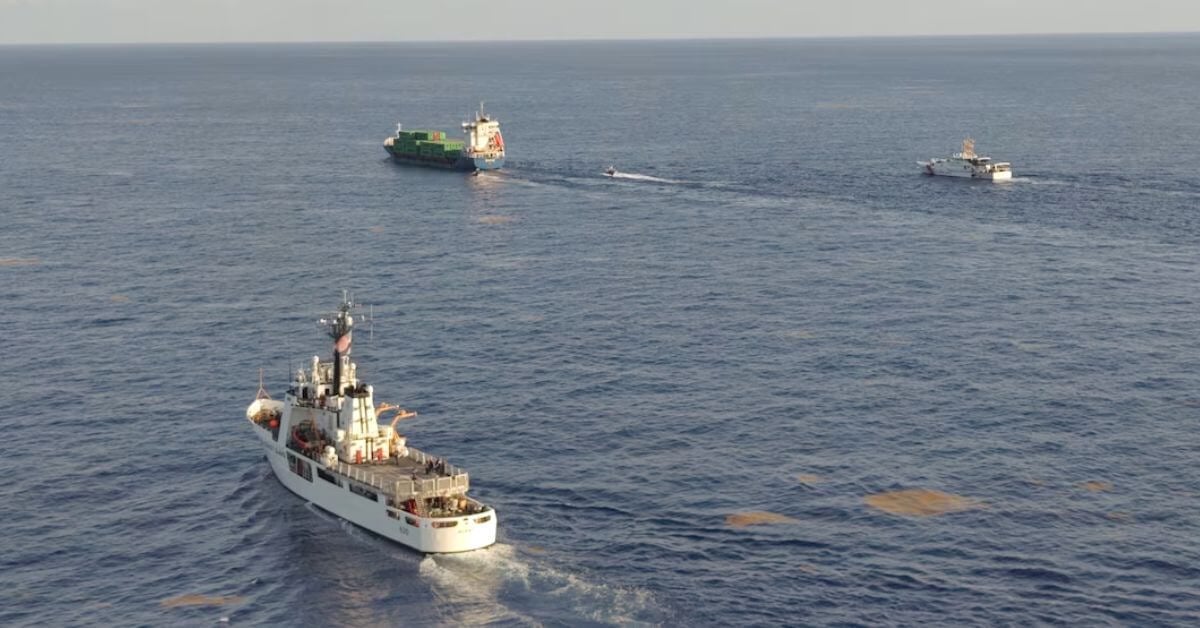
Enforcement action halts fuel shipment bound for Cuba in Gulf transit
The M/V Grace was intercepted mid-Gulf, its fuel shipment halted en route to Cuba by a targeted enforcement action. Coast Guard personnel boarded the vessel between Cuba and Mexico before diverting it to Mexico. This is border enforcement with direct geopolitical stakes, no ambiguity, no delay. For those tracking how legal frameworks meet maritime realities, our piece *Closing the Gap in Transboundary Marine Protection Through Legal Innovation* examines precisely how governance adapts when jurisdiction shifts at sea.

Unidentified Marine Life Observed in South Florida Waters
A community post about unidentified marine life in South Florida waters raises the kind of question that drives ocean intelligence forward. The observer's surprise at seeing these creatures "swing" in the water is a reminder that our understanding of marine ecosystems remains incomplete. Validated observation, even anecdotal, is a starting point for empirical inquiry. We encourage further reporting and documentation, as such data can contribute to a more integrated data ecosystem.
Leveraging Computer Science Skills for Ocean Conservation Pathways
You don't need to choose between a desk and the deck. A CS background, paired with a GIS certificate, opens a credible pathway into ocean conservation without abandoning Seattle's tech ecosystem. The market values calibrated, integrated data skills, and roles in marine spatial planning or fisheries analytics are growing. Friday Harbor's post-bach option offers tangible field exposure. It's a practical, measurable first step, not a detour. Understanding drives protection, and your skills are already part of that equation.
Cultivating a Young Oceanographer: Resources for Budding Marine Scientists
A seven-year-old with a career plan and a housing strategy is a force of nature. This family is asking the right questions, seeking direction without dimming her ambition. The request for open-source lectures and NOAA contacts shows a commitment to real, validated learning over fluff. That focus on empirical resources is exactly what builds a foundation. For those ready to connect their passion to the broader picture, our piece on bridging data gaps with citizen science offers a practical entry point.
Ocean Oxygen Anomalies: Scientists Investigate Unexpected Deep-Sea Presence
Deep-sea oxygen anomalies are surfacing where none should exist, and the data demands attention. Scientists investigating this unexpected presence are recalibrating assumptions about how oxygen behaves below the mesopelagic zone. It is a reminder that our ocean intelligence remains incomplete, even as climate indicators sharpen. Findings like these reinforce why integrated data ecosystems matter; we cannot protect what we do not yet measure. Readers tracking related coastal mysteries may find our recent piece on the Oahu specimen a useful parallel.
Modeling the Salinity Threshold for Atlantic Overturning Circulation
The question arrives with the weight of a thought experiment: what if we moved desalination's salty byproduct to Greenland's fjords? The scale is stark. Greenland's ice sheet already releases roughly 2.5 million litres of fresh water every second, while 22,000 plants generate up to 109 million cubic metres of brine daily. Transporting that brine is a logistical feat, yet the ocean's own mixing dwarfs our efforts. The AMOC's collapse hinges on salinity thresholds we are only beginning to map.

Human Impact Reveals Shifting Biogeochemical Patterns in Marine Ecosystems
Measured shifts in marine biogeochemical patterns now point to a clear conclusion: human activity is redefining ocean chemistry at scale. These are not abstract anomalies but calibrated signals, tracked through integrated data ecosystems and peer-reviewed observation. We see this as an opportunity to refine our understanding, not an excuse for alarm. The evidence demands rigorous attention and shared response. For those tracking how marine structures challenge assumptions, our related coverage, including the Port Phillip Bay debate, offers useful context.
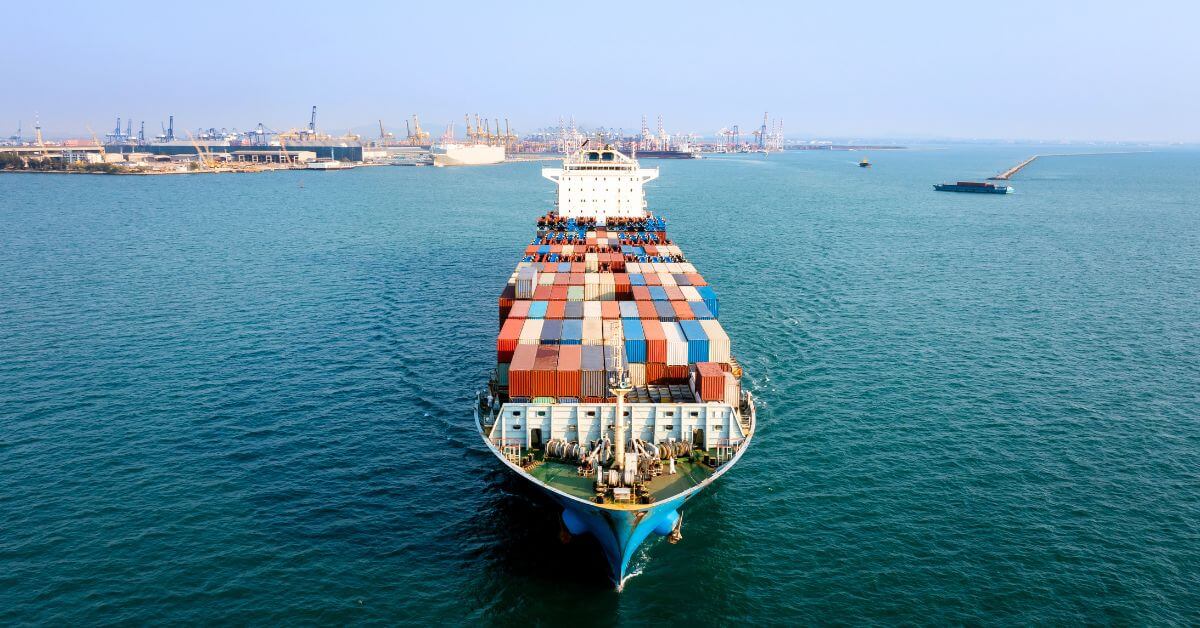
Rising Battery Shipments Demand Enhanced Safety Protocols.
Global lithium-ion battery deployments in 2025 reached six times the volume of 2020, a validated surge that demands calibrated safety protocols. This rapid scaling of energy storage is measurable progress, but it also introduces new risks we must address with the same empirical rigor that drives ocean intelligence. Understanding drives protection. For deeper context on maritime safety, our analysis of the NTSB's 2025 Safer Seas Digest offers peer-reviewed lessons from recent casualties.
Rising Porpoise Sounds Signal Baltic Sea Population Shift
Acoustic monitoring has detected a measurable rise in porpoise vocalizations across the Baltic, signaling a population shift we cannot ignore. These calibrated, real-time data points offer empirical evidence of changing marine behavior, a clear climate indicator demanding our attention. Understanding drives protection. For deeper context on how such ocean intelligence informs career pathways in marine science, see our related piece, "Navigating a Marine Studies BA: Pathways to a Marine Biology Career."
Bridging Data Science and Oceanography: Pathways for Aspiring Researchers
Understanding the ocean has never been more attainable for those entering the field without a traditional background. Your question reflects a common starting point, and the path is more open than you might think. Focus on building quantitative skills, particularly in statistics and programming with Python or R, as these are the currency of modern oceanographic research. Pair that with a genuine curiosity for how data translates into climate indicators.
Bridging Geography and Oceanography: A Path to Marine Science Research
A Geography undergrad with QGIS skills and a pull toward oceanography is holding a map to a door that's already slightly open. The gap between land-based spatial thinking and marine science is real, but it is not a wall, it's a bridge. Your GIS background is a validated entry point, not a consolation prize. Start with marine-focused QGIS tutorials and coastal data sets; pair them with open-access oceanography courses to build the science vocabulary.
Mapping the Seafloor: Detecting Ghost Nets with Side-Scan Sonar
A single sonar ping can reveal a tangled net resting on the seafloor, but telling it apart from a rock or a reef is where the real work begins. Oceanographers still guide much of the detection process manually, interpreting acoustic returns frame by frame. Ghost nets are difficult to classify because their shape and density vary with depth, current, and decay. Side-scan sonar offers a clear image, yet the final call often rests on human judgment.

California Sighting: Identifying Potential Porpoises Off Dana Point Coast
A 50-mile offshore sighting near Dana Point leaves room for genuine uncertainty. The captain's call was porpoises, but the observer's hesitation is warranted; without sharper imagery, confirmation stays elusive. That caution matters. In ocean observation, validated identification begins with calibrated records, and this query models the right instinct: ask, verify, and share. For readers tracking similar marine puzzles, our related piece on the unexpected chiton discovery off Puerto Rico underscores how often species distribution models meet their exceptions.

Real-Time Ocean Data Fuels Climate Insights Through GLODAP.
The ocean speaks in data, and GLODAP ensures we are listening. By integrating real-time observations with the rigorous standards of peer-reviewed science, this initiative turns raw measurements into validated climate indicators. We see this as a vital step toward actionable ocean intelligence, proving that what happens beneath the surface shapes our global climate reality. It is a clear, empirical call for collaborative stewardship, and for those charting a career in this field, our piece on international Master's programs offers a practical next step.
Deep Ocean Warming: Longitudinal Data Reveals a Concerning Trend.
The ocean's abyss was long considered a stable, slow-motion frontier, but new longitudinal data now shows the deepest layers are warming. This is not a distant anomaly; it is a measurable shift in a system we rely on for climate stability. We find this trend deeply concerning, yet it reinforces why sustained observation matters. As we track these changes, we must connect them to broader disruptions, much like our recent analysis of Atlantic Circulation Weakens, to fully grasp the scale of what is unfolding.
Blockchain: Enhancing Safety and Transparency in Dangerous Goods Transport
A shipper who quietly reclassifies dangerous goods as general cargo may save time and money, but the vessel, the port, and the marine environment inherit the risk. Our new study asks whether blockchain-enabled documentation can break this dangerous habit. The answer is not a simple yes. The technology cuts preparation time, yet it also raises costs, and our model shows that when the price penalty outweighs the time saved, undeclaration actually increases. Blockchain is a tool, not a cure.
Measuring Element Fluxes: Advancing Chemical Oceanography Research.
Chemical oceanography has long measured what enters the sea, but tracing where those elements actually go remains the harder question. This research direction pushes beyond simple concentration maps toward integrated, real-time flux tracking. That matters. Without calibrated, longitudinal data on element movement, our climate indicators stay incomplete. We explore why this empirical shift strengthens ocean intelligence and supports peer-reviewed modeling. For those tracking career pathways alongside these advances, our related piece on international master's programs offers a practical complement.

Red Sea Shipping Disrupted: Missile Strike Impacts Oil Tanker Near Yanbu
A ballistic missile strike has disrupted shipping near Yanbu, with the Houthis reporting that the tanker Amzan, operated by Bahri, was hit. The incident underscores how fragile Red Sea transit has become for energy flows. This is not an isolated disruption; it follows reports of Gulf of Oman STS transfers maxing out amid rising Saudi exports. The interconnected pressure on these routes demands attention.
Ocean Temperatures Reach Record High, Validating Climate Change Indicators.
August's ocean temperatures set a new record, and the data is unambiguous. This isn't a fleeting anomaly; it's a measurable signal that aligns with established climate indicators. We track these shifts because they carry consequences far beyond the surface. For those seeking to understand the mechanisms at play, our coverage of how magma and microbial activity may rewrite a 2-billion-year-old carbon signal offers a deeper, peer-reviewed perspective. The ocean is speaking in records; our role is to listen with calibrated, scientific rigor.
Rapid PAH Assessment in Seabirds Reveals Contamination Risks.
A validated HPLC method now gives researchers a practical way to measure PAH contamination in seabird blood plasma, with limits of quantification comparable to recent studies. Applied to Brown boobies along the Rio de Janeiro coast, the approach revealed low-level exposure consistent with chronic background contamination rather than acute events. That distinction matters. The method's simplicity reduces handling risks and supports ongoing monitoring. For readers tracking related environmental health risks, our coverage of automated soil microplastic separation offers a complementary look at contaminant detection.
Community Insights Shape Ocean Management in Vietnam’s Coastal Zone
Coastal communities in Vietnam's Cù Lao Chàm, Hội An Biosphere Reserve are not passive observers of marine change; they are precise chroniclers of it. Surveying 252 residents, this study reveals that local perceptions of environmental shifts are structured, place-specific, and consistent across past and future outlooks. Notably, residents perceived declines in marine resources and aquaculture, while marine habitats showed signs of improvement.