marine environment
marine environment at World Data Ocean is a file of 44 stories. The newest of them: “Beyond the Waves: Oceanographers Share Their Experiences and Insights”, “Ensuring Longevity: Assessing Offshore Wind Turbine Structure Reliability at Sea”, and “Tracking Plastic's Reach: Ocean Intelligence from Remote Waters.”. Choosing a career path without knowing what the daily reality entails is a valid concern, and it is exactly the kind of transparency that strengthens the field. Offshore wind is moving into deeper water, and that demands more than ambition. A Global Hub for Ocean Intelligence 4 World Data Ocean is a centralized digital platform where researchers, scientists, and ocean enthusiasts converge to… The list below is every marine environment story on World Data Ocean, newest first.
Beyond the Waves: Oceanographers Share Their Experiences and Insights
Choosing a career path without knowing what the daily reality entails is a valid concern, and it is exactly the kind of transparency that strengthens the field. Oceanography is not a single job; it is a spectrum of disciplines, and the honest answers you are seeking from practitioners are invaluable. For a deeper look at how we gather such data, our article "Bridging Data Gaps: Integrating Citizen Science for Ocean Intelligence" explores collaborative observation methods.

Ensuring Longevity: Assessing Offshore Wind Turbine Structure Reliability at Sea
Offshore wind is moving into deeper water, and that demands more than ambition. It demands proof of endurance. This review confronts the hard realities of support structures, from monopiles to tension-leg platforms, where cyclic loading, corrosion, and scour test every design assumption. The authors rightly stress that long-term monitoring and integrated maintenance frameworks remain underdeveloped. We cannot rely on predictive models alone; field validation is the missing link.
Tracking Plastic's Reach: Ocean Intelligence from Remote Waters.
Plastic debris doesn't stay where we drop it. New tracking from remote waters shows how far it travels, and the data is telling a clearer story than ever before. This kind of ocean intelligence turns scattered observations into something measurable, something we can act on. It's a reminder that the problem isn't out of sight, just out of sightlines. For readers drawn to the unseen, our piece on unidentified marine life offers a complementary glimpse into what else moves beneath the surface.
Illuminating the Deep: A Conversation with Ocean Pioneer Dr. Sylvia Earle
Dr. Sylvia Earle has spent a lifetime making the invisible visible, and her latest conversation cuts straight to the heart of why ocean intelligence matters. She speaks with the calm authority of someone who has seen the deep transform, yet her urgency is unmistakable. We admire how she translates complex marine systems into calls for action that feel both personal and collective. For those inspired to explore further, our piece on integrating citizen science for ocean intelligence complements her perspective beautifully.
Coastal Echoes: Exploring Abandonment and Discovery in North Sulawesi
An abandoned seaside building in North Sulawesi is more than a relic; it is a quiet classroom. For someone new to oceanography, this discovery offers a tangible entry point into coastal observation, where every structure reshaped by salt and tide holds data. The community's shared expertise can transform curiosity into calibrated understanding. While our recent coverage, such as the bulk carrier grounding near Gladstone, highlights maritime risk, this find reminds us that discovery often begins where human presence recedes.
Ocean Stewardship: A Foundation for Long-Term Human Survival
The deep ocean has already passed the multi-hundred-million-year test, and that is where our focus belongs. Land and space remain fragile, unproven options, while the ocean's stability has quietly outlasted every extinction event. The argument here is not about escape, but about learning to live within a system that has proven its resilience. We should treat the ocean as our primary environment, not a backup plan.

Pink Biofilm Emerges in Oyster Hatchery Tanks: Investigating the Source
Pink patches forming on hatchery tank walls raise a question worth answering with precision. A facility operator in NYS DEC zone 1, pumping harbor water directly into oyster and clam tanks, has noticed these growths during routine cleaning. Identifying the source matters, since tank conditions directly affect larval health. The observation is practical, measurable, and exactly the kind of empirical lead that benefits from shared investigation.

Mysterious Shells Wash Ashore in Providence, MA – What Species Do They Hide?
A cluster of shells on a Providence beach raises a straightforward question: what species are we looking at? For a coastal community, this is more than a casual find. It is a chance to turn curiosity into observation, to test identification skills against the empirical evidence scattered in the intertidal zone. The mystery invites patience, not speculation.
Distinct Water Patterns: Exploring Possible Langmuir Circulation in Coastal Waters
A long, slick-like patch of water appearing in the same coastal spot, regardless of the hour, is a compelling puzzle. The observer's instinct to look beyond a simple surface explanation is correct. Langmuir circulation, where wind-driven currents form parallel counter-rotating cells, is a strong candidate, yet the consistency of the location suggests a fixed seabed feature might be steering the flow. It is a neat piece of field observation.

MSC Baltic III Salvage Operation Underway Following Grounding Event
The MSC Baltic III's grounding near Wild Cove in February 2025, after losing power in severe weather, has moved into the salvage phase. A salvage operation is now underway. It is a demanding environment, and the response will require careful, validated assessments. We have seen similar challenges elsewhere, such as the bulk carrier freed after a prolonged grounding near Gladstone, Australia. That case reinforces that patience and precise engineering are essential. We are monitoring this operation closely.

K Line Employees Contribute to Global Ocean Plastic Cleanup Effort
On World Oceans Day, 630 K Line employees and their families traded their usual routines for shoreline cleanup efforts, turning corporate responsibility into measurable action. This is the kind of initiative that moves the needle, not with grand promises, but with coordinated, hands-on participation. It's a practical reminder that ocean health depends on collective effort, whether that's picking up debris or pushing for stronger governance. For those tracking the broader picture, our piece on MPA Networks highlights how such grassroots action complements larger conservation frameworks.
Ballast Water Filtration: A Practical Tool for Reducing Marine Microplastics
A 50 μm screen filter on a commercial ballast water management system captured 83.5% of microplastics during a single backwash event. That is not a lab-scale estimate; it is a measured retention from 147,769 particles entering the filtration unit. This study offers quantitative evidence that existing infrastructure can intercept plastic pollution during routine operations. The finding reframes ballast treatment as more than a compliance step; it is a practical tool for ocean stewardship.
Dynamic Biofouling: DNA Analysis Reveals Patterns Across Ocean Conditions
Season explained the largest share of variation in biofouling communities, but substrate and depth still left their mark. That is the takeaway from a new study that deployed two synthetic materials at three depths across summer and winter, analyzing 432 samples with DNA metabarcoding. Winter assemblages, dense and persistent, were dominated by Hydrozoa; summer communities, rapid but removable, favored Oligohymenophorea and Malacostraca. This kind of empirical, replicated work sharpens our understanding of fouling pressure.
Island Fish Diversity Linked to Climate, Environment, and Human Activity
The waters around China's islands hold more than biodiversity; they hold a diagnostic signal. Our study of eight islands reveals that fish assemblage diversity, measured through taxonomic, functional, and phylogenetic lenses, is not randomly distributed. Northern islands lead, while central ones lag. Marine environment factors exert a strong, positive pull (0.675), whereas socioeconomic pressures push back negatively. Climate acts indirectly, but its negative influence is clear. These empirical findings give us a calibrated baseline for conservation, a step toward integrated ocean intelligence.

Red Sea Incident: Vessel Fire Follows Houthi Blockade Announcement
A fire aboard a vessel in the Red Sea has followed the Houthi rebels' announcement of a naval blockade on Saudi Arabia, escalating a volatile maritime corridor. The move signals a deliberate tightening of pressure on shipping lanes that carry global trade. We read this as a calculated escalation, not a casual threat. For context on how these disruptions ripple outward, our related piece, "Eighty Nations Urge Reopening of Vital Strait of Hormuz Shipping Lane," details the diplomatic stakes.
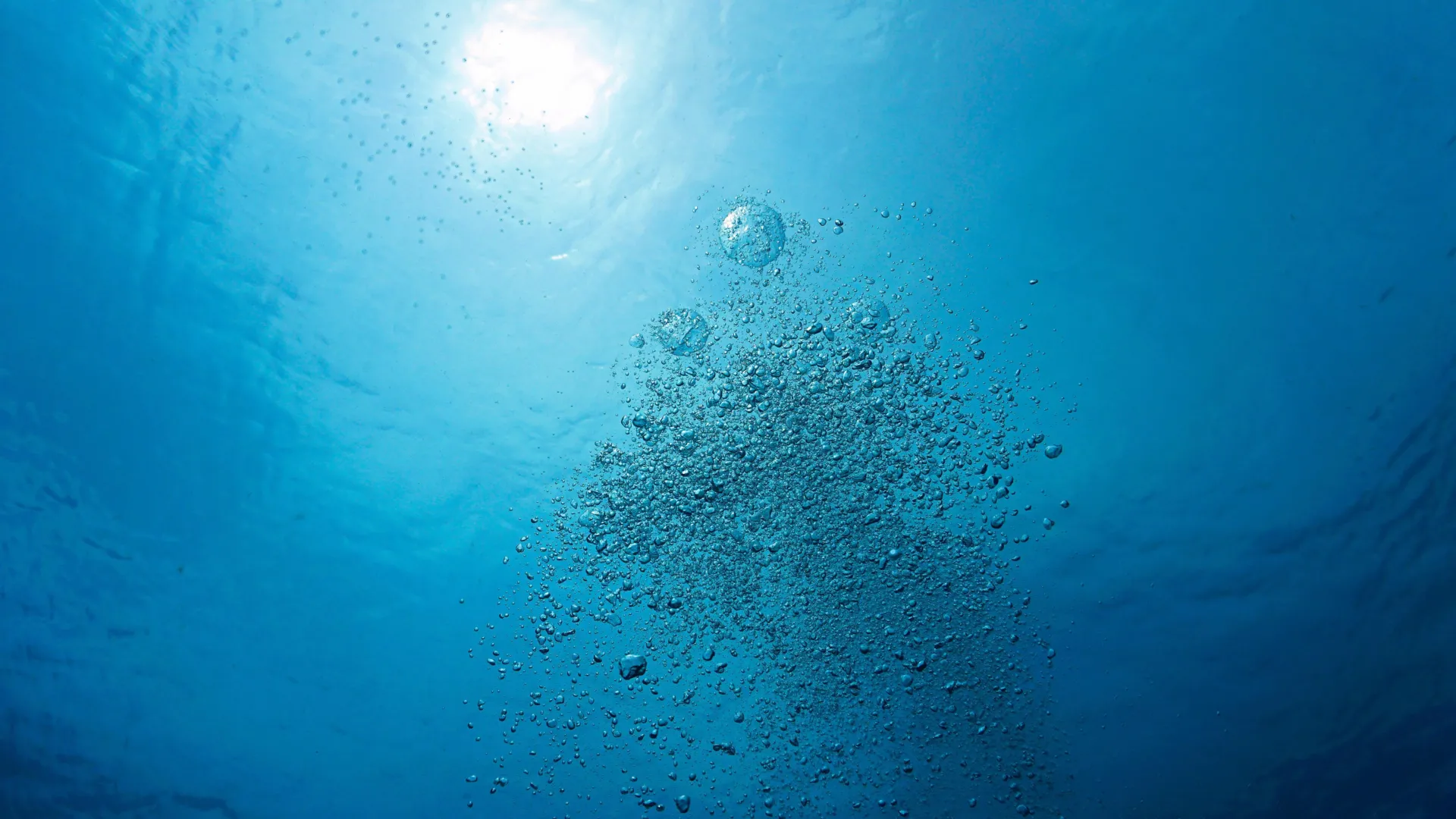
Ocean Deoxygenation Accelerates, Threatening Life and Climate Stability
Oxygen is vanishing from the ocean, and from lakes, rivers, and coastal waters, at a rate that should sharpen our focus. This deoxygenation does not merely stress marine life; it erodes the natural systems that help stabilize Earth's climate. Scientists link this decline directly to warming, pollution, and ocean acidification, making it a compounding planetary threat. We treat this as a measured alarm: the evidence is empirical, and the need for integrated observation has never been clearer.

Nuclear-Powered Container Ship Design Validated, Advancing Ocean Transport Innovation
Validation in naval engineering rarely arrives with this much clarity. The design of a nuclear-powered container ship, built around two molten salt reactors, has cleared a significant hurdle. By refining the power system, hull form, and layout in concert, the project demonstrates how integrated thinking can decarbonize heavy maritime transport without compromising operational efficiency. This is measured, peer-reviewed progress. For context on how such industrial shifts interact with broader marine systems, our related coverage of shifting biogeochemical patterns offers a fitting scientific counterpoint.

Maritime Security Imperative: IMO Condemns Attacks on Shipping Lanes
The IMO's condemnation of attacks on shipping lanes is a measured, necessary response to a crisis that threatens the very framework of global trade. The Secretary-General's call for an end to unwarranted strikes is not just diplomatic language; it is a demand for the rules that keep our integrated data ecosystem moving to hold firm. Geopolitical friction cannot be allowed to destabilize the maritime routes we all depend on.

Microcosms of the Pacific: Exploring Oregon's Tide Pool Ecosystems.
At Cape Blanco, Oregon, the tide pools reveal a world that feels almost alien up close. This July, photographer /u/JamTrackAdventures captures that otherness, showing how these microcosms shift perspective entirely. Each pool is a calibrated snapshot of life, measurable and immediate. The image reminds us that ocean intelligence starts at the shoreline, where small observations build larger understanding. For those exploring similar pathways, our related article, "Navigating a Marine Studies BA: Pathways to a Marine Biology Career," offers practical direction.
Beyond the Shore: Exploring Career Paths with a Marine Biology Degree
A marine biology degree does not lock you to the shoreline, but the question of whether it opens doors beyond the tide is more nuanced than a simple yes. The skills you build, from data analysis to rigorous research design, are transferable, yet they require deliberate framing. A strong curriculum matters, but so does your initiative to connect those dots for employers.