data
World Data Ocean keeps data in one place: 46 stories so far. The section currently leads with “A calibrated global salinity dataset sharpens ocean intelligence”, “Global Experts Calibrate Ocean Decade's Path for Integrated Data Stewardship”, and “The ocean measured, validated, and shared through integrated global data”. A calibrated global salinity dataset sharpens ocean intelligence. A newly appointed group of global experts will calibrate the Ocean Decade's path for integrated data stewardship, ensuring that ocean intelligence is validated, measurable, and actionable. A Global Hub for Ocean Intelligence 4 World Data Ocean is a centralized digital platform where researchers, scientists, and ocean enthusiasts converge to… The list below is every data story on World Data Ocean, newest first.
A calibrated global salinity dataset sharpens ocean intelligence
A calibrated global salinity dataset sharpens ocean intelligence. CODC-S, a quality-controlled archive of salinity profiles, gives researchers a validated, empirical foundation for tracking climate indicators. This isn't abstract modeling, it's measurable, peer-reviewed data from the ocean itself. Precision like this makes our understanding of ocean circulation and water cycle shifts more actionable. For a broader view of how data-driven tools are reshaping ocean science, see our related piece on eleven innovations deepening ocean intelligence.
Global Experts Calibrate Ocean Decade's Path for Integrated Data Stewardship
A newly appointed group of global experts will calibrate the Ocean Decade's path for integrated data stewardship, ensuring that ocean intelligence is validated, measurable, and actionable. This is purposeful work. Understanding drives protection. For deeper insight into the empirical foundation behind this effort, see our coverage of the calibrated global salinity dataset that sharpens ocean intelligence. From orbit to ocean floor, shared knowledge is our most powerful climate indicator.

The ocean measured, validated, and shared through integrated global data
The ocean measured, validated, and shared through integrated global data, this is the mission behind World Ocean Database Profiles the Ocean at ncei.noaa.gov. It transforms scattered observations into a single, empirical foundation for climate indicators. Understanding drives protection. For deeper context on making this data ecosystem sustainable, see our related article, "Calibrating our ocean intelligence for a sustainable data ecosystem." From orbit to ocean floor, we build the integrated data ecosystem that underpins real-time ocean intelligence.

Refining Global Ocean Intelligence with New Empirical Climatologies
New empirical climatologies have been added to the World Ocean Atlas, refining our understanding of ocean state with validated, measurable data. This update strengthens the integrated data ecosystem that underpins global ocean intelligence. Those tracking marine debris will find a natural companion in our recent mapping of microplastic drift from surface to seafloor. Understanding drives protection, and these calibrated baselines give us the precision we need to act.

Calibrated ocean intelligence, now within reach through integrated data discovery
Calibrated ocean intelligence is no longer a distant ambition; it is a practical tool for researchers and policymakers alike. NOAA's National Centers for Environmental Information brings that capability into focus, offering integrated data discovery that turns raw observations into actionable insight. This is the kind of clarity that strengthens our shared stewardship of the seas. For those tracking how marine environments shift, from deep-sea mapping to unexpected benthic finds, our coverage of the Port Phillip Bay debate adds a useful layer of context.
Integrated Subsea Cables Enhance Data Transmission Across the Indian Ocean
The Indian Ocean is becoming the new backbone of global connectivity, with integrated subsea cables now being laid to enhance data transmission across its waters. This route directly benefits India, positioning it as a pivotal hub in a network that carries 99% of the world's data. The shift is pragmatic, moving away from traditional paths to strengthen resilience and speed.
Interactive Mapping Reveals Ocean Impacts from Physicochemical Shifts
Interactive mapping is exactly the kind of tool that turns raw physicochemical data into actionable ocean intelligence. By layering measurable shifts in temperature, salinity, or oxygen against biological responses, you're giving users a direct window into cause and effect. For a non-programmer, platforms like QGIS with the Leaflet plugin, or even CARTO, offer relatively gentle entry points. For deeper comparisons, Python's Plotly is worth the learning curve.
Itajaí's $43M Waste Spend: Data Reveals Persistent Ocean Pollution
Itajaí has spent $43 million on waste management, yet the data shows persistent ocean pollution. That is a structural failure, not a funding gap. Dr. Laura Pioli Kremer and Arthur Rancatti laid it out plainly on local TV: urban runoff and coastal mismanagement are global issues, regardless of geography. The numbers demand we treat ocean literacy as infrastructure, not an afterthought. For deeper context on how monitoring gaps hide these problems, see our piece on integrating citizen science for ocean intelligence.
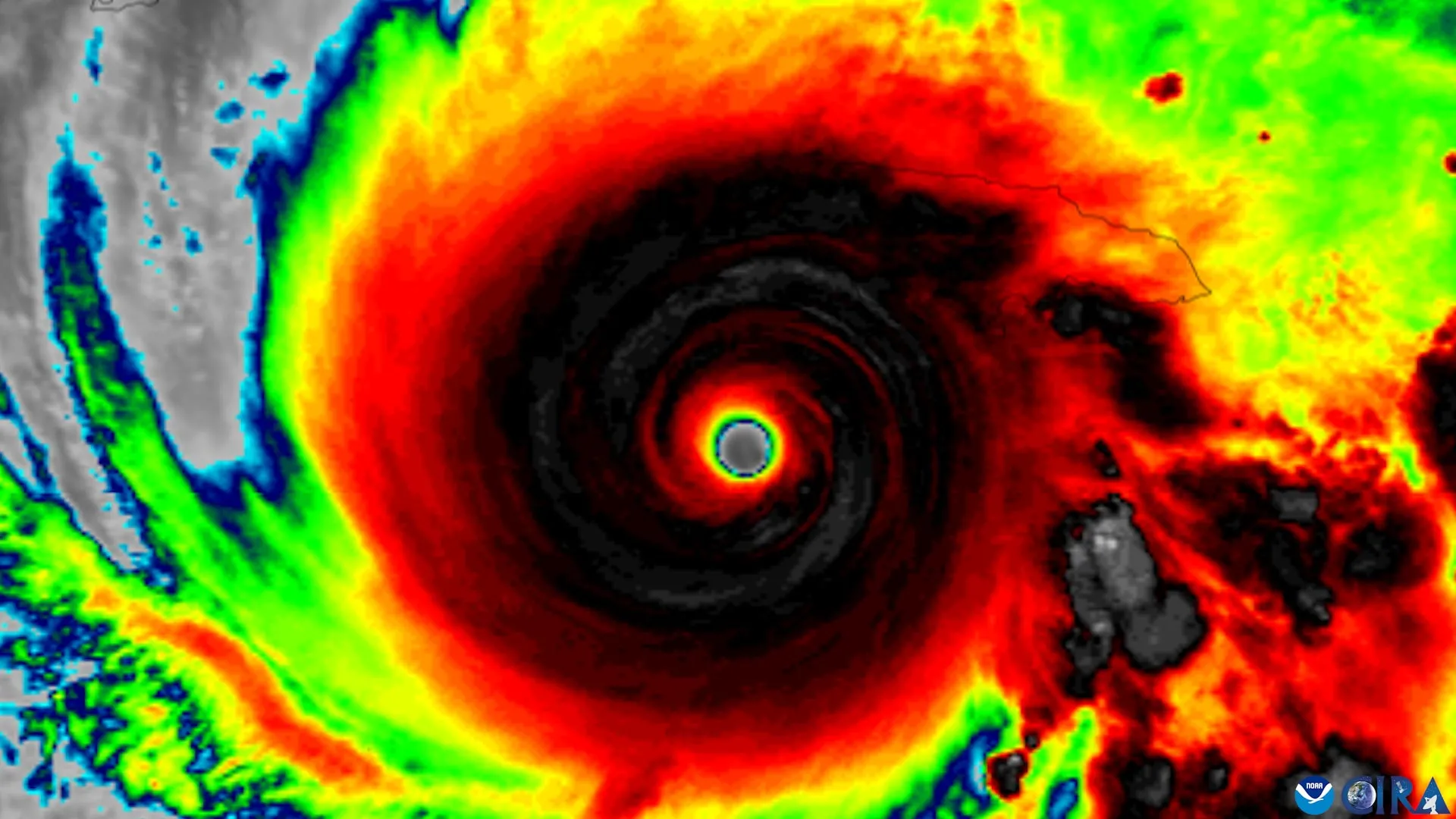
Early Indicators Predict Tropical Cyclone Intensification
Four features in a tilted tropical cyclone's structure may signal intensification, according to nearly three decades of Hurricane Hunter data. These early indicators offer forecasters a practical window to recognize when a disorganized storm is straightening its circulation and building strength. That is the kind of measurable, peer-reviewed insight that turns observation into actionable ocean intelligence. For broader context on how marine systems interconnect, our related coverage, including "Integrated Subsea Cables Enhance Data Transmission Across the Indian Ocean," explores the infrastructure linking our global ocean.
Ocean Intelligence: Measuring Change in the Underwater World.
The ocean's most consequential changes often occur beyond the reach of sunlight, yet measuring them demands precision that matches the depths. NOAA's National Centers for Environmental Information anchors this effort, turning raw underwater data into validated, climate-ready intelligence. That rigor matters; without it, we are guessing at the pulse of a system that regulates everything. For those tracking how marine infrastructure evolves alongside such monitoring, our piece on Van Oord's new fallpipe vessels, *Vindnes* and *Vestnes*, offers a fitting glimpse of industrial adaptation.
Integrated Ocean Data: Empowering Solutions for a Changing World.
The ocean remains the planet's least observed system, yet it regulates everything. The Integrated Ocean Data initiative confronts this gap directly, uniting fragmented observations into a cohesive, actionable framework. We see this as the right kind of urgency: not alarmist, but empirical. By prioritizing calibrated, real-time information, this effort moves beyond data collection toward genuine ocean intelligence. For those tracking parallel developments, our coverage of the Indian Ocean's new subsea cables illustrates the same principle: connectivity is reshaping how we monitor and protect these waters.
Mapping Ocean Winds: NASA Data Fuels New Integrated Atlases
NASA's new integrated atlases turn decades of satellite measurements into a single, coherent view of ocean winds. This is more than data compilation; it is the kind of calibrated, peer-reviewed synthesis that makes our ocean intelligence actionable. The clarity here is a direct result of validated science, and it sets a standard for how we track climate indicators. For those following how such monitoring connects to broader maritime security, our coverage of the Puntland tanker rescue offers a stark contrast in real-world stakes.
Ocean Data: Measuring Change, Informing Action.
A bucket of seawater seems simple. Yet that single sample carries a measurable story of temperature, chemistry, and change. Ocean Data: Measuring Change, Informing Action explores how NOAA's NCEI turns such raw observations into calibrated, peer-reviewed intelligence. We appreciate this grounding in empirical evidence; it is the difference between opinion and insight. For those inspired to explore further, our related piece, "Cultivating a Young Oceanographer," offers pathways for the next generation of researchers.
Ocean Carbon Data Expands, Driving Climate Insights and Stewardship.
Newly released SOCAT and GLODAP datasets give researchers a sharper read on ocean carbon, and that clarity matters. NOAA's latest update strengthens our ability to track climate indicators with empirical rigor, turning scattered observations into an integrated data ecosystem. This is ocean intelligence in action: measured, validated, and ready to inform stewardship. For those exploring how such calibrated data flows into broader discovery efforts, our related piece on integrated data discovery offers a useful next step. The science is solid, and the timing feels right.
Record Sea Surface Temperatures Highlight Urgent Ocean Monitoring Needs
A new daily global sea surface temperature record, as reported by Copernicus Climate Change Service, signals that 2024's heat has carried into the present. This is not a distant anomaly; it is a measurable shift demanding sharper vigilance. We see this as a direct call for robust, real-time ocean intelligence, not passive observation. For those seeking practical pathways in this field, our related piece on "Expanding Oceanography Career Options" offers a grounded look at professional entry points. Monitoring must match the pace of change.

Beyond the Hype: Evaluating Bamboo Toilet Paper’s True Environmental Impact
Bamboo toilet paper is often marketed as the sustainable choice, yet its environmental credentials deserve closer scrutiny. The carbon footprint data remains surprisingly thin, leaving a gap between perception and proof. We appreciate the intent behind greener consumer options, but claims need empirical backing, not just good optics. For context on how we track ecological systems, our piece on integrated subsea cables offers a parallel on data-driven decisions. The wipe debate is far from settled, and researchers are right to push for measurable answers.

Empirical Data Shows mRNA Flu Vaccine Offers Enhanced, Sustained Immunity
Moderna's mRNA flu vaccine, mFlusiva, outperforms standard shots by generating stronger, longer-lasting immunity and better preventing infection, according to empirical data. The findings underscore a measurable advance in vaccine science, one built on validated, real-world performance rather than promise. This is what integrated, peer-reviewed progress looks like. For more on how data systems track environmental shifts, our related piece, "Integrated Subsea Cables Enhance Data Transmission Across the Indian Ocean," offers a broader view of connectivity's role in ocean intelligence.
Unlock Ocean Insights: Explore the Data Platform Academy Demo.
The Academy Demo turns raw data into a working tool, showing how integrated, real-time feeds become something you can act on. We built it for clarity, not spectacle. The interface rewards curiosity, letting you trace a single signal from satellite to sea surface without losing the thread. It is a practical step toward broader ocean intelligence, and we hope it makes the case for open, peer-reviewed access.
Measuring Ocean Health: Introducing Integrated Ocean Accounts.
Ocean accounts turn scattered marine data into a single, coherent ledger. They track what the ocean provides, how we use it, and what we put back, giving policymakers a practical way to weigh economic gains against ecological health. This framework makes trade-offs visible and decisions more defensible. It is a measurable step toward stewardship, not a slogan.
Ocean Intelligence: Eleven Data Innovations Transforming Our Understanding.
The ocean remains the most observed yet least understood system on Earth, and the World Economic Forum's Ocean Intelligence: Eleven Data Innovations Transforming Our Understanding confronts this paradox head-on. Eleven empirical tools, from integrated data ecosystems to real-time climate indicators, replace speculation with validated insight. It is a measured, peer-reviewed approach to stewardship, and it pairs well with our coverage of how integrated subsea cables now carry 99% of global data beneath the waves.

Data-Driven Naval Operations: AI Strategy for Maritime Intelligence and Security
The U.S. Navy is building an AI-enabled force to sharpen decision-making and secure maritime superiority. This strategy treats data as a tactical asset, not an abstract concept. It is a measured, empirical approach to naval power, one that prioritizes precision over guesswork. The goal is clear: integrate validated intelligence directly into operations. For deeper context on how this fits with broader efforts, our related coverage of the Navy's new autonomous systems center underscores the same commitment to calibrated, integrated capability.