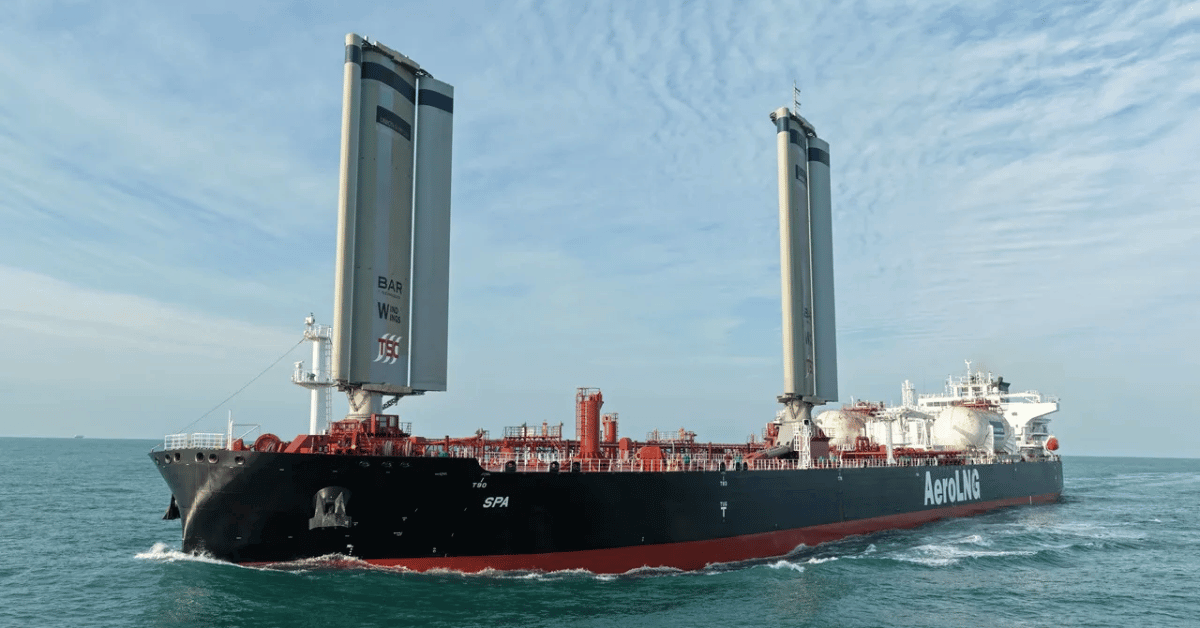
When four major maritime industry players commit to a shared engineering goal, the result is rarely incremental. The new wind-assisted LNG carrier project, built around a 174K cubic meter vessel from HD Hyundai Heavy Industries (HHI) with a forward accommodation arrangement, is a direct acknowledgment that the sector's next efficiency gains will come from integration, not isolated retrofits. This is not a pilot program or a publicity exercise. It is a deliberate convergence of expertise aimed at solving a specific operational challenge: how to move large, cryogenic cargoes while meaningfully reducing fuel consumption and emissions. The choice of a forward accommodation design is particularly telling, as it signals a willingness to revisit fundamental hull and superstructure layouts, not just bolt on new sails and call it a day.
For our readers, the practical takeaway is about supply chain readiness. Wind-assisted propulsion has been discussed for years, but mostly in the context of bulkers or smaller tankers. Applying it to a 174K LNG carrier introduces a different set of constraints, from cargo containment stresses to portside maneuverability in tight LNG terminals. The fact that HHI is leading the design means the project benefits from a shipbuilder with direct access to construction data and cost models. But the real test will be in the operational data that follows sea trials. We would tell any fleet operator or charterer watching this story that the question is not whether wind assistance works, but how the technology integrates with existing route planning and ETA commitments. If this collaboration yields a validated, measurable reduction in fuel oil consumption across a standard voyage, it will set a benchmark that owners cannot ignore, especially as carbon intensity regulations tighten.
What stands out here is the collaborative structure itself. Historically, LNG shipping has been conservative, with owners and charterers often waiting for regulatory pressure before adopting new systems. This project inverts that dynamic by bringing together partners before a mandate forces their hand. That is a signal of confidence in the technology, but it also raises an open question about retrofits. Newbuilds are one thing, but the existing LNG fleet is young and will operate for decades. If the forward accommodation layout proves successful, will it be adaptable to current hulls, or will it remain a feature of next-generation tonnage only? That distinction matters for anyone planning fleet renewal cycles now.
The detail to watch is how the performance data is shared and validated. If the consortium publishes peer-reviewed results on fuel savings and structural loads, it will accelerate adoption across the industry. If the data remains proprietary, the project will still benefit the participants, but its impact on the broader market will be slower. We would tell a reader that this is the moment to track which partners are willing to open their books. The technology is promising, but the true measure of success will be whether this collaboration produces transparent, empirical evidence that others can build upon. That is the difference between a project and a movement.